CM Mohan Yadav Hails Women Strengthening MP Governance
Synopsis
MP Chief Minister Dr. Mohan Yadav celebrated women fulfilling administrative responsibilities in Madhya Pradesh, linking their governance roles to the Ladli Behna Yojana and the state's broader women-empowerment agenda.
Key Takeaways
Mohan Yadav posted on October 14, 2026 celebrating women administrators strengthening Madhya Pradesh's governance.
The post was tagged #LadliBahnaMP , connecting administrative participation to the state's flagship women's welfare scheme.
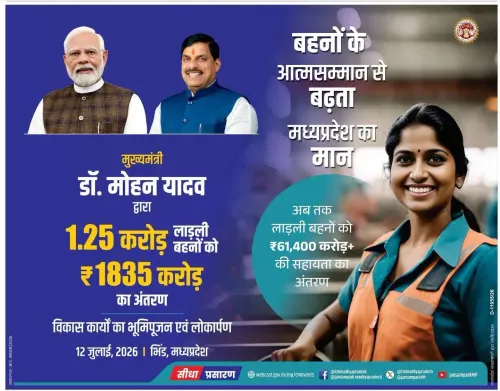
Ladli Behna Yojana was launched in 2023 to provide direct monthly financial assistance to eligible women in Madhya Pradesh.
The 73rd and 74th Constitutional Amendments of 1992 established one-third reservation for women in panchayats and urban local bodies nationwide.
Madhya Pradesh has been under BJP governance since 2003 , implementing successive women-focused welfare and participation programmes.
The Chief Minister's framing positions Ladli Behna as an identity broader than cash transfers — encompassing women's active role in governance.
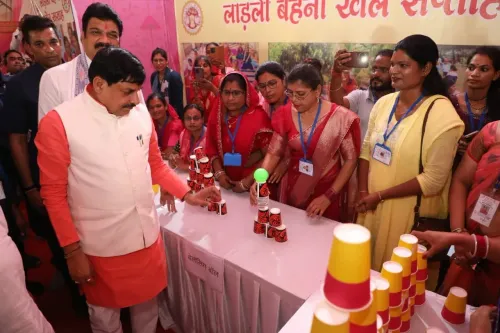
Women in Madhya Pradesh are no longer just beneficiaries of state welfare — they are running it. Madhya Pradesh Chief Minister Dr. Mohan Yadav on Wednesday, October 14, 2026, highlighted the growing role of women administrators in strengthening the state's governance machinery, framing it as a living extension of the Ladli Behna Yojana movement.
Posting under the hashtag #LadliBahnaMP, Dr. Yadav wrote: 'Aaj hamari mata-bahnen prashasanik zimmedariyon ka nirvahan karte hue shasan vyavastha ko mazboot bana rahi hain' — 'Today, our mothers and sisters are fulfilling administrative responsibilities and strengthening the system of governance.'
From Cash Transfers to the Administrator's Chair
The Ladli Behna Yojana, launched in 2023 by the Madhya Pradesh government, was designed as a direct financial support scheme for eligible women across the state. But the programme's political and social identity has steadily broadened beyond monthly cash transfers. The Chief Minister's framing on Wednesday positions it as an umbrella for women's participation in public life — including governance itself.
That framing has constitutional roots. The 73rd and 74th Constitutional Amendments of 1992 mandated at least one-third reservation for women in panchayats and urban local bodies, seeding a generation of female elected representatives and administrators across India. Madhya Pradesh, under BJP governance since 2003, has layered state-level schemes onto that national foundation.
Women Administrators as a Governance Metric
The post's specific emphasis on prashasanik zimmedariyon — administrative responsibilities — signals a deliberate shift in messaging: women are not passive recipients but active drivers of state machinery. Female elected representatives in gram panchayats, ward councillors in municipalities, and women officers in district administration have all expanded significantly since the 1992 amendments took effect across successive electoral cycles.
For the BJP in Madhya Pradesh, tying this narrative to #LadliBahnaMP is also a political signal — one that keeps the scheme's identity visible and relevant well beyond its initial cash-transfer mandate, particularly as local body elections periodically refresh the pipeline of women in public roles.
The numbers behind that pipeline will matter. State-level reviews of women's representation in administrative posts — and any expansion of the Ladli Behna scheme itself — will be the real test of whether the governance story Dr. Yadav is telling holds up in the data.
Point of View
Recasting it as a governance-participation movement ahead of future local body elections. By invoking women in administrative roles alongside #LadliBahnaMP, the BJP in Madhya Pradesh is building a durable political narrative — one that ties financial empowerment to civic agency. This mirrors a broader national BJP strategy of framing women-centric schemes as transformative rather than transactional. The test will be whether actual data on female representation in administrative posts in MP supports the momentum the messaging implies.
NationPress
14 Oct 2026
Frequently Asked Questions
What is Ladli Behna Yojana in Madhya Pradesh?
Ladli Behna Yojana is a Madhya Pradesh government welfare scheme launched in 2023 that provides monthly direct cash assistance to eligible women for economic empowerment. CM Dr. Mohan Yadav has broadened its public identity to also celebrate women's roles in governance and administration.
What did CM Mohan Yadav say about women in governance?
On October 14, 2026, CM Dr. Mohan Yadav stated that 'our mothers and sisters are fulfilling administrative responsibilities and strengthening the system of governance,' linking this to the Ladli Behna Yojana movement in Madhya Pradesh.
What is the constitutional basis for women's reservation in local bodies in India?
The 73rd and 74th Constitutional Amendments of 1992 introduced at least one-third reservation for women in panchayats and urban local bodies across India, laying the foundation for women's participation in grassroots governance.
How long has BJP governed Madhya Pradesh?
The BJP has governed Madhya Pradesh since 2003, and Dr. Mohan Yadav became Chief Minister in December 2023 following the state assembly elections.
How does Ladli Behna Yojana connect to women in administration?
While Ladli Behna Yojana was originally a financial assistance scheme, CM Mohan Yadav has increasingly used its platform and hashtag to highlight women's active participation in administrative and governance roles across Madhya Pradesh.