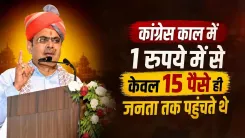
CM Mohan Yadav: Indore-Ujjain Greenfield Corridor to Drive MP Growth
Synopsis
Chief Minister Dr. Mohan Yadav has declared the Indore-Ujjain Greenfield Corridor a landmark development project for Madhya Pradesh, saying it will benefit current residents and future generations while reshaping metropolitan region planning across the Indore-Ujjain belt.
Key Takeaways
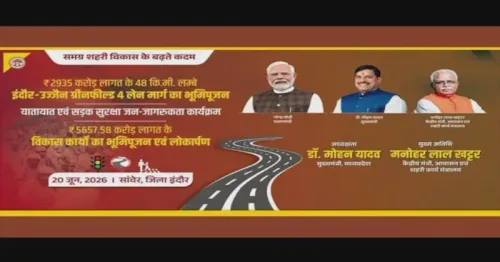
The Chief Minister's Office of Madhya Pradesh announced on 20 June 2026 that the Indore-Ujjain Greenfield Corridor will become synonymous with development in the region.
Mohan Yadav said the project will benefit local residents as well as future generations.
The corridor is expected to give new direction to metropolitan region planning in the Indore-Ujjain belt.
The Madhya Pradesh Public Works Department (PWD) is the nodal agency for the project.
The initiative aligns with the national PM Gati Shakti Master Plan for integrated multimodal infrastructure.
Key next steps include land acquisition, environmental assessments, and funding sanctions.
The Chief Minister's Office of Madhya Pradesh announced on Saturday, 20 June 2026, that the proposed Indore-Ujjain Greenfield Corridor will become a symbol of development, promising wide-ranging benefits for local residents and future generations while giving new direction to metropolitan region planning.
Context
Chief Minister Dr. Mohan Yadav stated that the corridor will be 'vikas ka paryay' (synonymous with development), benefiting not only people living in the region today but also future generations. The announcement underscores the state government's intent to treat the Indore-Ujjain belt as a unified metropolitan growth zone rather than two separate urban centres.
Indore is Madhya Pradesh's largest city and its commercial engine, while Ujjain is a historic religious hub best known as the site of the Simhastha Kumbh Mela. The two cities are roughly 55 kilometres apart and share significant commuter and pilgrim traffic, making a dedicated greenfield corridor a long-discussed infrastructure priority.
Policy Backdrop
The corridor aligns with the PM Gati Shakti National Master Plan, launched in 2021, which promotes integrated, multimodal infrastructure corridors across Indian states. Madhya Pradesh has pursued several greenfield and expressway projects in recent years to knit its major urban centres together and attract industrial investment.
The Indore Metro Rail project, which received central approval in 2018, already targets improved intra-city mobility in Indore. A greenfield road corridor to Ujjain would complement that network, potentially enabling seamless movement of passengers and freight across the broader metropolitan region. The Madhya Pradesh Public Works Department (PWD), tagged in the official post, is the nodal agency expected to execute the project.
Stakeholders and Impact
Urban commuters, regional businesses, and pilgrims travelling to Ujjain's temples and religious festivals stand to gain most directly from faster, safer connectivity. Local residents along the corridor alignment could see improved access to employment, healthcare, and education hubs concentrated in Indore.
The metropolitan region framing signals that planners may pursue coordinated land-use, industrial, and residential development along the corridor rather than treating it as a standalone road project. This approach mirrors greenfield corridor models seen in other Indian states, where new alignments have catalysed logistics parks, satellite townships, and special economic zones.
What's Next
Key milestones to watch include land acquisition proceedings, environmental impact assessments, and formal funding sanctions from state and central agencies. Integration with the existing Indore Metro network and state highway grid will also shape the corridor's final alignment and utility.
If the project advances on schedule, the Indore-Ujjain belt could emerge as one of Madhya Pradesh's most significant metropolitan corridors, reinforcing the state's broader ambition to position itself as a top-tier destination for investment and sustainable urban growth in central India.
Point of View
The Chief Minister's Office is also signalling accountability and execution urgency. The corridor fits a broader pattern of BJP-governed states leveraging PM Gati Shakti branding to align state infrastructure ambitions with central government priorities, making it easier to unlock Union funding. Whether the project translates from announcement to ground-breaking will be the real test of this administration's infrastructure delivery record.
NationPress
20 Jun 2026
Frequently Asked Questions
What is the Indore-Ujjain Greenfield Corridor?
The Indore-Ujjain Greenfield Corridor is a proposed new road and development corridor in Madhya Pradesh linking the state's commercial capital Indore with the religious city of Ujjain, aimed at boosting regional connectivity and metropolitan growth.
Who announced the Indore-Ujjain Greenfield Corridor project?
The announcement was made by the Chief Minister's Office of Madhya Pradesh on 20 June 2026, quoting Chief Minister Dr. Mohan Yadav.
What is the distance between Indore and Ujjain?
Indore and Ujjain are approximately 55 kilometres apart in Madhya Pradesh, with heavy commuter and pilgrim traffic between the two cities.
Which department will build the Indore-Ujjain Greenfield Corridor?
The Madhya Pradesh Public Works Department (PWD) is the state agency expected to execute the corridor project, as indicated by the official post tagging the department.
How does the Indore-Ujjain Corridor relate to PM Gati Shakti?
The project aligns with the PM Gati Shakti National Master Plan launched in 2021, which promotes integrated multimodal infrastructure corridors across Indian states including Madhya Pradesh.