CM Bhajan Lal Sharma backs Modi's farmer empowerment push
Synopsis
Rajasthan Chief Minister Bhajan Lal Sharma on 20 June 2026 reaffirmed that farmer progress is the bedrock of national progress, crediting PM Modi's leadership for driving agricultural modernisation and direct welfare schemes including PM-KISAN and e-NAM across India and Rajasthan.
Key Takeaways
CM Bhajan Lal Sharma posted on 20 June 2026 backing PM Modi's farmer-welfare agenda, calling the annadata's progress the foundation of national progress.
The PM-KISAN scheme, launched in February 2019 , provides Rs 6,000 annually in direct income support to eligible landholding farmer families.
The e-NAM platform, introduced in 2016 , enables online agricultural produce trading across mandis to improve price discovery for farmers.
PMKSY (irrigation) and PMFBY (crop insurance) form the broader policy architecture aimed at reducing farmer income risk.
Rajasthan , a largely agrarian state, is a key implementation ground for central agricultural schemes, with rural households in semi-arid districts especially dependent on these programmes.
State-level rollout — including PM-KISAN beneficiary verification and FPO registrations — will be the measure of how political commitment converts to on-ground impact.
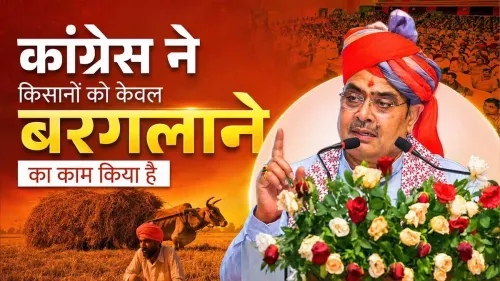
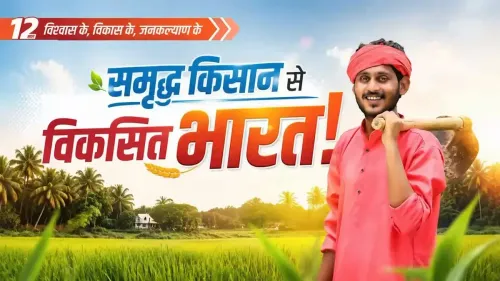
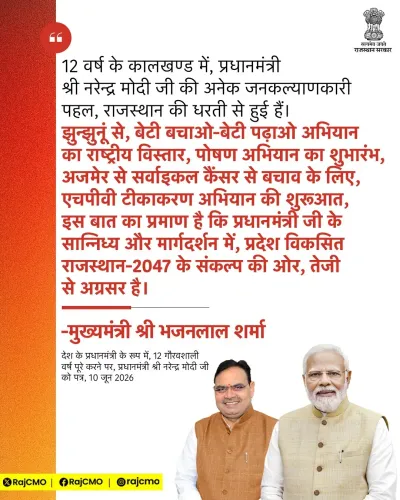
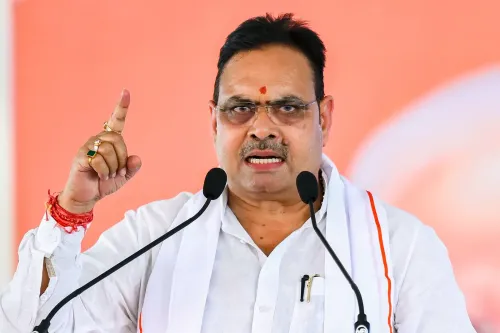
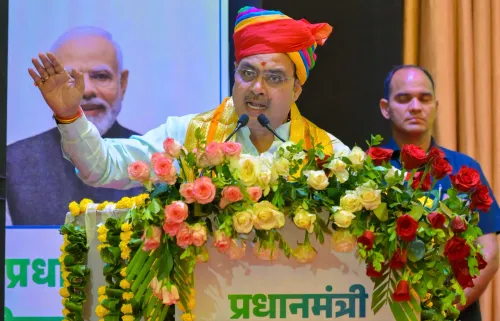
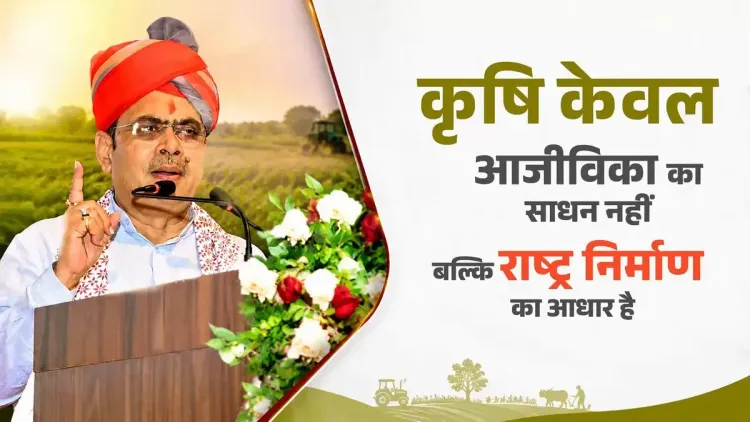
Rajasthan Chief Minister Bhajan Lal Sharma on Saturday, 20 June 2026, reaffirmed the BJP-led government's commitment to farmer welfare, stating that the progress of the annadata (provider of food) is the foundation of national progress. Posting on X, Sharma credited Prime Minister Narendra Modi's leadership for driving continuous efforts to make agriculture more profitable and modern while empowering farmers to become self-reliant.
In his post, Sharma wrote: 'अन्नदाता की प्रगति ही राष्ट्र की प्रगति का आधार है' — 'The progress of the farmer is the foundation of the nation's progress.' He added that under PM Modi's leadership, work is continuously being done to empower farmers, make them self-reliant and prosperous, and to make agriculture more remunerative and modern.
Context
Bhajan Lal Sharma assumed office as Rajasthan Chief Minister following the BJP's victory in the state assembly elections in late 2023. Since taking charge, Sharma has consistently aligned state agricultural policy with the central government's farmer-welfare agenda. His post reflects the broader BJP political messaging that frames agricultural development as inseparable from national development.
The post comes as the Rajasthan government continues to implement centrally sponsored agricultural schemes at the state level, with farmer welfare remaining a high-priority theme in state budget sessions and public communications.
Policy Backdrop
The central government's agricultural policy architecture, built since 2014, rests on several flagship interventions. The PM-KISAN scheme, launched in February 2019, provides direct income support of Rs 6,000 annually to eligible landholding farmer families through direct benefit transfers, bypassing intermediaries.
The e-NAM platform, introduced in 2016, created a unified online trading system for agricultural produce across mandis, aiming to give farmers better price discovery. Complementing these, the Pradhan Mantri Krishi Sinchayee Yojana (PMKSY) has expanded irrigation coverage, while the Pradhan Mantri Fasal Bima Yojana (PMFBY) has worked to reduce crop-loss risk for farming households across the country.
In Rajasthan, a predominantly agrarian state with a large share of small and marginal farmers, these schemes carry significant electoral and economic weight. The state has been an active participant in rolling out direct benefit transfers and crop insurance coverage across its districts.
Stakeholders and Impact
The primary beneficiaries of the policies Sharma references are Rajasthan's farming households, who depend on both kharif and rabi crops across the state's varied agro-climatic zones. Rural households in semi-arid districts are particularly dependent on irrigation support and income-transfer schemes to manage weather-related income volatility.
Farmer Producer Organisations (FPOs) are also a growing stakeholder group, as the central government has pushed for FPO registration to improve collective bargaining power for small farmers. State-level implementation quality directly determines whether central scheme benefits reach the intended beneficiaries.
What's Next
Attention will now turn to how Rajasthan's upcoming budget sessions and administrative reviews translate this political commitment into on-ground delivery — including the pace of PM-KISAN beneficiary verification, PMFBY claim settlements, and new FPO registrations in the state. CM Sharma's public alignment with PM Modi's agricultural vision also signals that farmer welfare will remain a central plank of the BJP's political communication in Rajasthan ahead of future electoral cycles.
Point of View
Sharma taps into a politically resonant idiom that has defined BJP's rural outreach since 2014. The timing, mid-year and outside any immediate electoral cycle, suggests this is part of a sustained governance-messaging effort rather than a reactive move. The real test, however, will be whether Rajasthan's administrative machinery can match the political rhetoric with measurable improvements in farmer incomes and scheme delivery.
NationPress
20 Jun 2026
Frequently Asked Questions
What did Rajasthan CM Bhajan Lal Sharma say about farmers?
On 20 June 2026 , CM Bhajan Lal Sharma stated that the progress of the farmer ( annadata ) is the foundation of national progress, and credited PM Modi's leadership for continuously working to empower farmers and modernise agriculture.
What is the PM-KISAN scheme and how does it help farmers?
PM-KISAN is a central government scheme launched in February 2019 that provides Rs 6,000 per year in direct income support to eligible landholding farmer families, transferred directly to their bank accounts in three instalments.
What agricultural schemes are being implemented in Rajasthan?
Rajasthan is implementing several central schemes including PM-KISAN for income support, PMFBY for crop insurance, and PMKSY for irrigation expansion, alongside the e-NAM online mandi trading platform.
Who is Bhajan Lal Sharma?
Bhajan Lal Sharma is the Chief Minister of Rajasthan and a senior BJP leader who took office following the party's victory in the state assembly elections in late 2023 .
What is e-NAM and how does it benefit Indian farmers?
e-NAM (Electronic National Agriculture Market) is an online trading platform launched in 2016 that connects agricultural mandis across India, allowing farmers to access better price discovery and a wider market for their produce.