CM Mohan Yadav Joins Mann Ki Baat 135 in Betul
Synopsis
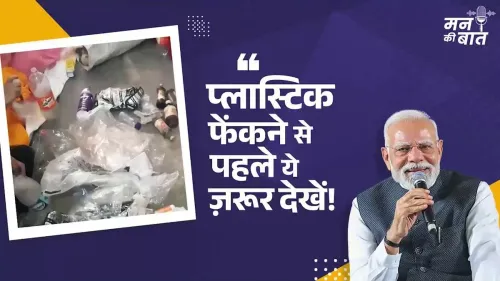
Madhya Pradesh CM Dr. Mohan Yadav joined Mann Ki Baat's 135th episode at Kukru in Betul district. PM Modi praised women from Rajgarh's Byavara for making eco-bricks from plastic waste and urged citizens to use clay idols for Ganesh Mahotsav.
Key Takeaways
Mohan Yadav attended the 135th Mann Ki Baat episode at Kukru village, Betul district on 28 June 2026 .
State BJP president Hukum Singh Khandelwal and local villagers joined the CM for the broadcast.
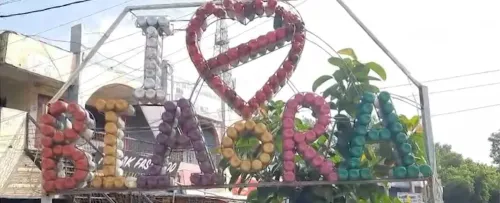
PM Modi praised women from Byavara, Rajgarh district for recycling plastic waste into eco-bricks .
The initiative is being highlighted as a model for both environmental protection and women's self-reliance .
PM Modi appealed to citizens to use clay (mitti) Ganesh idols during the upcoming Ganesh Mahotsav to protect the environment.
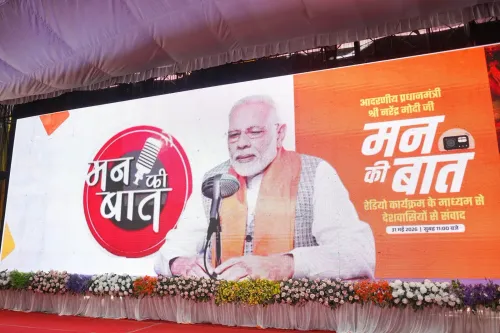
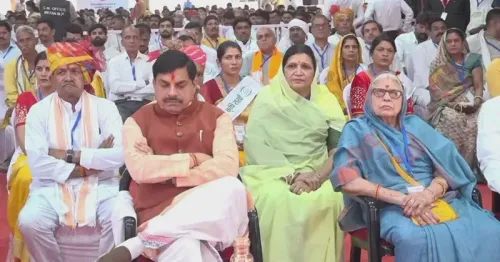
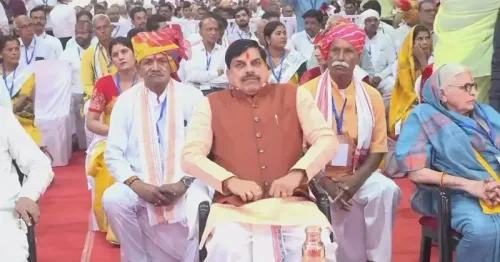
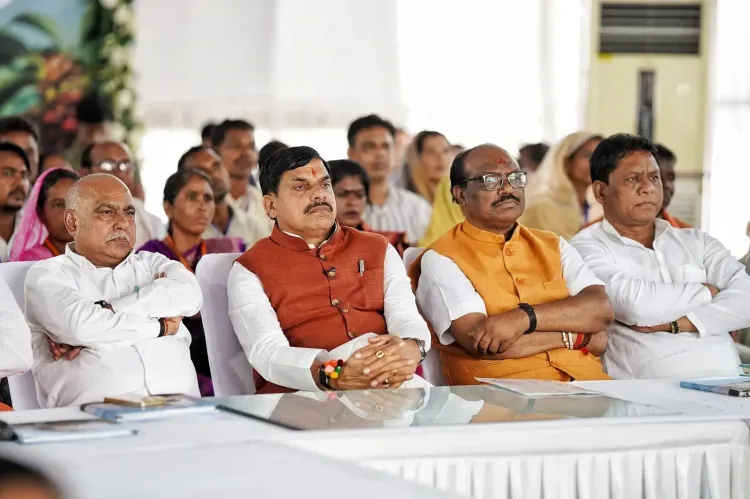
Madhya Pradesh Chief Minister Dr. Mohan Yadav joined the 135th episode of Prime Minister Narendra Modi's 'Mann Ki Baat' programme on Sunday, 28 June 2026, listening to the broadcast from Kukru village in Betul district alongside state BJP president Shri Hukum Singh Khandelwal and local villagers.
Context
Chief Minister Dr. Yadav shared that Prime Minister Modi, during the episode, praised a group of women from Byavara in Rajgarh district of Madhya Pradesh who are recycling plastic waste to produce eco-bricks. The CM described the initiative as an inspiring example of both environmental protection and women's self-reliance, calling it 'aatmanirbhar banne ki disha mein prernadayi udaharan' (an inspiring example on the path to becoming self-reliant).
The Prime Minister's radio-and-digital address, broadcast on the last Sunday of every month, reaches tens of millions of listeners across India. The 135th edition marks a continued milestone in the programme's run since its launch in October 2014.
Policy Backdrop
The eco-brick initiative from Byavara, Rajgarh fits squarely within the national push for plastic waste management under the Swachh Bharat Mission and the government's broader ban on single-use plastics. Eco-bricks — plastic bottles packed tightly with non-recyclable waste — have been promoted as a low-cost, community-driven solution for repurposing plastic that would otherwise end up in landfills or water bodies.
The women's group in Byavara represents a grassroots convergence of two central government priorities: the plastic-free India campaign and the women's self-help group (SHG) ecosystem supported under schemes such as Lakhpati Didi and the National Rural Livelihood Mission. A mention on Mann Ki Baat typically amplifies such local models to a national audience, encouraging replication.
Ganesh Festival and Clay Idols Appeal
Prime Minister Modi also used the episode to appeal to citizens ahead of the upcoming Ganesh Mahotsav, urging them to purchase idols made from clay (mitti) rather than plaster of Paris or chemically painted alternatives. The CM noted that this appeal ties personal faith to an environmental commitment, as clay idols dissolve naturally in water without releasing toxic chemicals.
The call for eco-friendly Ganesh idols is a recurring theme in public environmental messaging ahead of the festival season, and a Prime Ministerial endorsement on Mann Ki Baat is expected to give the campaign significant reach ahead of Ganesh Chaturthi celebrations later in the year.
Stakeholders and Impact
For Madhya Pradesh, the national recognition of the Byavara women's eco-brick project is a reputational boost for the state administration. Chief Minister Dr. Yadav's decision to attend the broadcast in a rural setting — Kukru, Betul — alongside the state party president and villagers signals an effort to demonstrate grassroots connect and reinforce the BJP's outreach in tribal and rural belt constituencies in the state.
The women of Byavara now stand to benefit from heightened visibility, potential replication support, and possible government linkages for scaling their recycling enterprise. Community-led plastic recycling models that receive Mann Ki Baat mentions have historically attracted NGO partnerships and state funding.
What's Next
The eco-brick model from Rajgarh district is likely to receive follow-up attention from the state government, including possible visits by officials and integration into Madhya Pradesh's solid waste management programmes. With Ganesh Chaturthi approaching, civic bodies across the state are expected to ramp up awareness drives promoting clay idols in line with the Prime Minister's appeal, potentially anchored by the Chief Minister's office.
Point of View
Placing the BJP's senior-most face in Madhya Pradesh within a grassroots setting ahead of local outreach cycles. The national spotlight on Byavara's eco-brick women gives the state government a ready-made success narrative at the intersection of two politically salient themes: women's empowerment and environmental action. PM Modi's clay-idol appeal, amplified by the CM, allows the BJP to frame festival culture as consistent with ecological values — a message aimed at urban middle-class and youth voters. Collectively, the episode positions Madhya Pradesh as a model implementation state within the broader Swachh Bharat and self-reliance policy arc.
NationPress
28 Jun 2026
Frequently Asked Questions
What happened in Mann Ki Baat episode 135?
In the 135th episode of Mann Ki Baat, broadcast on 28 June 2026, PM Modi praised women from Byavara in Rajgarh, Madhya Pradesh, for making eco-bricks from recycled plastic waste. He also urged citizens to use clay idols during Ganesh Mahotsav to protect the environment.
Where did CM Mohan Yadav listen to Mann Ki Baat 135?
CM Dr. Mohan Yadav listened to the 135th Mann Ki Baat episode at Kukru village in Betul district of Madhya Pradesh, alongside state BJP president Hukum Singh Khandelwal and local villagers.
What are eco-bricks and who is making them in Madhya Pradesh?
Eco-bricks are plastic bottles or containers packed tightly with non-recyclable plastic waste, used as a low-cost building material. Women from Byavara in Rajgarh district, Madhya Pradesh, are producing eco-bricks by recycling plastic waste, an initiative praised by PM Modi on Mann Ki Baat.
Why did PM Modi ask people to use clay Ganesh idols?
PM Modi appealed to citizens to buy clay (mitti) Ganesh idols for Ganesh Mahotsav because clay idols dissolve naturally in water without releasing toxic chemicals, unlike plaster of Paris idols, making them environmentally safer.
What is Mann Ki Baat and how often does it air?
Mann Ki Baat is a monthly radio and digital address by Prime Minister Narendra Modi, broadcast on the last Sunday of every month. It was launched in October 2014 and the 135th episode aired on 28 June 2026.