PM Modi Praises Meghalaya's Living Root Bridges on Mann Ki Baat

Synopsis
Prime Minister Narendra Modi used his June 2026 Mann Ki Baat broadcast to praise the people of Meghalaya for preserving their iconic living root bridges — centuries-old bioengineered structures grown by Khasi and Jaintia tribal communities, which are under consideration for UNESCO World Heritage status.
Key Takeaways
PM Modi praised Meghalaya's communities on June 28, 2026 via Mann Ki Baat for preserving living root bridges.
Living root bridges are grown from the aerial roots of the Ficus elastica (Indian rubber fig) tree and can take 15–30 years to become functional.
The bridges are primarily found in East Khasi Hills and West Jaintia Hills districts, near Cherrapunji and Mawlynnong .
Meghalaya's root bridges are on India's tentative UNESCO World Heritage Site nomination list.
Mann Ki Baat, running since October 2014 , regularly spotlights grassroots cultural and ecological achievements from across India.
National recognition is expected to boost eco-tourism and conservation funding in the Northeast region.
Prime Minister Narendra Modi on Sunday, June 28, 2026, praised the people of Meghalaya for their centuries-old tradition of preserving living root bridges, sharing his admiration during the latest episode of his monthly radio programme Mann Ki Baat.
Context
In his post, the Prime Minister wrote: 'India is proud of the people of Meghalaya for the manner in which they have preserved the root bridges.' The remark was made in the context of Mann Ki Baat, Modi's long-running public outreach programme broadcast on All India Radio, in which he regularly highlights grassroots achievements, cultural heritage, and community-led initiatives from across the country.
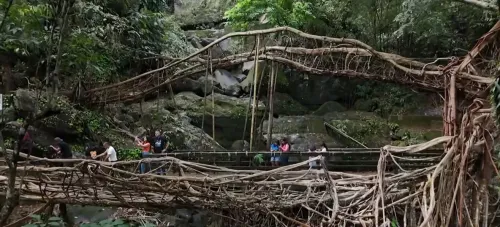
Living root bridges are a remarkable feat of bioengineering found in the East Khasi Hills and West Jaintia Hills districts of Meghalaya, particularly around the village of Cherrapunji (Sohra) and Mawlynnong. These bridges are grown — not built — by training the aerial roots of the Indian rubber fig tree (Ficus elastica) across streams and ravines over decades, sometimes centuries.
Policy Backdrop
The recognition fits within a broader Central Government emphasis on safeguarding India's intangible and natural heritage. Meghalaya's living root bridges have been on India's tentative list for UNESCO World Heritage Site nomination, with community groups and state authorities working to formalise their preservation and document traditional Khasi knowledge systems associated with their cultivation.
Mann Ki Baat, which began in October 2014, has consistently served as a platform to amplify stories of local innovation and cultural stewardship that might otherwise receive limited national attention. Featuring such traditions on the programme typically boosts tourism interest and policy focus on the highlighted regions.
Stakeholders and Impact
The primary stewards of these bridges are the Khasi and Jaintia tribal communities of Meghalaya, who have maintained the practice across generations as a functional solution to the region's heavy monsoon rainfall and difficult terrain. A single root bridge can take 15 to 30 years to become fully functional and can last for hundreds of years.
National recognition from the Prime Minister is expected to draw fresh attention to conservation funding, eco-tourism infrastructure, and the intellectual property rights of indigenous communities over their traditional ecological knowledge. Local guides, homestay operators, and craftspeople in the region stand to benefit from increased visitor footfall.
What's Next
The spotlight from Mann Ki Baat may accelerate ongoing efforts to secure UNESCO World Heritage status for Meghalaya's living root bridges, a bid that requires sustained documentation and community consent processes. Central and state agencies may also be prompted to increase budgetary support for bio-heritage conservation in the Northeast region. The episode underscores a pattern of using the programme to build national pride around indigenous ecological wisdom ahead of broader heritage policy announcements.
Point of View
The Prime Minister subtly builds political goodwill in a region where the BJP has long sought deeper roots. The move also aligns with the Centre's broader soft-power strategy of positioning India's living traditions as globally significant, ahead of potential heritage diplomacy wins. Whether this translates into concrete conservation funding or remains symbolic will be the test.
NationPress
28 Jun 2026
Frequently Asked Questions
What are the living root bridges of Meghalaya?
Living root bridges are natural bridges grown by training the aerial roots of the Indian rubber fig tree ( Ficus elastica ) across streams and ravines. They are created and maintained by the Khasi and Jaintia tribal communities of Meghalaya and can take 15 to 30 years to mature, lasting for centuries.
Why did PM Modi mention root bridges on Mann Ki Baat?
PM Modi praised the people of Meghalaya for preserving their living root bridges during the June 28, 2026 episode of Mann Ki Baat, his monthly radio programme, as part of its regular focus on grassroots cultural and ecological achievements.
Are Meghalaya's root bridges a UNESCO World Heritage Site?
Not yet. Meghalaya's living root bridges are currently on India's tentative list for UNESCO World Heritage Site nomination. Formal nomination requires detailed documentation and community consent processes that are ongoing.
Where are the living root bridges located in Meghalaya?
The bridges are primarily found in the East Khasi Hills and West Jaintia Hills districts of Meghalaya, with notable examples near Cherrapunji (Sohra) and the village of Mawlynnong.
What is Mann Ki Baat?
Mann Ki Baat is a monthly radio programme hosted by Prime Minister Narendra Modi on All India Radio, launched in October 2014. It is used to highlight citizen achievements, cultural heritage, and community initiatives from across India.