CM Mohan Yadav Hails Byawara Women's Eco-Brick Drive
Synopsis
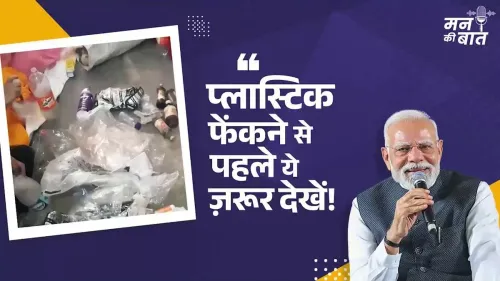
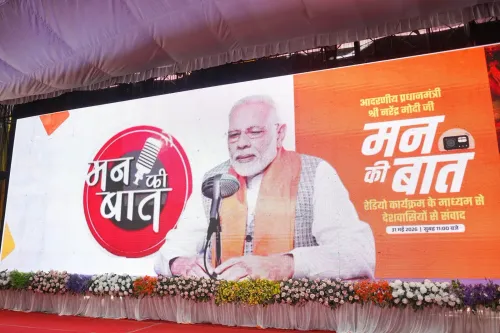
MP Chief Minister Dr. Mohan Yadav shared how women from Byawara in Rajgarh district independently collected plastic waste, converted it into eco-bricks, and used them to beautify public spaces — a story featured in the context of PM Modi's Mann Ki Baat.
Key Takeaways
Madhya Pradesh CM Dr.
Mohan Yadav shared the story on 28 June 2026 in reference to PM Modi's Mann Ki Baat programme.
Women from Byawara, Rajgarh district independently launched a plastic waste collection drive without waiting for official support.
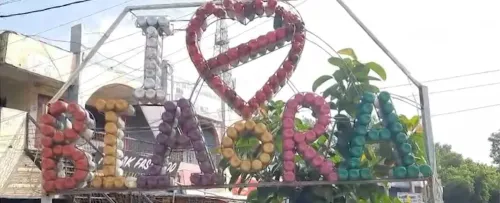
Collected plastic waste and empty bottles were converted into eco-bricks — plastic bottles packed tightly with non-recyclable waste to form durable units.
The eco-bricks are now being used to beautify public spaces in Byawara town.
The initiative aligns with India's push to eliminate single-use plastic under the Swachh Bharat Mission .
National amplification through Mann Ki Baat could encourage replication of the model in other districts.
Madhya Pradesh Chief Minister Dr. Mohan Yadav on Sunday, 28 June 2026, shared the inspiring story of women from Byawara in Rajgarh district of Madhya Pradesh, who independently launched a plastic waste collection initiative that has transformed public spaces through eco-bricks — highlighting the account in the context of Prime Minister Narendra Modi's Mann Ki Baat programme.
Context
The Chief Minister recounted how a group of women in Byawara resolved to address the plastic waste problem in their surroundings without waiting for government intervention. As Dr. Yadav described it, they decided: 'yeh nahin socha ki koi aakar badlaav laayega' ('they did not think that someone would come and bring change'). Instead, they took matters into their own hands.
The women began collecting plastic waste and empty bottles from across the town. Over time, this grassroots effort evolved into a structured initiative in which the collected plastic was converted into eco-bricks — a technique where plastic bottles are tightly packed with non-recyclable waste to create durable, reusable building units.
Policy Backdrop
Mann Ki Baat, Prime Minister Modi's monthly radio address, has since its launch in 2014 served as a platform to spotlight citizen-led social initiatives across India. The programme regularly features stories of grassroots innovation, environmental stewardship, and community self-reliance, lending national visibility to local efforts.
The eco-brick concept aligns with India's broader push to reduce single-use plastic, reinforced by the nationwide ban on identified single-use plastic items that came into effect on 1 July 2022. Madhya Pradesh has also run campaigns under the Swachh Bharat Mission to curb plastic pollution in urban and semi-urban areas.
Stakeholders and Impact
The women of Byawara — a town in Rajgarh district, located in western Madhya Pradesh — are at the centre of this initiative. Their effort demonstrates how community-driven action can produce tangible civic outcomes without dependence on institutional support.
The eco-bricks produced through their initiative are now being used to beautify public spaces in the town. This dual impact — waste reduction and urban beautification — makes the Byawara model a replicable template for other municipalities grappling with plastic waste management.
By sharing this story in the context of Mann Ki Baat, Chief Minister Yadav is amplifying a local success to a state and national audience, potentially encouraging similar citizen-led efforts in other parts of Madhya Pradesh.
What's Next
The national spotlight that Mann Ki Baat provides could catalyse replication of the Byawara eco-brick model in other districts of Madhya Pradesh and beyond. State administrations often follow up on Mann Ki Baat features with formal recognition or integration of such initiatives into official schemes.
If the Byawara eco-brick initiative is formally adopted or scaled under Swachh Bharat Mission or urban local body programmes, it could provide a structured framework for turning plastic waste into public infrastructure — a low-cost, community-powered approach to two persistent civic challenges.
Point of View
CM Yadav is doing more than celebrating a local initiative — he is positioning Madhya Pradesh as a state where citizen-led environmental action flourishes, feeding into the BJP's broader 'Jan Bhaagidari' (people's participation) narrative. The eco-brick story is politically safe and symbolically rich: it foregrounds women's agency, environmental consciousness, and self-reliance without requiring any government expenditure. The timing — shared on a Sunday, the day Mann Ki Baat typically airs — suggests a deliberate effort to ride the programme's national reach and associate the state government with grassroots success stories that Prime Minister Modi champions.
NationPress
26 Sept 2026
Frequently Asked Questions
What are eco-bricks and how are they made?
Eco-bricks are reusable building units made by tightly packing non-recyclable plastic waste into plastic bottles until they become hard and dense. The Byawara women used this technique to repurpose plastic waste collected from across their town.
Where is Byawara and why is it in the news?
Byawara is a town in Rajgarh district of Madhya Pradesh. It came to national attention after MP Chief Minister Dr. Mohan Yadav shared the story of local women who converted plastic waste into eco-bricks to beautify public spaces, in the context of PM Modi's Mann Ki Baat.
What is Mann Ki Baat and why did CM Mohan Yadav mention it?
Mann Ki Baat is Prime Minister Narendra Modi's monthly radio programme that spotlights citizen-led initiatives across India. CM Yadav referenced it to highlight the Byawara eco-brick story as an example of grassroots action celebrated on the national platform.
How is Madhya Pradesh addressing plastic waste pollution?
Madhya Pradesh has run campaigns under the Swachh Bharat Mission to reduce plastic waste. The Byawara eco-brick initiative is a citizen-driven example that aligns with India's nationwide ban on identified single-use plastics, which came into effect on 1 July 2022.
Can the Byawara eco-brick model be replicated elsewhere in India?
Yes, the model is low-cost and community-powered, requiring no specialised equipment. National visibility through Mann Ki Baat and CM Yadav's post could encourage other towns and districts to adopt similar plastic-waste-to-eco-brick programmes.