CM Mohan Yadav, Khattar Inspect Simhastha 2028 Works in Ujjain
Synopsis
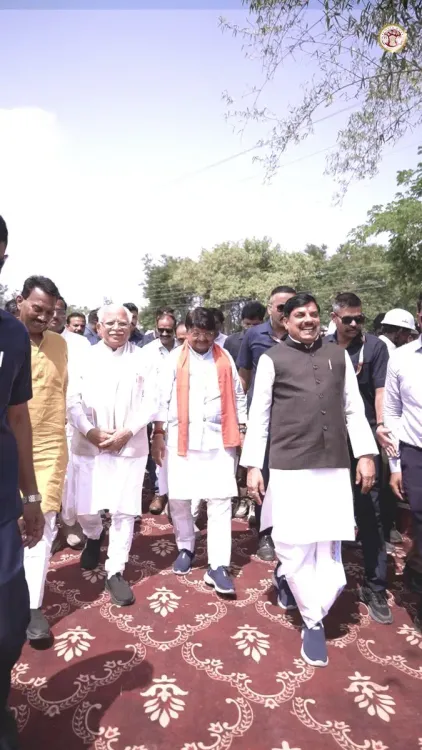
Chief Minister Dr. Mohan Yadav and Union Minister Manohar Lal Khattar jointly inspected Simhastha 2028 development works in Ujjain on 20 June 2026, signalling active state-Centre coordination for the 12-yearly Kumbh Mela expected to draw tens of millions of pilgrims.
Key Takeaways
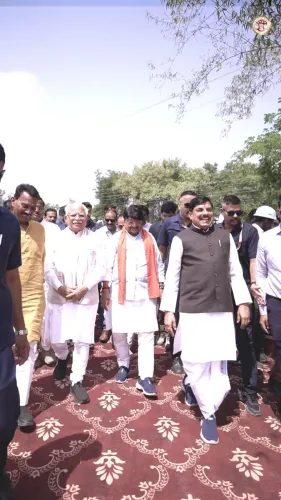
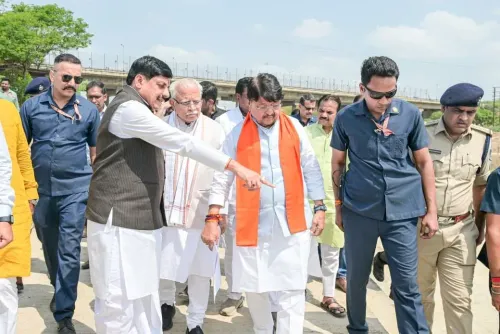
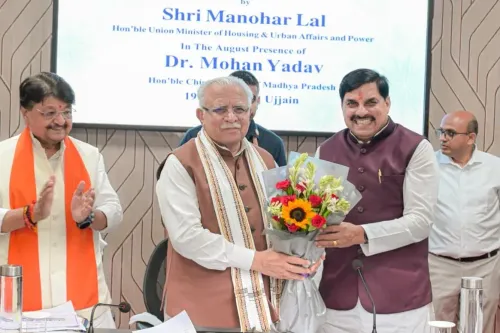
Mohan Yadav and Union Minister Manohar Lal Khattar jointly inspected Simhastha 2028 development works in Ujjain on 20 June 2026 .
Simhastha is held in Ujjain on a 12-year cycle and is expected to attract tens of millions of pilgrims in 2028.
Preparations build on infrastructure investments made for Simhastha 2016 , including riverfront ghats, roads, and sanitation networks.
The joint inspection reflects active coordination between the Madhya Pradesh government and the Union government on logistics and funding.
Key stakeholders include Ujjain residents , local traders , and pilgrims from across India and abroad.
Further high-level reviews and central funding announcements are expected as 2028 approaches.
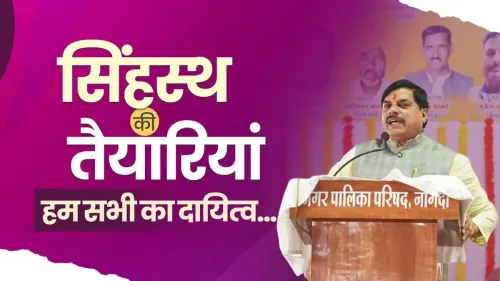
The Chief Minister's Office of Madhya Pradesh announced on Saturday, 20 June 2026 that Chief Minister Dr. Mohan Yadav and Union Minister Manohar Lal Khattar jointly inspected ongoing development works in Ujjain for Simhastha 2028, the next edition of the grand Kumbh Mela held in the ancient city every twelve years.
Context
The Chief Minister's Office described the upcoming event as 'alaukik aastha ka bhavy swaroop' — 'a magnificent manifestation of transcendental faith' — underscoring the scale of spiritual significance attached to Simhastha. The joint inspection by a state and a central minister signals active coordination between the Madhya Pradesh government and the Union government at this early preparatory stage, more than two years before the mela is scheduled to take place.
Policy Backdrop
Simhastha is held in Ujjain on a 12-year cycle, making it one of four rotating Kumbh Mela sites alongside Prayagraj, Haridwar, and Nashik. The previous edition, Simhastha 2016, triggered multi-year investments by both the state and the Centre in riverfront ghats, roads, drainage, and sanitation infrastructure — much of which is now being expanded and upgraded for 2028. Indian states routinely coordinate with the Union government on logistics, temporary infrastructure, and crowd-management for these events, drawing on central schemes as well as state budgets.
The scale of preparation reflects the enormous footfall these gatherings attract. Simhastha consistently draws tens of millions of pilgrims over its duration, placing extraordinary demands on urban infrastructure, accommodation, transport, and public health systems in and around Ujjain.
Stakeholders and Impact
The inspection directly concerns Ujjain residents, who live with both the disruption and the economic opportunity that large-scale pre-mela construction brings. Local traders and hospitality businesses stand to benefit significantly from the surge in pilgrims, while the broader religious tourism ecosystem of Madhya Pradesh is expected to receive a sustained boost in the run-up to and during the event. Heritage conservation at the city's historic ghats along the Shipra river is also a key dimension of the preparatory works.
Pilgrims from across India and the Indian diaspora abroad represent the primary stakeholders, as the quality of infrastructure — from sanitation and crowd corridors to accommodation and transport links — will determine the safety and experience of the gathering. The involvement of Union Minister Khattar points to potential central funding flows and inter-ministerial coordination on national highways and rail connectivity to Ujjain.
What's Next
With Simhastha 2028 still over two years away, the focus in the near term will be on the pace and completion of infrastructure projects — ghats, roads, temporary facility zones, and sanitation networks. Progress reports on these works, along with any fresh central funding announcements, will be closely watched by both state planners and the communities that depend on the mela economy. The joint inspection by Dr. Mohan Yadav and Manohar Lal Khattar sets the tone for an intensifying phase of preparation that will likely see further high-level reviews as 2028 approaches.
Point of View
And the 2028 edition offers a similar opportunity. The early inspection, more than two years out, suggests the state is keen to avoid the last-minute scrambles that have dogged past Kumbh preparations elsewhere. Sustained central engagement will be the real test of whether the coordination seen today translates into on-the-ground delivery.
NationPress
20 Jun 2026
Frequently Asked Questions
What is Simhastha 2028?
Simhastha 2028 is the next edition of the Kumbh Mela held in Ujjain, Madhya Pradesh, on a 12-year cycle. It is expected to attract tens of millions of pilgrims and is one of four rotating Kumbh Mela sites in India alongside Prayagraj, Haridwar, and Nashik.
Who inspected the Simhastha 2028 works in Ujjain?
Chief Minister Dr. Mohan Yadav of Madhya Pradesh and Union Minister Manohar Lal Khattar jointly inspected the ongoing development works in Ujjain on 20 June 2026.
What kind of infrastructure is being built for Simhastha 2028 in Ujjain?
Preparations include upgrades to riverfront ghats along the Shipra river, roads, sanitation networks, drainage, and temporary facilities to handle the massive pilgrim footfall expected during the mela.
When was the last Simhastha Kumbh Mela held in Ujjain?
The previous Simhastha was held in Ujjain in 2016, which triggered significant state and central investments in urban infrastructure that are now being expanded for the 2028 edition.
Why is the Union government involved in Simhastha 2028 preparations?
Indian states routinely coordinate with the Union government on Kumbh Mela logistics, crowd management, and infrastructure funding. Union Minister Manohar Lal Khattar's participation in the inspection signals active central support for the Ujjain preparations.