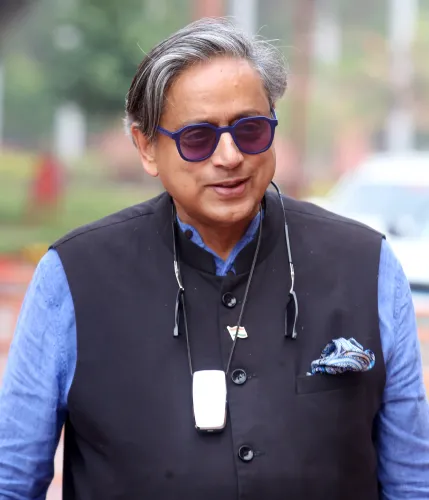
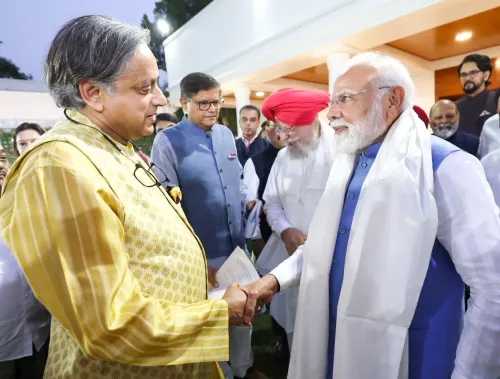
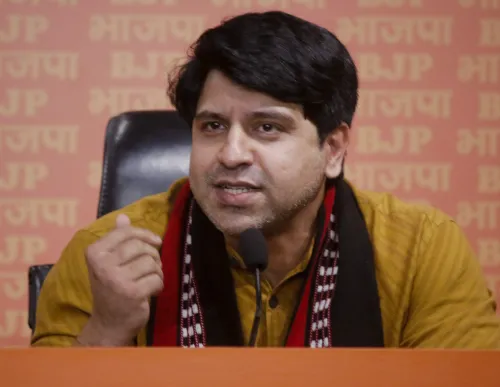
Tharoor Defends Claim on Modi's G7 Remarks, Cites Reports
Synopsis
Congress MP Dr. Shashi Tharoor has defended his reference to PM Modi's G7 remarks, saying he relied on widely published reports and a Google Gemini summary — not personal hearing — after critics accused him of misrepresenting the Prime Minister.
Key Takeaways
Shashi Tharoor clarified on June 20, 2026 that his reference to PM Modi's G7 remarks was based on published media reports, not a personal account.
Tharoor cited both an external report link and a Google Gemini AI-generated summary to support his position.
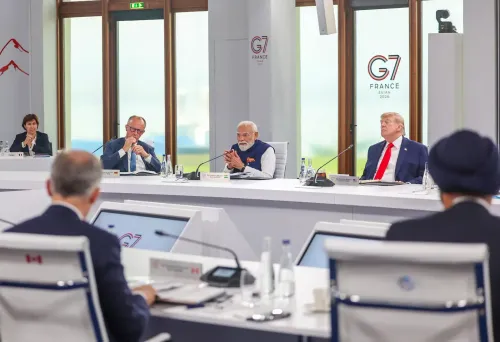
The dispute centres on remarks attributed to Prime Minister Narendra Modi at the G7 Summit , the details of which remain unconfirmed by an official government transcript.
India has attended G7 summits as a guest invitee since 2019 , with participation forming a key plank of its multi-alignment diplomacy.
The episode highlights growing use of AI tools such as Google Gemini in Indian political fact-checking and public debate.
An official read-out from the Ministry of External Affairs could resolve the factual dispute over Modi's precise remarks.
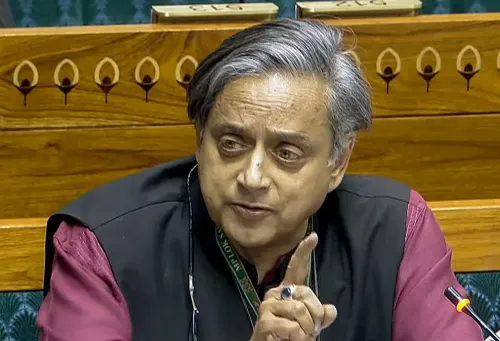
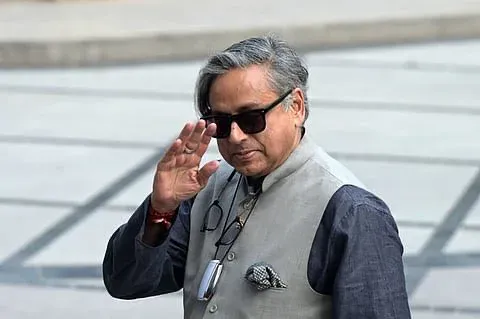
Congress MP Dr. Shashi Tharoor on Saturday, June 20, 2026, pushed back against critics who accused him of misrepresenting Prime Minister Narendra Modi's statements at the G7 Summit, clarifying that his remarks were based on widely published media reports and not a personal account of what he heard.
Context
Tharoor, in an earlier intervention, had referenced remarks attributed to Prime Minister Modi at the G7. Critics — apparently including ruling-party supporters — challenged him, suggesting he had fabricated or misheard the Prime Minister's words. In his response, the Thiruvananthapuram MP was unambiguous: 'I was merely alluding to widely published reports about his remarks.'
To buttress his position, Tharoor pointed to an external report link and also cited a summary generated by Google Gemini, the AI assistant, which he said corroborated the substance of the remarks attributed to Modi at the summit. The post cuts off mid-sentence on the Gemini quote, but its inclusion signals Tharoor's intent to rely on verifiable, third-party sources rather than personal assertion.
Policy Backdrop
India has participated in G7 summits as a guest invitee since 2019, with the arrangement becoming a settled feature of New Delhi's multi-alignment foreign policy. Prime Minister Modi's appearances at these forums — most notably at the Hiroshima G7 in May 2023 — have drawn both domestic applause and scrutiny over India's positioning on global issues.
Political exchanges over the precise wording or emphasis of Modi's remarks at international forums are not new. Opposition MPs, particularly those with foreign-policy expertise, have frequently flagged gaps between official government read-outs and independent media accounts of the Prime Minister's statements abroad. Tharoor, a former UN Under-Secretary-General, is among the most prominent voices in this space.
Stakeholders and Impact
The dispute reflects a broader tension between the government's official communication machinery and opposition attempts to hold it accountable on foreign-policy messaging. When a senior opposition MP cites an AI-generated summary alongside published reports, it also highlights the growing role of AI tools in political fact-checking and public discourse in India.
For ruling-party supporters, the episode is an opportunity to question the credibility of opposition commentary on foreign affairs. For Tharoor and the Indian National Congress, it is a chance to press the government on transparency around what India's leadership says — and commits to — at multilateral forums.
What's Next
Attention will now turn to whether the Ministry of External Affairs releases an official transcript or detailed read-out of Prime Minister Modi's remarks at the G7, which would settle the factual dispute. In the absence of such a document, the exchange is likely to continue in Parliament and on social media. Tharoor's willingness to cite AI-generated summaries as supporting evidence may itself become a point of debate, raising questions about the evidentiary standards acceptable in political discourse.
Point of View
He shifts the burden of rebuttal onto the government to produce an official transcript. The episode fits a recurring pattern in Indian politics where the absence of proactive, detailed foreign-policy read-outs creates space for competing narratives. The invocation of Google Gemini as a corroborating source is notable — it signals that AI-generated content is entering the evidentiary toolkit of Indian political debate, with implications for how misinformation and accountability claims are adjudicated. If the Ministry of External Affairs does not release a full transcript, the opposition will likely keep this controversy alive as an example of opacity in the government's international communications.
NationPress
20 Jun 2026
Frequently Asked Questions
What did Shashi Tharoor say about PM Modi's G7 remarks?
Tharoor clarified that he was referring to widely published reports about Modi's remarks at the G7, and had not personally heard the Prime Minister say those words. He shared an external report and a Google Gemini summary to support his claim.
What is the G7 and why does India attend it?
The G7 is a grouping of seven major advanced economies. India is not a permanent member but has been invited as a guest to G7 summits since 2019 as part of the forum's outreach programme, reflecting India's growing global standing.
Has India attended the G7 Summit before?
Yes. India has participated in G7 summits as a guest invitee since 2019. A notable recent appearance was Prime Minister Modi's attendance at the Hiroshima G7 Summit in May 2023.
Why is Tharoor's use of Google Gemini significant?
Tharoor cited a Google Gemini AI-generated summary as supporting evidence for his claim, marking one of the more prominent instances of an Indian opposition MP using an AI tool as part of a political fact-checking argument in a public forum.
Will the government release an official transcript of Modi's G7 remarks?
No official transcript has been cited in this exchange. The Ministry of External Affairs typically issues press releases or read-outs after major multilateral engagements, and such a document would be the most authoritative way to resolve the dispute over what exactly was said.