CM Mohan Yadav Links BNS Rollout to MP Police Welfare Push

Synopsis
MP Chief Minister Mohan Yadav has linked the Modi government's landmark replacement of British-era criminal laws — including the Bharatiya Nyaya Sanhita — to a state-level push for expanded police welfare and infrastructure in Madhya Pradesh.
Key Takeaways
Parliament enacted the Bharatiya Nyaya Sanhita, Bharatiya Nagarik Suraksha Sanhita, and Bharatiya Sakshya Adhiniyam in December 2023 , with all three in force from July 2024 .
CM Mohan Yadav publicly connected these central legal reforms to Madhya Pradesh's commitment to police welfare and facility expansion.
The new codes replace over 160 years of colonial-era criminal law including the Indian Penal Code.
The statement reflects a broader pattern of BJP-governed states aligning with the Centre's legal modernisation narrative.
Police training and infrastructure upgrades under the new criminal laws in MP remain the key deliverable to watch.
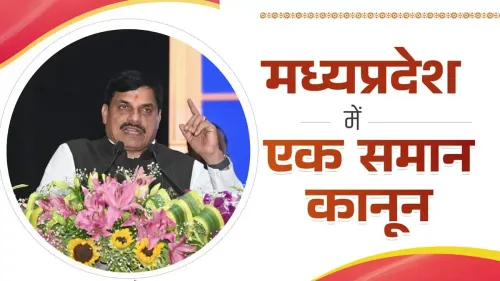
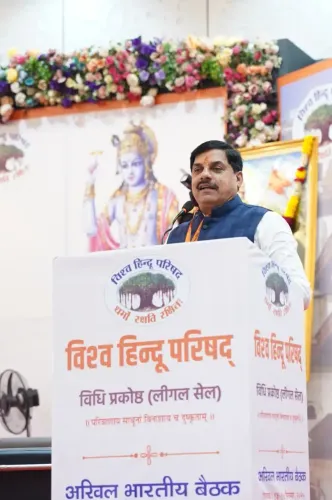
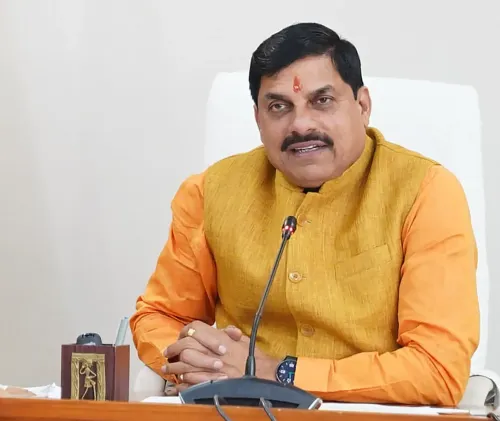
India's criminal justice system is undergoing its most sweeping overhaul since independence — and Madhya Pradesh Chief Minister Dr. Mohan Yadav wants his state's police force at the centre of that transformation. On Saturday, August 1, 2026, the Chief Minister's Office of Madhya Pradesh posted a statement from CM Yadav tying the Centre's landmark legal reforms directly to the state government's ongoing commitment to police welfare and modernisation.
From Colonial Statute Book to Bharatiya Nyaya Sanhita
The backdrop is significant. Parliament enacted three new criminal codes in December 2023 — the Bharatiya Nyaya Sanhita (BNS), the Bharatiya Nagarik Suraksha Sanhita (BNSS), and the Bharatiya Sakshya Adhiniyam (BSA) — replacing the Indian Penal Code, the Code of Criminal Procedure, and the Indian Evidence Act respectively. All three came into force from July 2024, ending over 160 years of colonial-era criminal law. CM Yadav's statement frames this as a defining achievement of Prime Minister Narendra Modi's tenure: 'bhavishya ki chunautiyon ke anusar Bharat tezi se badal raha hai' — 'India is changing rapidly in accordance with the challenges of the future.'
What Madhya Pradesh Is Promising Its Police Force
CM Yadav explicitly linked the Centre's legal modernisation to a state-level commitment: the Madhya Pradesh government is focused on expanding facilities and welfare measures for the Madhya Pradesh Police. The statement signals that the state sees police welfare not as a separate agenda but as integral to implementing the new legal framework on the ground. Officers enforcing the BNS and BNSS need training, infrastructure, and institutional support — and Yadav is publicly committing to providing it.
Centre-State Alignment on Law Enforcement Modernisation
This is a pattern playing out across BJP-governed states: as the Centre rewrites the rulebook, state governments amplify the message by spotlighting local implementation steps. For Madhya Pradesh, that means positioning police welfare as both a governance priority and a delivery mechanism for New Delhi's justice reform agenda. The next concrete test will be how quickly the state rolls out police training programmes and infrastructure upgrades calibrated to the new codes.
The laws have changed. The question now is whether the machinery enforcing them catches up — and CM Yadav is staking his government's credibility on the answer being yes.
Point of View
The BJP government in Bhopal reinforces both its own credentials and the Modi government's legacy in one move. The Bharatiya Nyaya Sanhita's July 2024 implementation has given state governments a ready policy peg, and Madhya Pradesh is using it deliberately. The real test, however, lies in execution — police welfare pledges are easy to announce and hard to audit, and the new criminal codes place significant new procedural burdens on state police forces. Whether Madhya Pradesh backs the rhetoric with measurable infrastructure investment will determine whether this is governance or optics.
NationPress
1 Aug 2026
Frequently Asked Questions
What is the Bharatiya Nyaya Sanhita and when did it come into effect?
The Bharatiya Nyaya Sanhita (BNS) is India's new criminal code that replaced the British-era Indian Penal Code. It was enacted by Parliament in December 2023 and came into force from July 2024, along with the Bharatiya Nagarik Suraksha Sanhita and Bharatiya Sakshya Adhiniyam.
What did CM Mohan Yadav say about Madhya Pradesh police welfare?
CM Mohan Yadav stated that the Madhya Pradesh government is committed to the welfare of the police department and is focused on expanding facilities for police personnel, linking this to the broader legal modernisation drive under PM Modi.
Which colonial-era laws did the Modi government repeal?
The Modi government replaced the Indian Penal Code (1860), the Code of Criminal Procedure (1973), and the Indian Evidence Act (1872) with three new Indian codes enacted in December 2023, ending over 160 years of British-era criminal law.
What is the role of state governments in implementing the new criminal codes?
State governments are responsible for training their police forces, upgrading infrastructure, and ensuring local law enforcement agencies can effectively operate under the new procedural and evidentiary frameworks established by the BNS, BNSS, and BSA.
Who is Mohan Yadav and what is his position?
Dr. Mohan Yadav is the Chief Minister of Madhya Pradesh. He has been in office since December 2023 and represents the BJP government in the state.