CM Mohan Yadav links MP fisheries to food processing, MSME push
Synopsis
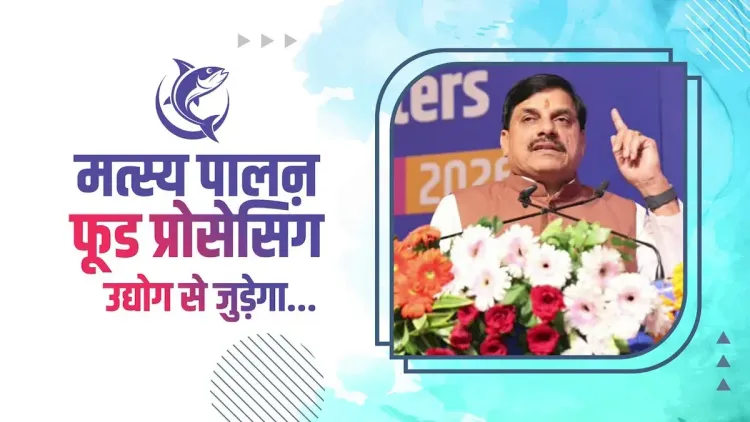
Madhya Pradesh CM Dr. Mohan Yadav announced plans to link fisheries with food processing industries, extend MSME incentives to integrated fish enterprises, and provide land and facilities under the state's Matsya Udyog Niti-2026 — a significant push to industrialise the state's freshwater fishing sector.
Key Takeaways
Fisheries-food processing link: Madhya Pradesh will formally connect fish farming to food processing industries to drive value addition.
MSME incentives: Integrated fish enterprises will qualify for promotion, incentives, and financing under the MSME framework.
Land allocation: The state will provide land and related facilities under Matsya Udyog Niti-2026 .
National foundation: The move builds on the Centre's Pradhan Mantri Matsya Sampada Yojana launched in 2020 .
Key beneficiaries: Fish farmers and MSME-scale food processing units across Madhya Pradesh's river and reservoir belts.
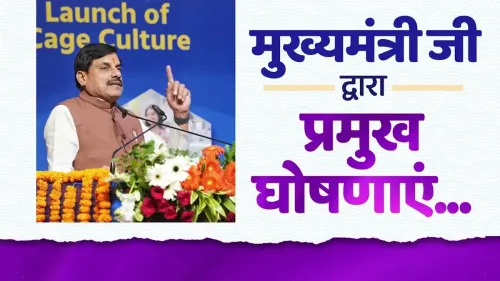
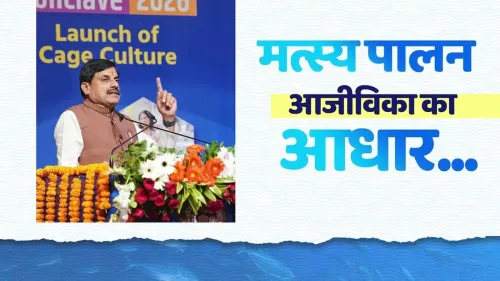
Madhya Pradesh is about to rewire its fisheries economy from the ground up. Chief Minister Dr. Mohan Yadav announced on Friday, October 23, 2026, that the state will formally integrate fish farming with food processing industries — unlocking MSME-grade incentives and state-allocated land for integrated fish enterprises under a dedicated policy framework.
In his post, CM Yadav stated: 'Fisheries in Madhya Pradesh will be linked to the food processing industry, integrated fish enterprises will be given promotion and incentives under MSME, and land and other facilities will be provided under the Matsya Udyog Niti-2026 [Fish Industry Policy-2026].' The announcement signals a structural shift — moving fish farming out of the subsistence column and into organised industrial value chains.
From pond to plant: the MSME fisheries model
The logic is straightforward but the stakes are real. By classifying integrated fisheries units as MSMEs, fish farmers and processors gain access to credit guarantees, capital subsidies, and priority lending that were previously reserved for manufacturing and light industry. Madhya Pradesh is a landlocked state — its fisheries are freshwater-dependent — which makes value addition through processing units, cold chains, and branded packaging the primary lever for income growth.
Indian states have increasingly pursued this model: anchor primary producers to downstream processing and let the industrial incentive architecture do the heavy lifting. The difference here is the explicit land-allocation commitment, which removes one of the most persistent bottlenecks for first-generation fish entrepreneurs looking to build processing facilities.
Matsya Udyog Niti-2026 and the national fisheries backbone
The state policy draws on momentum from the Centre's Pradhan Mantri Matsya Sampada Yojana, launched in 2020, which channelled investment into fish production infrastructure, cold-chain logistics, and value-chain development across states. Madhya Pradesh's Matsya Udyog Niti-2026 appears designed as a state-level translation of that national framework — giving local fish farmers a single policy window for land, finance, and market linkages rather than navigating multiple departments.
The direct beneficiaries are fish farmers and MSME-scale food processing units across the state's river basins and reservoir belts — communities that have historically lacked the institutional support available to crop farmers.
What the rollout will reveal
The announcement defines the intent; the implementation calendar will define the impact. Key details still to emerge include the specific incentive rates and subsidy slabs for integrated fish processing units, the mechanism for land allocation under the policy, and the timeline for MSME classification to take effect for existing fish farming cooperatives and individual entrepreneurs.
For Madhya Pradesh's fish farming communities, the policy represents a genuine industrial upgrade — if the bureaucratic machinery can execute at the speed the announcement implies.
Point of View
Embedding fisheries within the MSME architecture could meaningfully scale incomes along river and reservoir communities that have remained outside formal industrial policy. The critical test will be whether land allocation under Matsya Udyog Niti-2026 is executed transparently and quickly enough to attract private processing investment rather than stalling at the departmental level. If delivered, it positions CM Yadav as a reformer who moved fisheries out of welfare-scheme territory and into the commercial mainstream.
NationPress
23 Oct 2026
Frequently Asked Questions
What is Madhya Pradesh's Matsya Udyog Niti-2026?
Matsya Udyog Niti-2026 is Madhya Pradesh's fish industry policy framework announced by CM Dr. Mohan Yadav that aims to integrate fisheries with food processing, extend MSME incentives to integrated fish enterprises, and provide land and facilities to fish industry operators.
What MSME benefits will fish farmers in Madhya Pradesh get?
Under the new policy, integrated fisheries units in Madhya Pradesh will be eligible for MSME-category promotion, financial incentives, and subsidies — the same support available to small manufacturing and processing businesses.
How does this relate to the Pradhan Mantri Matsya Sampada Yojana?
The Pradhan Mantri Matsya Sampada Yojana, launched by the Central Government in 2020, provides the national framework for fisheries infrastructure and value-chain development. Madhya Pradesh's Matsya Udyog Niti-2026 is a state-level policy designed to align with and leverage that central scheme.
Who benefits from linking fisheries to food processing in Madhya Pradesh?
The primary beneficiaries are fish farmers and MSME-scale food processing units across Madhya Pradesh, particularly those operating around the state's river basins and reservoir areas.
What still needs to be announced about the MP fisheries policy?
The specific incentive rates, subsidy slabs, land allocation mechanisms, and timelines for MSME classification of existing fish farming cooperatives have not yet been detailed and are expected to follow as the policy rolls out.