CM Mohan Yadav Meets Natural Farmers in Jhabua's Thandla
Synopsis
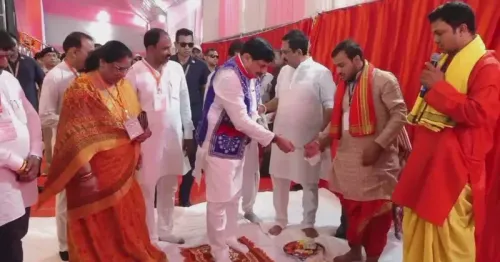
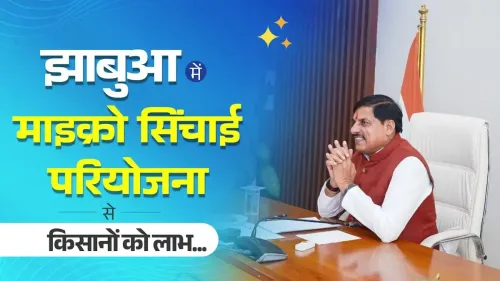
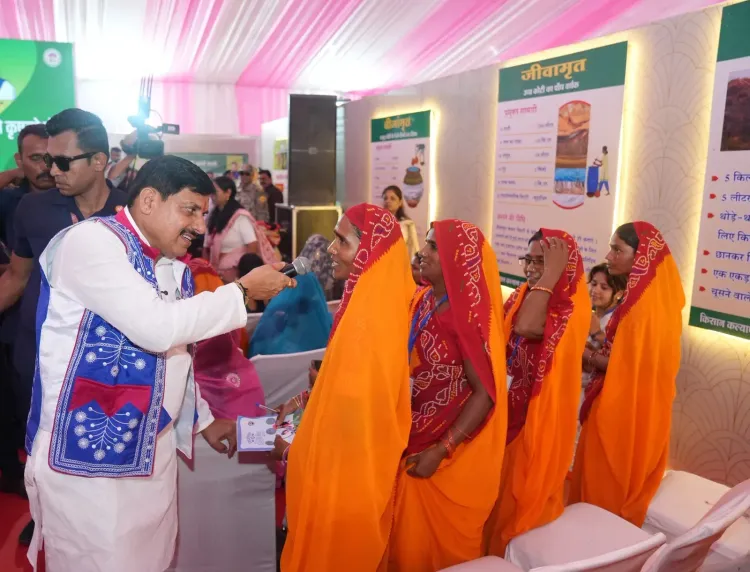
Madhya Pradesh Chief Minister Dr. Mohan Yadav held a farmer dialogue at Thandla, Jhabua on 31 July 2026, meeting natural farming practitioners from multiple districts and calling natural farming the best route to health and higher income at lower cost.
Key Takeaways
Mohan Yadav visited Thandla, Jhabua district on 31 July 2026 to engage with natural farming practitioners.
Farmers from multiple districts of Madhya Pradesh participated in the dialogue.
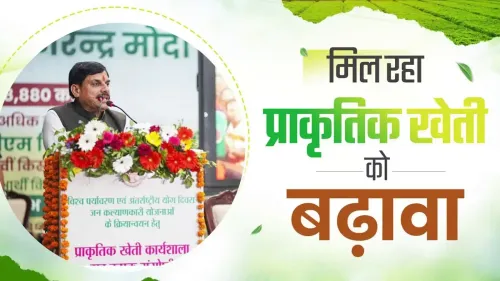
The CM described natural farming as 'the best source of health and income' and praised farmer innovation.
Jhabua is a tribal-dominated district where smallholder farmers face acute input-cost pressures, making natural farming's low-cost model especially relevant.
The event aligns with both state-level natural farming programmes and the central government's Paramparagat Krishi Vikas Yojana .
The dialogue format — cross-district practitioners sharing techniques — functions as a peer-learning extension model ahead of the next sowing season.
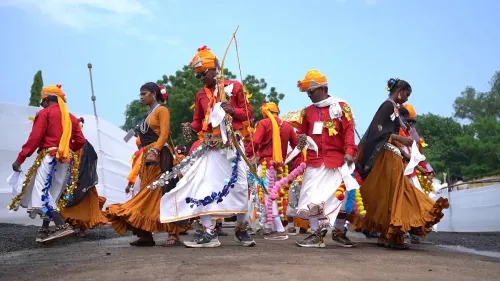
In the tribal heartland of western Madhya Pradesh, Chief Minister Dr. Mohan Yadav sat down on Friday, 31 July 2026 with progressive farmers from across the state who have turned their backs on chemical inputs — and, by their own accounts, turned a profit doing it. The venue was Thandla, Jhabua district, and the message was pointed: natural farming is no longer a fringe experiment.
Posting on X after the interaction, Dr. Yadav wrote: 'Prakritik kheti sehat aur aamdani ka sabse accha srot hai' — 'Natural farming is the best source of health and income.' He described conversations with 'unnatshill bhai aur behnon' (progressive brothers and sisters) drawn from multiple districts, praising their efforts on income growth, innovation, and natural agriculture techniques. 'Natural farming,' he added, 'is becoming an effective medium for increasing production at low cost and raising income.'
Why Thandla, Why Now
Jhabua is one of Madhya Pradesh's most tribal-dominated districts, where smallholder and subsistence farming is the norm and input costs bite hardest. Holding a farmer dialogue here is a deliberate signal — natural farming's promise of lower costs and higher margins resonates most acutely where chemical fertiliser bills can erase an entire season's gain. The choice of Thandla as the venue places the conversation squarely among the communities most vulnerable to agrarian stress.
The National Push Behind the State Programme
Madhya Pradesh's natural farming push sits inside a larger national architecture. The central government's Paramparagat Krishi Vikas Yojana (PKVY) has channelled funds toward organic and natural farming clusters across India, and several states have built state-level programmes on top of it. MP has run its own organic and natural farming initiatives alongside PKVY, targeting soil health, reduced chemical dependency, and farmer income. Dr. Yadav's Thandla visit — with farmers from multiple districts assembled in one place — suggests the state is using peer-exchange events as a grassroots extension tool, letting successful practitioners make the case that textbooks and officials cannot.
Innovation on the Farm Floor
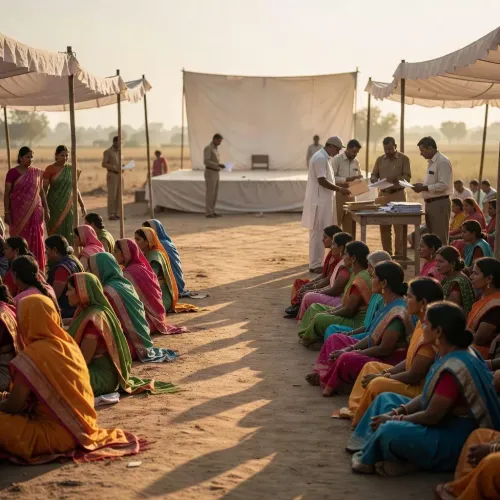
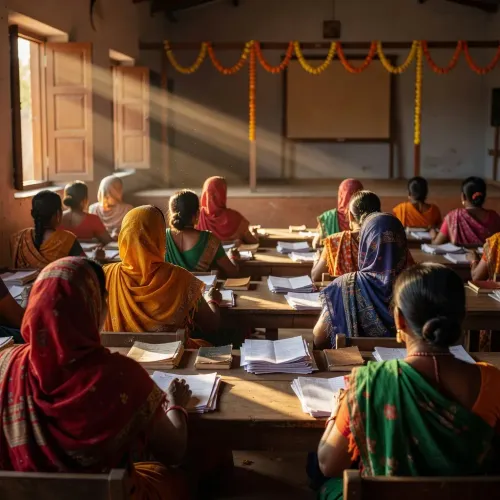
The CM specifically flagged innovation alongside income gains — an acknowledgement that natural farming in practice is not simply a return to pre-Green Revolution methods but an evolving set of techniques: bio-inputs, cow-dung-based formulations, intercropping models, and water-conservation practices. The farmers at Thandla, drawn from diverse agro-climatic zones within the state, represent a living demonstration network. Their collective presence at a single dialogue is itself a model — cross-pollinating what works before the next sowing season begins.
The kicker is simple arithmetic: if low-cost natural inputs can hold yields steady while slashing the fertiliser bill, the income equation flips — and for Jhabua's tribal farmers, that arithmetic is not academic. It is survival.
Point of View
Income-linked agricultural narratives rather than abstract welfare rhetoric. The emphasis on 'innovation' alongside cost reduction also signals an attempt to reframe natural farming not as a nostalgic retreat but as a forward-looking productivity model, which is politically safer ground. Whether the state follows with measurable budget allocations or training infrastructure will determine if this dialogue translates into durable policy momentum.
NationPress
1 Aug 2026
Frequently Asked Questions
What is natural farming and why is Madhya Pradesh promoting it?
Natural farming relies on bio-inputs and on-farm resources instead of synthetic fertilisers and pesticides, lowering input costs and improving soil health. Madhya Pradesh has promoted it alongside central schemes like Paramparagat Krishi Vikas Yojana to raise farmer incomes and reduce chemical dependency.
Where did CM Mohan Yadav meet natural farmers on 31 July 2026?
The dialogue was held at Thandla , a tehsil in Jhabua district in western Madhya Pradesh, a tribal-dominated region where smallholder farming is common.
What did CM Mohan Yadav say about natural farming?
He called natural farming 'the best source of health and income' and said it is becoming an effective medium for increasing production at low cost while raising farmer income.
What is Paramparagat Krishi Vikas Yojana (PKVY)?
PKVY is a central government scheme that supports organic and natural farming clusters across India, funding training, certification, and market linkages for farmers who shift away from chemical inputs.
Which district is Thandla located in?
Thandla is a tehsil in Jhabua district , situated in the western part of Madhya Pradesh and known for its large tribal farming population.