CM Mohan Yadav: MP Leads Nation in Horticulture GI Tags
Synopsis
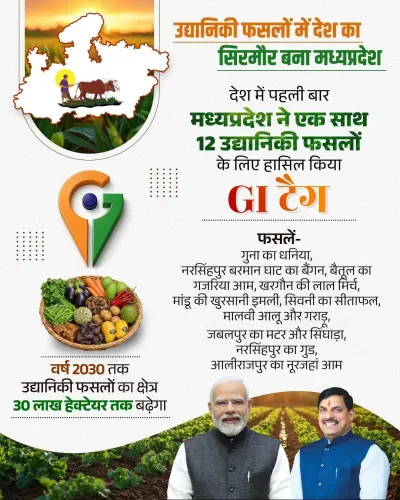
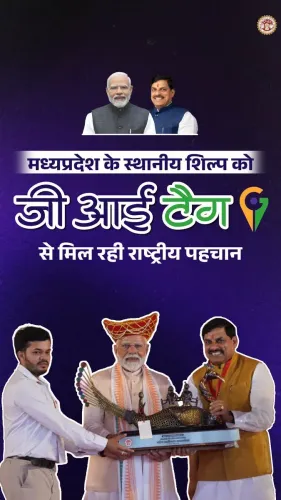
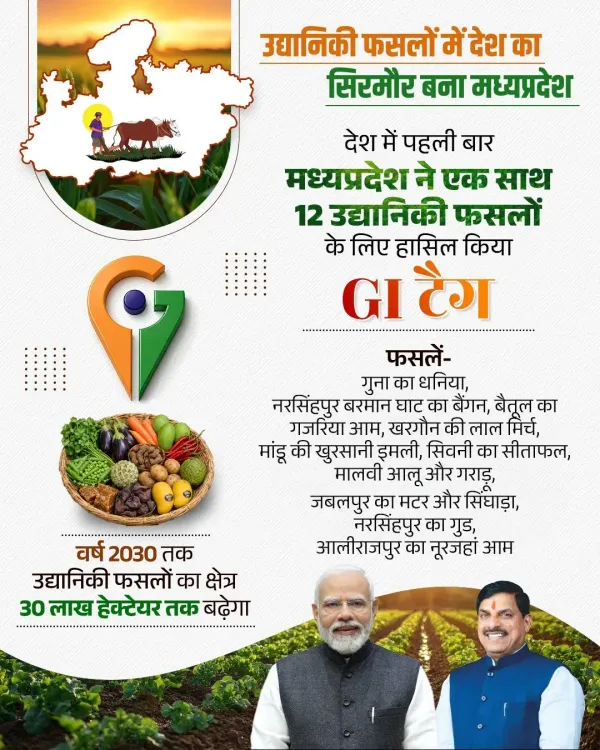
Madhya Pradesh Chief Minister Dr. Mohan Yadav announced that 12 horticultural crops from the state received GI tags simultaneously, calling it a national first. Proposals for 7 more regional products, including Ujjain tamarind and Burhanpur jalebi, have also been submitted.
Key Takeaways
12 Madhya Pradesh horticultural crops have received Geographical Indication tags simultaneously, described by CM Dr.
Mohan Yadav as a first in India.
Tagged products include Jabalpur's singhada (water chestnut) and Seoni's sitafal (custard apple), among others.
Proposals have been submitted for 7 additional products : Ujjain imli, Alirajpur achari aam, Malwa safed pyaz, Jhabua dal-paniya, Mandsaur desi jeera, Burhanpur jalebi, and Ashoknagar khirni.
GI tags are governed by the Geographical Indications of Goods (Registration and Protection) Act, 1999 and provide legal protection to region-specific products.
The recognition is expected to benefit horticulture farmers and local producers across multiple Madhya Pradesh districts through improved market access and price realisation.
The announcements are framed under the #ViksitMadhyaPradesh development initiative championed by the state government.
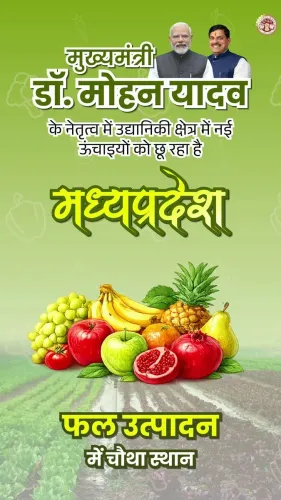
Madhya Pradesh Chief Minister Dr. Mohan Yadav on Saturday, 4 July 2026, announced that Madhya Pradesh has emerged as the country's foremost state in horticultural crops, with 12 crops receiving Geographical Indication (GI) tags simultaneously — claimed to be a first-of-its-kind achievement in India. The Chief Minister also revealed that proposals have been submitted to secure GI tags for several additional regional products.
Context
In his post, Dr. Yadav declared, 'उद्यानिकी फसलों में देश का सिरमौर बना मध्यप्रदेश' ('Madhya Pradesh has become the crown of the nation in horticultural crops'). He described the simultaneous GI recognition of 12 crops as a moment of pride for the entire state, noting that products from Jabalpur's singhada (water chestnut) to Seoni's sitafal (custard apple) would now establish their identity on the world stage.
The Chief Minister added that proposals have been sent for GI tags for Ujjain's imli (tamarind), Alirajpur's achari aam (pickle mango), Malwa's safed pyaz (white onion), Jhabua's dal-paniya, Mandsaur's desi jeera (indigenous cumin), Burhanpur's jalebi, and Ashoknagar's khirni.
Policy Backdrop
Geographical Indication tags are granted under the Geographical Indications of Goods (Registration and Protection) Act, 1999, which provides legal protection to products that have a specific geographical origin and possess qualities or a reputation tied to that origin. A GI tag prevents unauthorised use of the designation and enables producers to build brand value around their regional specialty.
Across India, states have increasingly pursued GI registrations to protect traditional agricultural and craft products, supporting rural livelihoods and export potential. Madhya Pradesh, a state with diverse agro-climatic zones, has been actively expanding its portfolio of GI-recognised products in recent years, aligning with national goals to commercialise regional heritage.
Stakeholders and Impact
The primary beneficiaries of GI recognition are horticulture farmers and local producers in the districts associated with each product. A GI tag can open access to premium markets, improve price realisation, and protect growers from competition by producers outside the designated region who may attempt to sell inferior goods under the same name.
Products such as Burhanpur's jalebi and Jhabua's dal-paniya represent not just agricultural output but deeply embedded local food traditions. GI status elevates these items from purely local consumption to potential export commodities, which could meaningfully improve incomes in districts like Jhabua and Alirajpur, both of which have significant tribal populations with agrarian livelihoods.
What's Next
The proposals submitted for the second batch of products — including Ujjain's imli, Mandsaur's desi jeera, and Ashoknagar's khirni — will now undergo review by the relevant central authority before formal GI registration is granted. The state government's ability to follow through with dedicated marketing and export linkages for already-tagged products will determine how much economic value the recognition ultimately delivers to farmers.
If Madhya Pradesh successfully converts GI recognition into structured supply chains and market access, the model could serve as a replicable template for other states seeking to leverage their horticultural diversity under the #ViksitMadhyaPradesh development framework.
Point of View
Grassroots-level deliverables ahead of any electoral cycle. The simultaneous recognition of 12 crops — if verified — would represent a significant administrative push, signalling that Madhya Pradesh is moving beyond ad hoc GI applications toward a coordinated horticultural branding programme. The pending proposals for products from tribal-dominated districts like Jhabua and Alirajpur suggest a deliberate effort to extend the GI narrative to economically marginalised communities.
NationPress
4 Jul 2026
Frequently Asked Questions
What is a GI tag and why does it matter for farmers?
A GI tag, granted under India's Geographical Indications of Goods Act 1999, legally certifies that a product originates from a specific region and carries qualities linked to that origin. For farmers, it prevents outsiders from selling inferior goods under the same name and can help command premium prices in domestic and export markets.
Which Madhya Pradesh products have received GI tags recently?
According to CM Dr. Mohan Yadav's announcement, 12 horticultural crops received GI tags, with Jabalpur's singhada and Seoni's sitafal specifically highlighted. Proposals for Ujjain imli, Alirajpur achari aam, Malwa safed pyaz, Jhabua dal-paniya, Mandsaur desi jeera, Burhanpur jalebi, and Ashoknagar khirni have also been submitted.
Is it true that 12 crops got GI tags simultaneously for the first time in India?
CM Dr. Mohan Yadav has claimed this is a first-of-its-kind achievement in India. This claim has not been independently verified and is based solely on the Chief Minister's announcement.
What is the significance of Burhanpur jalebi getting a GI tag proposal?
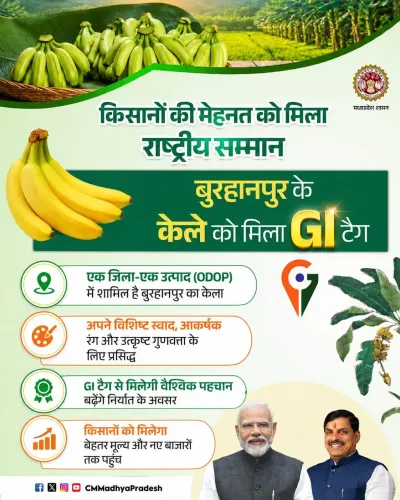
Burhanpur's jalebi is a distinctive local sweet with a preparation method and taste profile tied to the region's culinary tradition. A GI tag would protect this identity, prevent imitation products from using the Burhanpur name, and potentially open premium market and tourism opportunities for local confectioners.
What is Viksit Madhya Pradesh?
Viksit Madhya Pradesh, translated as 'Developed Madhya Pradesh,' is a state government development framework promoted by Chief Minister Dr. Mohan Yadav that emphasises economic growth, cultural heritage promotion, and grassroots welfare initiatives across the state.