CM Mohan Yadav: MP Moving Toward Uniform Civil Code
Synopsis
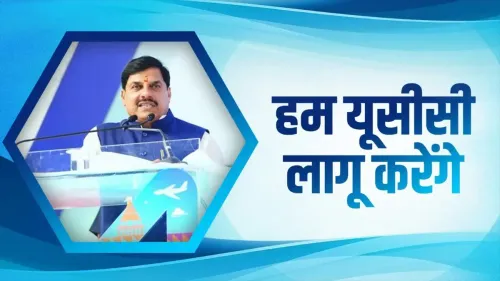
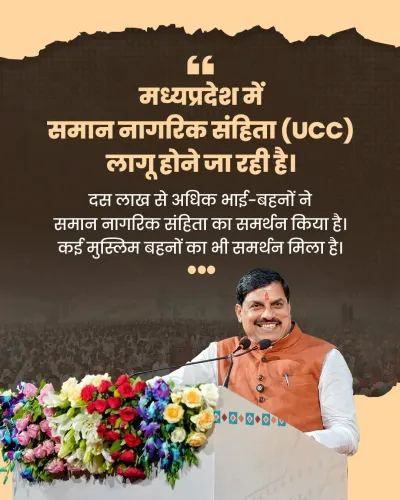
Chief Minister Dr. Mohan Yadav has declared that Madhya Pradesh is moving toward implementing a Uniform Civil Code, invoking Dr. Shyama Prasad Mookerjee's 'One Nation, One Constitution' resolve. The announcement signals a formal policy direction from the BJP-governed state, following Uttarakhand's landmark UCC enactment in 2024.
Key Takeaways
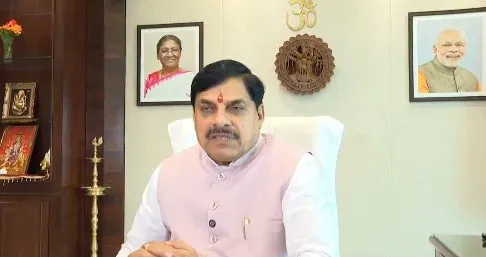
The Chief Minister's Office of Madhya Pradesh announced on 6 July 2026 that the state is advancing toward implementing a Uniform Civil Code .
Mohan Yadav framed the move by invoking Dr.
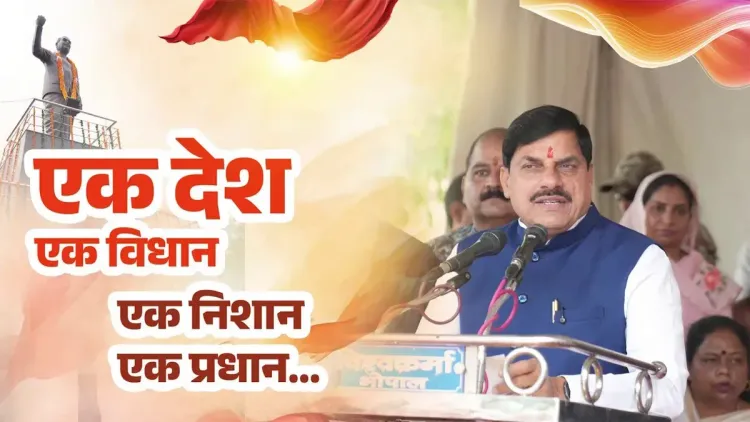
Shyama Prasad Mookerjee's slogan 'Ek Desh, Ek Vidhan, Ek Nishan, Ek Pradhan' ('One Nation, One Constitution, One Symbol, One Prime Minister').
The Uniform Civil Code is enshrined as a directive principle under Article 44 of the Indian Constitution, covering personal laws on marriage, divorce, inheritance, and adoption.
Uttarakhand became the first Indian state to enact a UCC law in February 2024 , providing a legislative precedent for other BJP-ruled states.
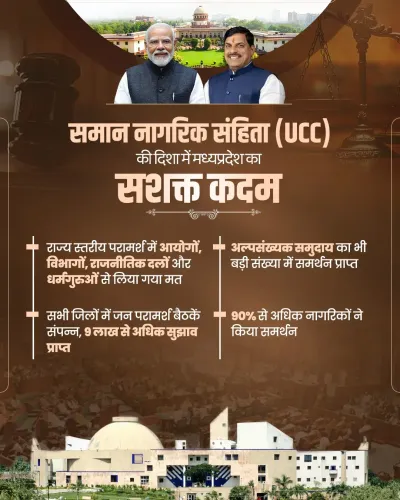
No specific bill, committee, or timeline has been announced yet; the statement signals directional intent from the Madhya Pradesh government.
The move would affect the personal law framework for all communities across a state of over 8 crore residents.
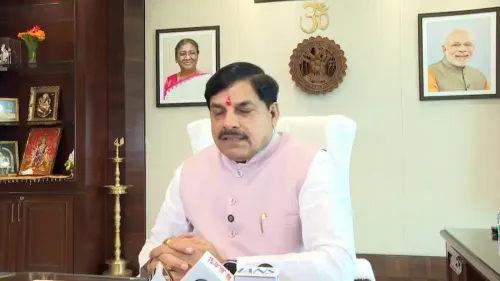
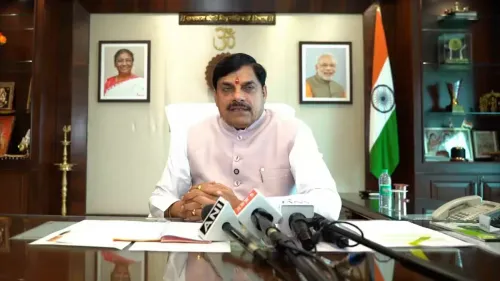
The Chief Minister's Office of Madhya Pradesh announced on Monday, 6 July 2026 that the state is advancing toward the implementation of a Uniform Civil Code (UCC), with Chief Minister Dr. Mohan Yadav invoking the ideological legacy of Dr. Shyama Prasad Mookerjee to frame the move.
CM Yadav stated that Madhya Pradesh is moving forward in the direction of implementing the Uniform Civil Code by internalising the resolve of Dr. Shyama Prasad Mookerjee — 'Ek Desh, Ek Vidhan, Ek Nishan, Ek Pradhan' ('One Nation, One Constitution, One Symbol, One Prime Minister'). The statement was posted from the official CMO handle, signalling a formal policy direction from the state government.
Context
Dr. Shyama Prasad Mookerjee, founder of the Bharatiya Jana Sangh and a central figure in the movement for full constitutional integration of Jammu and Kashmir, popularised the slogan as a call for uniform legal and constitutional application across all parts of India. His ideological legacy has long been central to the BJP's political identity, and invoking it here ties the UCC push explicitly to the party's national-integration narrative. The Uniform Civil Code refers to a common set of personal laws governing marriage, divorce, inheritance, and adoption applicable to all citizens regardless of religion. It finds its constitutional basis in Article 44 of the Indian Constitution, which directs the State to endeavour to secure such a code for all citizens.Policy Backdrop
Uttarakhand became the first Indian state to enact a UCC law in February 2024, following a structured committee process, setting a legislative template for other BJP-governed states. The BJP's election manifestos since 2014 have repeatedly committed to implementing a Uniform Civil Code at the national level, making state-level moves a visible step toward that broader goal. Madhya Pradesh, governed by the BJP, joins a pattern of party-ruled states signalling intent to move on the UCC in the years following Uttarakhand's legislation. The reference to Mookerjee's slogan is consistent with the BJP's framing of the UCC as a matter of national unity and legal uniformity rather than a purely administrative reform.Stakeholders and Impact
The proposed code would affect religious minorities, whose personal laws — governing areas such as marriage and inheritance — currently differ from those applicable to Hindus under codified statutes. Women's organisations have broadly supported a UCC on the grounds that it could standardise protections across communities, while some minority groups and legal practitioners have raised concerns about the process and scope of such legislation. Any enacted code in Madhya Pradesh would apply to the state's population of over 8 crore residents, making it one of the larger implementations of such a framework in India if enacted.What's Next
Observers will watch for the possible formation of an expert drafting committee, the introduction of a bill in the Madhya Pradesh Legislative Assembly, and public consultation rounds — the steps Uttarakhand followed before its own enactment. CM Yadav's statement, framed as a directional commitment rather than an announcement of a specific bill or timeline, suggests the state is in the preparatory phase of the process. How quickly Madhya Pradesh moves from stated intent to legislative action will be a key indicator of the UCC's momentum across BJP-governed states.Point of View
Anchoring a contemporary policy push in the BJP's foundational narrative of national integration. By framing the UCC as a continuation of Mookerjee's resolve rather than a new legislative initiative, the Madhya Pradesh government is positioning the move within a decades-long ideological arc rather than as a reactive or electoral gesture. The announcement follows Uttarakhand's enactment and fits a visible pattern of BJP-governed states building a multi-state UCC momentum ahead of any potential central legislation. The absence of a specific bill or timeline, however, leaves the commitment at the level of stated direction — the gap between that and enacted law will be the real test of political will.
NationPress
6 Jul 2026
Frequently Asked Questions
What is the Uniform Civil Code that Madhya Pradesh wants to implement?
The Uniform Civil Code is a proposed common set of personal laws on marriage, divorce, inheritance, and adoption that would apply to all citizens regardless of religion. It is listed as a directive principle under Article 44 of the Indian Constitution, which asks the State to work toward securing such a code for all citizens.
Which was the first Indian state to implement the Uniform Civil Code?
Uttarakhand became the first Indian state to enact a Uniform Civil Code law in February 2024, following a committee-led drafting process. It has since served as a legislative model for other BJP-governed states considering similar legislation.
Who is Dr. Shyama Prasad Mookerjee and why is he being referenced?
Dr. Shyama Prasad Mookerjee was the founder of the Bharatiya Jana Sangh, a predecessor to the BJP, and a prominent advocate for the full constitutional integration of Jammu and Kashmir. His slogan 'Ek Desh, Ek Vidhan, Ek Nishan, Ek Pradhan' ('One Nation, One Constitution, One Symbol, One Prime Minister') is cited by CM Yadav to connect the UCC push to a broader ideology of legal and constitutional uniformity across India.
What will the Madhya Pradesh Uniform Civil Code mean for religious minorities?
If enacted, the UCC would replace religion-specific personal laws — such as those governing Muslim marriage and inheritance, or tribal customary practices — with a single common framework applicable to all residents of Madhya Pradesh. Women's organisations have generally supported the move for standardising legal protections, while some minority groups and legal experts have raised concerns about the scope and process of drafting such a code.
Has Madhya Pradesh announced a specific UCC bill or committee yet?
As of the 6 July 2026 announcement, CM Yadav has stated a directional intent to move toward the UCC but has not announced a specific draft bill, expert committee, or legislative timeline. Observers expect a committee formation and public consultation process, similar to the steps taken by Uttarakhand before its 2024 enactment.