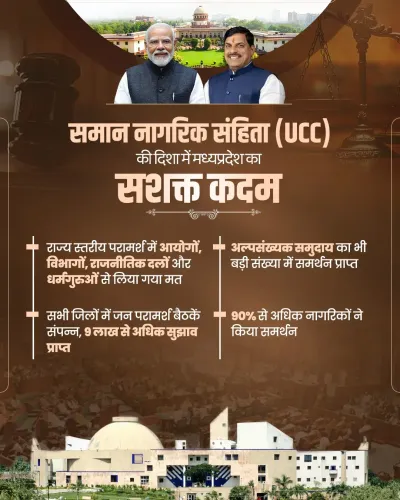
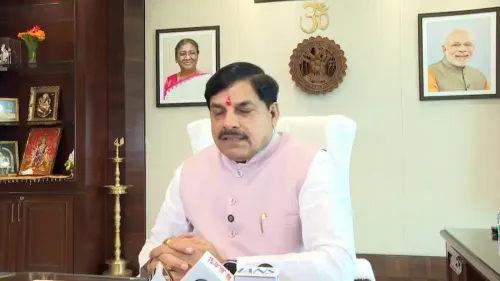
CM Mohan Yadav Outlines Four Pillars of UCC for MP
Synopsis
Chief Minister Dr. Mohan Yadav's office on 19 July 2026 outlined the Uniform Civil Code's objective of equal rights for all citizens and identified four key pillars underpinning Madhya Pradesh's UCC push, continuing the BJP's post-Uttarakhand legislative momentum.
Key Takeaways
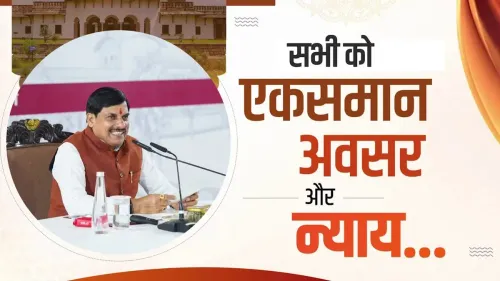
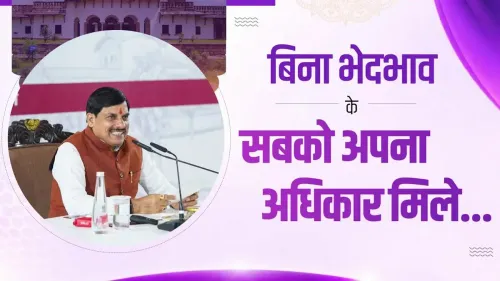
The Chief Minister's Office of Madhya Pradesh on 19 July 2026 publicly articulated the objective of the Uniform Civil Code as ensuring equal rights and a uniform legal system for all citizens.
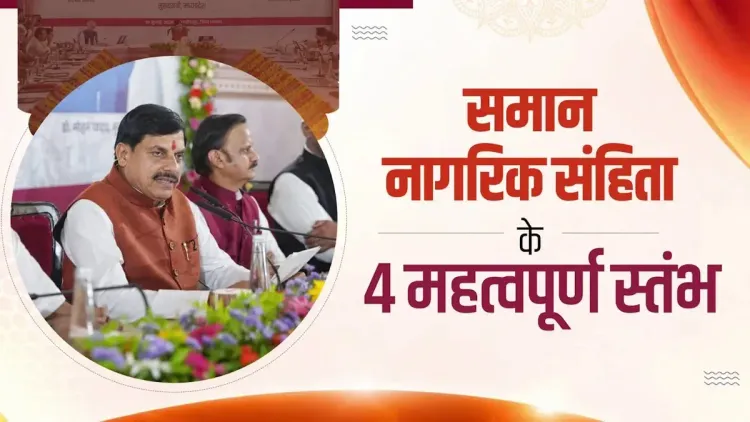
Mohan Yadav stated that the UCC rests on four important pillars , details of which were shared via an accompanying video.
UCC draws its constitutional basis from Article 44 of the Indian Constitution, a Directive Principle of State Policy.
Uttarakhand became the first state to enact a UCC law in February 2024 , serving as a legislative reference point for Madhya Pradesh.
Personal laws covering marriage, divorce, inheritance, and adoption would fall under the ambit of a state UCC.
The BJP has included UCC in its election manifestos and governs both Madhya Pradesh and the Centre.
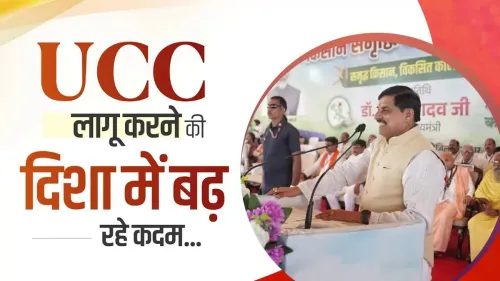
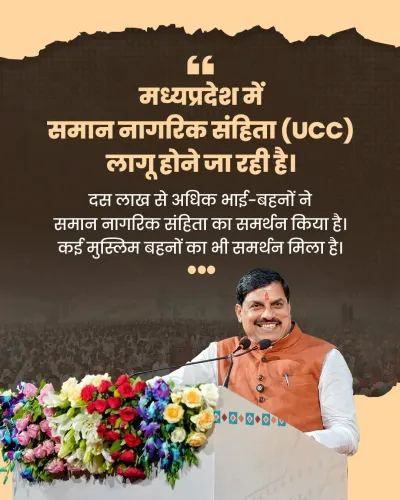
The Chief Minister's Office of Madhya Pradesh, citing Chief Minister Dr. Mohan Yadav, on Sunday, 19 July 2026, outlined the core objectives of the Uniform Civil Code (UCC), stating that its purpose is to ensure equal rights and a uniform legal framework for all citizens of the state.
The post, shared from the official handle of the Chief Minister's Office, declared: 'Samaan Nagarik Sanhita ka uddeshya sabhi nagarikonke liye samaan adhikar aur samaan kanooni vyavastha sunishchit karna hai' ('The objective of the Uniform Civil Code is to ensure equal rights and a uniform legal system for all citizens'). It further stated that UCC rests on four important pillars, accompanied by a video elaborating on those pillars.
Context
The Uniform Civil Code envisions a single set of personal laws — governing marriage, divorce, inheritance, and adoption — applicable uniformly to all citizens irrespective of religion, caste, or community. The concept draws its constitutional mandate from Article 44 of the Indian Constitution, which lists UCC as a Directive Principle of State Policy, directing the State to endeavour to secure such a code for all citizens. The Supreme Court of India has, in multiple rulings since the 1985 Shah Bano case, reiterated the need for a Uniform Civil Code, though its enactment has remained a subject of political and social debate for decades.Policy Backdrop
Uttarakhand became the first Indian state to pass a UCC law in February 2024, under a BJP government, providing what many policy observers regard as a legislative template for other states. Goa remains the only state with a longstanding common civil code, inherited from Portuguese-era laws retained after its integration into India in 1961. The Bharatiya Janata Party (BJP), which governs both Madhya Pradesh and the Centre, has consistently included UCC implementation in its election manifestos. Following Uttarakhand's legislation, BJP-ruled states including Madhya Pradesh and Gujarat have publicly signalled intent to pursue similar frameworks. Personal laws in India fall under concurrent jurisdiction, meaning both Parliament and state legislatures hold legislative competence in the domain.Stakeholders and Impact
If enacted, a UCC in Madhya Pradesh would directly affect all citizens of the state across religious communities, with particular significance for women's rights in matters of marriage, maintenance, and inheritance. Proponents argue the code would deliver gender justice by replacing uncodified or religion-specific personal laws that are seen as discriminatory. Critics, including several minority community organisations and legal scholars, have raised concerns about cultural autonomy and the complexity of harmonising diverse personal law traditions. The Madhya Pradesh Cabinet, as the state's executive body, would be the nodal authority for approving any draft bill before it is tabled in the Madhya Pradesh Vidhan Sabha.What's Next
The immediate next steps to watch include the possible constitution of an expert drafting committee, a public consultation process, and the eventual tabling of a UCC bill in the state legislature. Dr. Mohan Yadav's government has now publicly framed the UCC debate around four structural pillars — the details of which were shared via video — suggesting the administration is moving toward a more formal legislative communication strategy. How Madhya Pradesh translates this policy articulation into a legislative timeline will be closely watched by other BJP-governed states considering similar action.Point of View
Suggesting the Yadav administration is laying groundwork for a formal legislative process. This follows the Uttarakhand template closely and fits a broader BJP strategy of advancing UCC state by state, building political and legal precedent ahead of any potential central legislation. The emphasis on 'equal rights for all citizens' is a calculated framing that foregrounds gender justice over religious identity, which has historically been the more contentious axis of the debate. Whether Madhya Pradesh moves to a draft bill or remains at the consultation stage will determine whether this communication is a policy signal or an electoral positioning exercise.
NationPress
20 Jul 2026
Frequently Asked Questions
What is the Uniform Civil Code and why is Madhya Pradesh discussing it?
The Uniform Civil Code is a proposed single set of personal laws on marriage, divorce, inheritance, and adoption applicable to all citizens regardless of religion. Madhya Pradesh CM Dr. Mohan Yadav's office has outlined its four pillars, signalling the state's intent to pursue UCC legislation consistent with the BJP's national policy position.
Has any Indian state already implemented the Uniform Civil Code?
Yes. Uttarakhand became the first Indian state to pass a UCC law in February 2024. Goa has also maintained a common civil code inherited from Portuguese rule since 1961.
What are the four pillars of UCC mentioned by CM Mohan Yadav?
The Chief Minister's Office stated that the UCC rests on four important pillars, details of which were shared via a video accompanying the post. The specific pillars were not enumerated in the text of the post.
What does Article 44 of the Indian Constitution say about UCC?
Article 44 is a Directive Principle of State Policy that directs the State to endeavour to secure a Uniform Civil Code for all citizens of India. It is non-justiciable but carries significant constitutional weight.
How does UCC affect women's rights in India?
Proponents argue that a UCC would deliver greater gender justice by replacing religion-specific personal laws that can be discriminatory in matters of marriage, maintenance, and inheritance, ensuring equal legal standing for women across all communities.