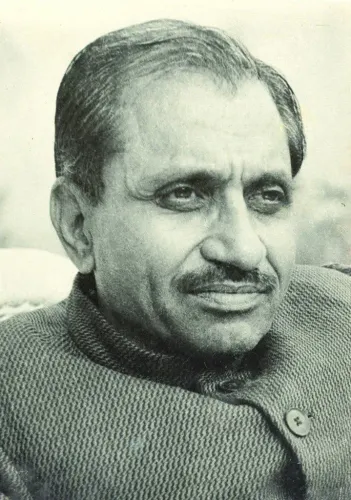
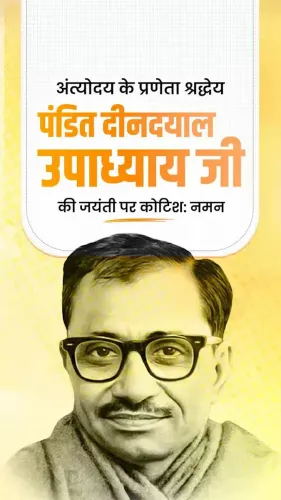
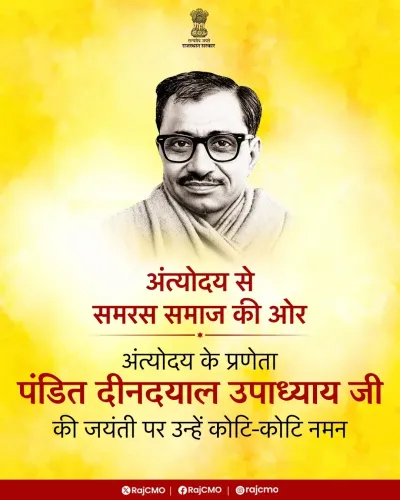
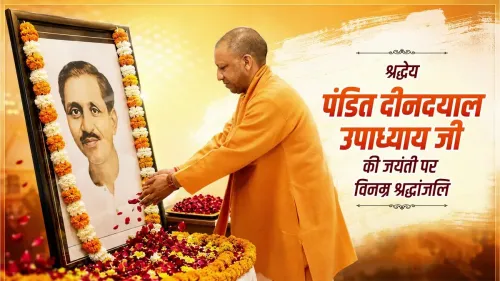
CM Mohan Yadav Pays Tribute to Deendayal Upadhyaya on Birth Anniversary
Synopsis
On Pandit Deendayal Upadhyaya's birth anniversary, MP Chief Minister Dr. Mohan Yadav invoked his Antyodaya and Integral Humanism philosophies, pledging that inclusive development rooted in Jana Sangh-era ideology will continue to guide Madhya Pradesh's governance.
Key Takeaways
Pandit Deendayal Upadhyaya's birth anniversary falls on 25 September ; BJP leaders mark it annually as an ideological renewal.
Upadhyaya was a founding member of the Bharatiya Jana Sangh (1951) , the predecessor to the BJP.
The BJP formally adopted his philosophy of Integral Humanism as its core ideology at its formation in 1980 .
His concept of Antyodaya — welfare of the last person in line — inspired the Antyodaya Anna Yojana launched in 2000 .
Mohan Yadav reaffirmed inclusive development as Madhya Pradesh's governing resolve, drawing directly on Upadhyaya's ideological legacy.
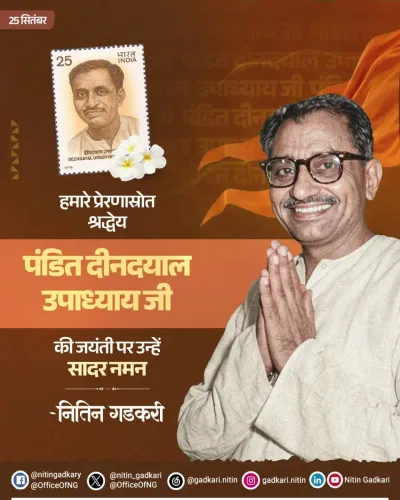
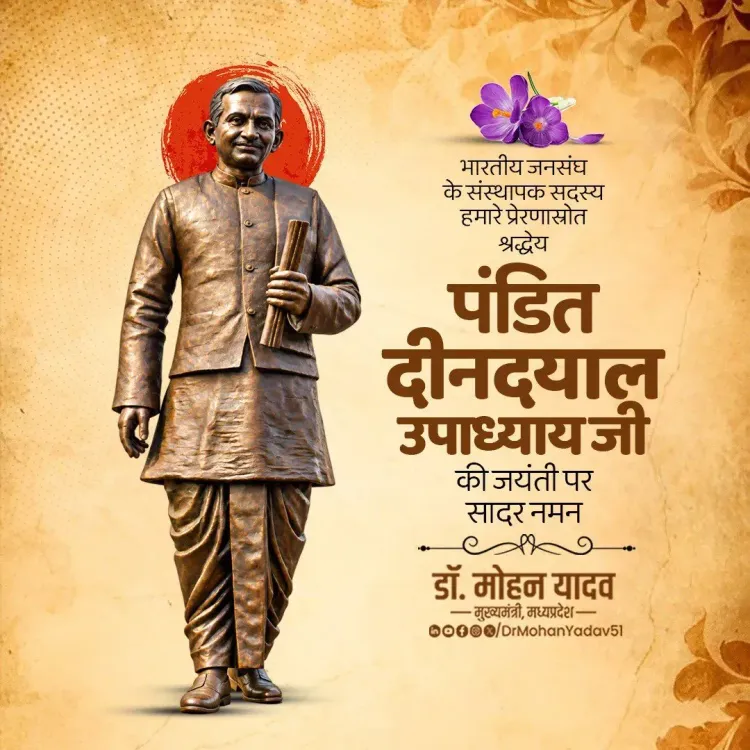
On the birth anniversary of one of India's most consequential ideologues, Madhya Pradesh Chief Minister Dr. Mohan Yadav on Friday, 25 September 2026 paid homage to Pandit Deendayal Upadhyaya, reaffirming that his twin philosophies of Antyodaya (uplift of the last person) and Ekatma Manavvad (Integral Humanism) remain the moral compass for inclusive governance today.
In his post on X, Dr. Yadav wrote: 'I respectfully bow to the revered Pandit Deendayal Upadhyaya ji, founding member of the Bharatiya Jana Sangh and our source of inspiration, on his birth anniversary. His philosophy of Antyodaya and Integral Humanism continues to pave the way for the welfare of the person in the last row of society. Drawing inspiration from his ideas of national service and public welfare, we are steadily moving forward with the resolve of inclusive development.'
The Ideologue Who Shaped a Party's Soul
Pandit Deendayal Upadhyaya was a founding member of the Bharatiya Jana Sangh, established in 1951, which served as the direct precursor to today's Bharatiya Janata Party. His philosophy of Integral Humanism argued that political and economic models must be rooted in Indian cultural values, placing the individual — and especially the most marginalised — at the centre of the state's moral obligation. When the BJP was formally constituted in 1980, it adopted Integral Humanism as its core guiding ideology. The inheritance was not merely symbolic.
The concept of Antyodaya — serving the very last person in the queue — found tangible policy expression decades later with the launch of the Antyodaya Anna Yojana in 2000, a food-security programme explicitly framed as a fulfilment of Upadhyaya's vision, targeting the poorest households across India.
A Ritual of Renewal — and Its Policy Stakes
Every 25 September, BJP leaders from the Prime Minister down to state chief ministers mark the anniversary by invoking Upadhyaya's ideas as live doctrine rather than archived history. The pattern is deliberate: it connects contemporary welfare spending and last-mile delivery programmes to a coherent ideological lineage, lending them a philosophical foundation that predates the party's own founding.
For Madhya Pradesh, a state where rural poverty and agrarian welfare remain persistent governance challenges, the Antyodaya framework carries particular resonance. Dr. Yadav's pledge to pursue 'inclusive development' signals continued policy attention toward the state's most vulnerable populations — though specific scheme expansions or budget announcements were not detailed in the post.
Seventy-five years after Upadhyaya helped build a political movement from scratch, his ideas are still the language in which a ruling government chooses to describe its own ambitions. That, in itself, is a measure of enduring influence few ideologues anywhere in the world can claim.
Point of View
Leaders like CM Yadav frame welfare spending not as electoral populism but as philosophical obligation, a framing that resonates strongly in states like Madhya Pradesh with large marginalised populations. The consistency of this messaging across decades also signals the party's internal ideological discipline and its effort to distinguish its welfare model from left-leaning redistribution frameworks. Watching whether Madhya Pradesh announces concrete Antyodaya-branded scheme expansions around this anniversary will reveal how much of this tribute translates into actionable policy.
NationPress
25 Sept 2026
Frequently Asked Questions
Who was Pandit Deendayal Upadhyaya?
Pandit Deendayal Upadhyaya was a founding member of the Bharatiya Jana Sangh, established in 1951, and the key ideologue behind the philosophies of Antyodaya and Integral Humanism. His ideas became the core ideology of the BJP when it was formed in 1980.
What is Antyodaya philosophy?
Antyodaya, meaning 'rise of the last person,' is a welfare philosophy articulated by Deendayal Upadhyaya that places the most marginalised individual at the centre of state policy. It inspired India's Antyodaya Anna Yojana food-security programme launched in 2000.
What is Integral Humanism (Ekatma Manavvad)?
Integral Humanism, or Ekatma Manavvad, is Deendayal Upadhyaya's political philosophy arguing that governance must be rooted in Indian cultural values and must harmonise the individual, society, nature, and the divine — in contrast to purely Western capitalist or socialist models. The BJP adopted it as its official ideology in 1980.
When is Pandit Deendayal Upadhyaya's birth anniversary?
Pandit Deendayal Upadhyaya's birth anniversary is observed on 25 September each year. BJP leaders and governments across India mark the day with tributes and events reaffirming his ideological legacy.
What did CM Mohan Yadav say on Deendayal Upadhyaya Jayanti 2026?
CM Dr. Mohan Yadav paid his respects to Pandit Deendayal Upadhyaya on his birth anniversary on 25 September 2026, stating that Upadhyaya's Antyodaya and Integral Humanism philosophies continue to guide welfare for the last person in society, and that Madhya Pradesh is moving forward with a resolve for inclusive development.