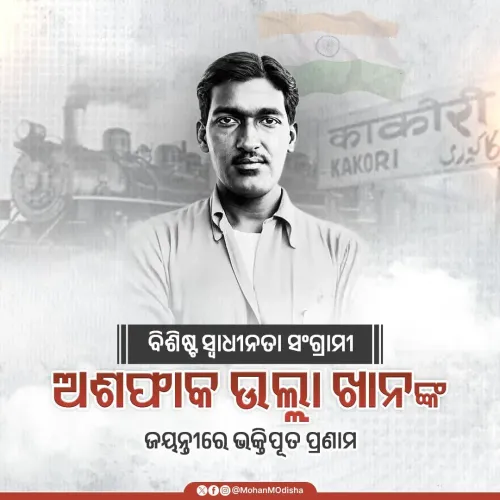
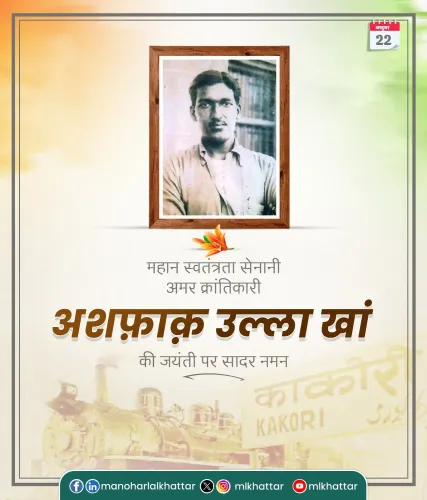
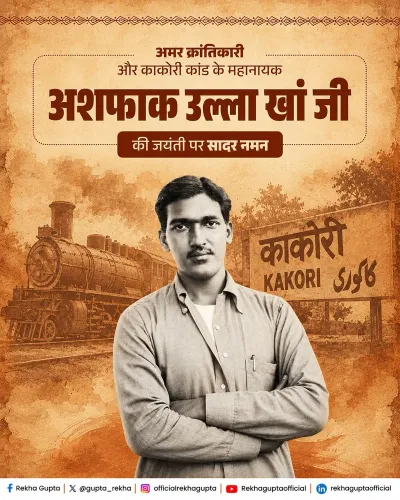
CM Mohan Yadav pays tribute to revolutionary Ashfaqulla Khan
Synopsis
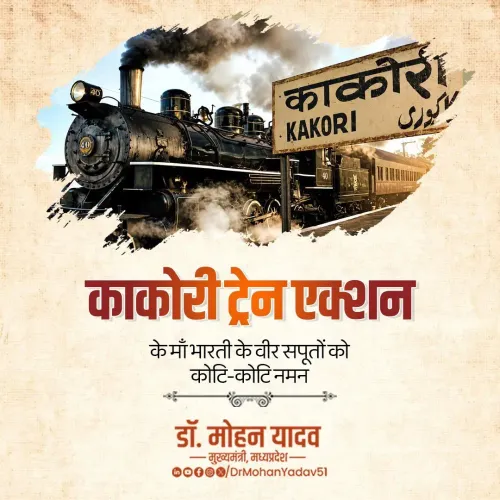
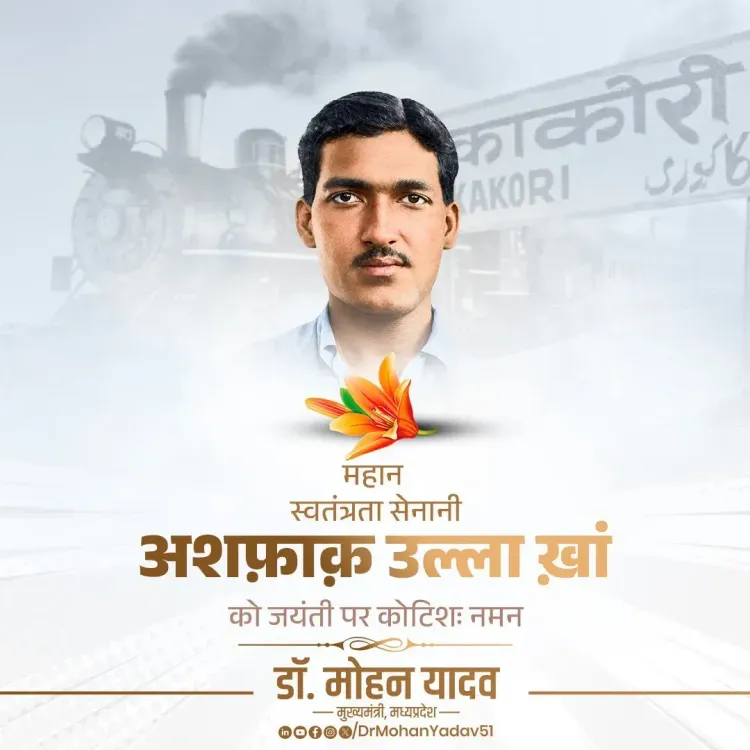
Madhya Pradesh CM Dr. Mohan Yadav paid tribute to revolutionary Ashfaqulla Khan on his birth anniversary, honouring his role in the 1925 Kakori Train Action and his supreme sacrifice for India's independence.
Key Takeaways
Madhya Pradesh CM Dr.
Mohan Yadav posted a tribute to revolutionary Ashfaqulla Khan on his birth anniversary on 22 October 2026 .
Ashfaqulla Khan was born in 1900 and was a member of the Hindustan Republican Association .
Khan played a key role in the Kakori Train Action of 1925 , in which revolutionaries seized British treasury funds from a train near Kakori.
He was executed by British authorities on 19 December 1927 at Faizabad Jail , aged 27 .
CM Yadav described Khan's legacy as an eternal source of inspiration for the nation and invoked his 'glorious saga of service to Mother India.'
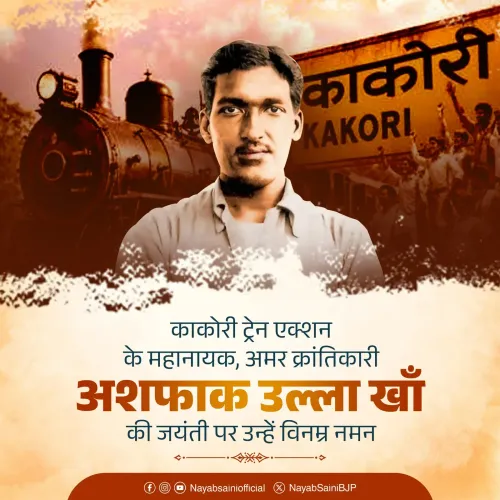
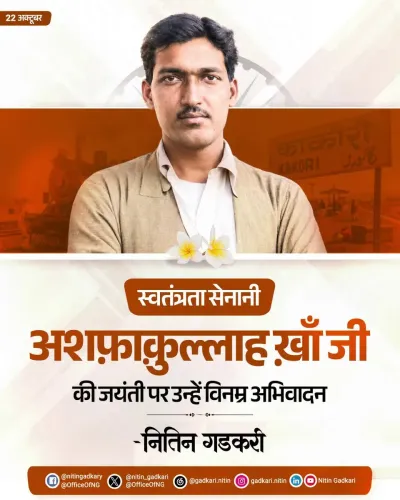
A century after he gave his life for a free India, Ashfaqulla Khan continues to draw reverence from the highest offices of the land. On Thursday, 22 October 2026, Madhya Pradesh Chief Minister Dr. Mohan Yadav offered his homage to the legendary revolutionary on his birth anniversary, calling him an enduring symbol of indomitable courage and patriotism.
In his post, CM Yadav wrote: 'मातृभूमि की स्वतंत्रता हेतु अपना जीवन समर्पित करने वाले, अदम्य साहस और राष्ट्रभक्ति के प्रतीक महान क्रांतिकारी अशफ़ाक़ उल्ला ख़ां जी की जयंती पर कोटिशः नमन करता हूँ।' — 'I bow in countless salutations on the birth anniversary of the great revolutionary Ashfaqulla Khan, a symbol of indomitable courage and patriotism who dedicated his life to the freedom of the motherland.'
The man behind the Kakori Train Action
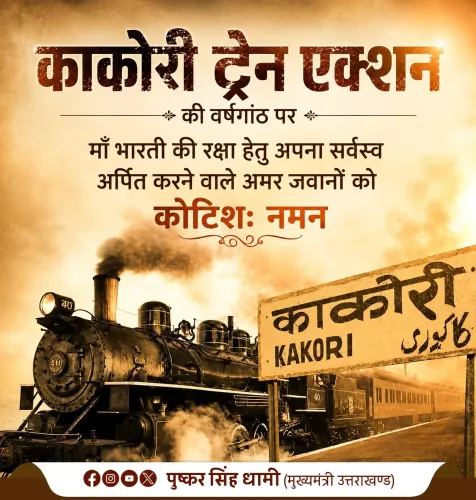
Ashfaqulla Khan, born in 1900, was a firebrand member of the Hindustan Republican Association — a clandestine network of young revolutionaries who believed armed resistance was the only language the British Empire would understand. His most defining moment came on 9 August 1925, when he and his comrades, including Ram Prasad Bismil, stopped a train near Kakori in present-day Uttar Pradesh and seized British treasury funds to finance the independence movement.
The Kakori Train Action electrified the subcontinent — and terrified the colonial administration. British authorities responded with a sweeping crackdown. Khan was hunted, captured, tried, and hanged on 19 December 1927 at Faizabad Jail, becoming one of the youngest martyrs of the freedom struggle. He was 27 years old.
A Hindu-Muslim revolutionary brotherhood, remembered across party lines
What makes Khan's legacy particularly resonant is the fraternal bond he shared with Ram Prasad Bismil — a Hindu revolutionary and he a Muslim, united entirely by their hunger for a free India. CM Yadav's tribute explicitly invoked this inclusive nationalist spirit, noting that Khan's 'glorious saga of service to Mother India and dedication to the nation will remain memorable for ages.'
Indian political leaders across the spectrum regularly invoke freedom fighters on their birth and martyrdom anniversaries — a tradition that keeps the emotional memory of the independence struggle alive in public discourse. For a BJP chief minister to prominently honour Khan underscores the party's deliberate effort to frame its nationalism as a broad, plural inheritance from the freedom movement.
Ashfaqulla Khan did not live to see the dawn of 15 August 1947. But the country he died for has not forgotten him — and on mornings like this one, it says so out loud.
Point of View
Countering the perception that the party's patriotism is exclusivist. Khan's partnership with Ram Prasad Bismil remains one of the most powerful symbols of composite nationalism, and political tributes to him from any quarter carry inherent legitimacy. For CM Yadav, the gesture also serves a domestic audience in Madhya Pradesh, a state with a significant Muslim population, reinforcing an inclusive developmental image ahead of future electoral cycles.
NationPress
22 Oct 2026
Frequently Asked Questions
Who was Ashfaqulla Khan?
Ashfaqulla Khan was an Indian revolutionary born in 1900 , best known for his participation in the Kakori Train Action of 1925 . A member of the Hindustan Republican Association , he was arrested by British authorities and executed on 19 December 1927 at Faizabad Jail, aged 27.
What was the Kakori Train Action?
The Kakori Train Action took place on 9 August 1925 , when revolutionaries including Ashfaqulla Khan and Ram Prasad Bismil stopped a British treasury train near Kakori in present-day Uttar Pradesh and seized funds to finance India's independence movement. The British crackdown that followed led to several executions.
Why did CM Mohan Yadav pay tribute to Ashfaqulla Khan?
Madhya Pradesh CM Dr. Mohan Yadav posted the tribute on 22 October 2026 to mark Ashfaqulla Khan's birth anniversary , honouring his supreme sacrifice for India's freedom and his role in the Kakori Train Action.
What is the significance of Ashfaqulla Khan's friendship with Ram Prasad Bismil?
The close bond between Ashfaqulla Khan , a Muslim, and Ram Prasad Bismil , a Hindu, is celebrated as a powerful symbol of composite nationalism — proof that India's freedom struggle transcended religious boundaries and was united by a shared vision of independence.
When is Ashfaqulla Khan's birth anniversary celebrated?
According to the post by CM Yadav dated 22 October 2026 , Ashfaqulla Khan's birth anniversary falls around this date. His exact birth date is widely cited as 22 October 1900 .