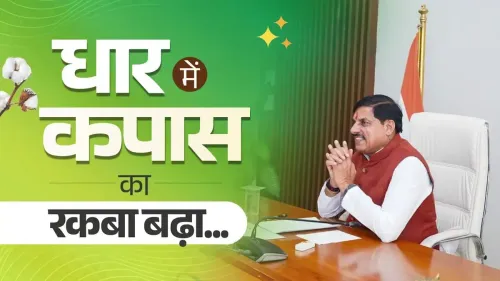
CM Mohan Yadav Pushes Cotton Value Chain in MP's Tribal Belt
Synopsis
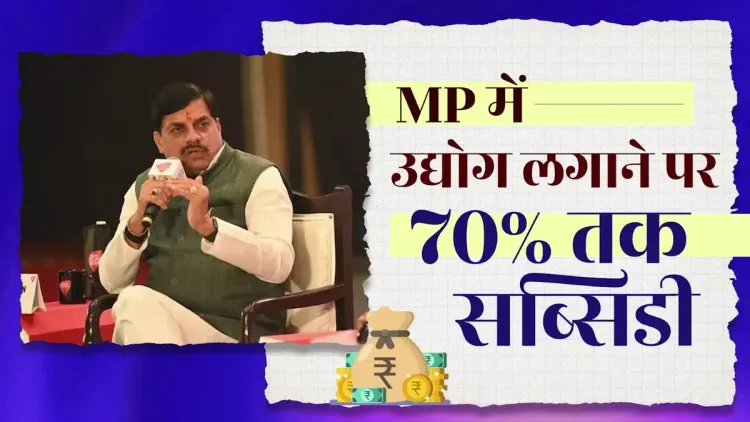
CM Dr. Mohan Yadav announced a full cotton-to-export value chain project for Madhya Pradesh's Malwa-Nimar tribal belt, backed by up to 70 percent capital grants, power tariff cuts, and land provision, targeting 3 lakh jobs and benefits for 6 lakh cotton farmers.
Key Takeaways
The Chief Minister's Office of Madhya Pradesh announced a major push for food and agro-processing units on November 11, 2026 .
Incentives include land provision, power tariff concessions, stamp duty relief, and capital grants of up to 70 percent .
A dedicated project targets the Malwa-Nimar cotton belt to build integrated yarn, fabric, and export infrastructure.
Roughly six lakh cotton farmers in the tribal western region are the primary intended beneficiaries.
The project is projected to generate approximately three lakh jobs in the region.
The initiative extends the logic of the MP Industrial Promotion Policy 2022 to full textile value-chain integration.
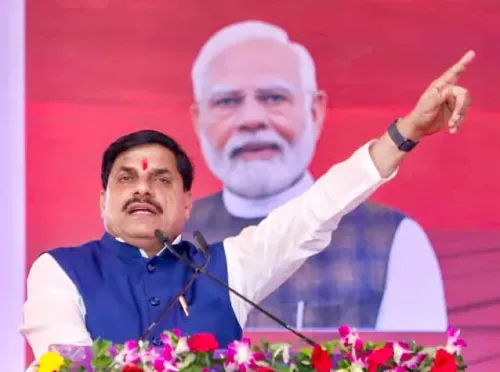
A major industrial push is quietly reshaping Madhya Pradesh's cotton heartland. On Wednesday, November 11, 2026, the Chief Minister's Office of Madhya Pradesh announced that Chief Minister Dr. Mohan Yadav is rolling out a sweeping package of incentives to build a full cotton-to-export value chain across the state's tribal western regions — land provision, power tariff concessions, stamp duty relief, and capital grants of up to 70 percent for food and agro-processing units.
From raw cotton to finished cloth — the Malwa-Nimar vision
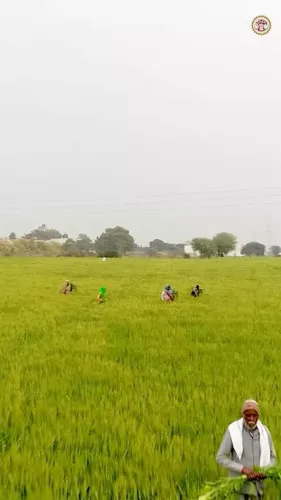
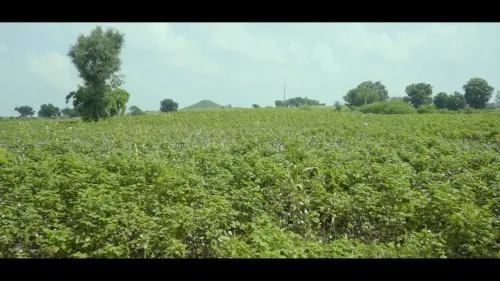
The ambition is specific: the tribal farming belt stretching from Malwa to Nimar in western Madhya Pradesh, where roughly six lakh (600,000) farmers grow cotton on rain-fed land, would no longer just supply raw fibre to mills elsewhere. Under the announced project, the state aims to establish the entire production ladder — yarn spinning, fabric weaving, and finished-goods export — right inside the region. Three lakh (300,000) jobs, the Chief Minister said, would flow from that integrated chain.
That is the core logic CM Dr. Mohan Yadav has articulated consistently since taking office in December 2023: farmers earn more not by selling raw produce at prevailing mandis, but when processing happens close to the farm gate. 'Our effort is that maximum processing units are established in the state so that farmers get better value for their produce and their income increases,' he stated.
Incentives built on a familiar MP playbook
The incentive architecture is an extension of the Madhya Pradesh Industrial Promotion Policy 2022, which had already offered capital subsidies and power tariff concessions for agro-processing. What the latest push adds is the explicit integration of food processing with textile manufacturing — stitching together sectors that have historically been treated separately in state industrial policy.
Concretely, industries setting up units can access: subsidised land, reduced electricity tariffs, concessions on registration charges, and capital grants reaching 70 percent of eligible project cost. Western MP's cotton belt has seen earlier ginning and spinning cluster attempts under both central textile schemes and state programmes, but those stopped short of full value-chain integration. This project, at least in its stated design, aims further.
Tribal farming communities at the centre of the bet
The Malwa-Nimar corridor carries particular social weight. The region's tribal farming communities — classified as Scheduled Tribes — have long depended on cotton as a primary cash crop, with limited bargaining power against traders and distant processors. Bringing spinning, weaving, and export infrastructure into the region would, in theory, give those farmers both a local market and direct wage employment for family members.
That double dividend — better crop prices and industrial jobs in the same geography — is the political and economic bet the state is placing. Whether the announced project translates into actual land allotments, disbursed subsidies, and running mills is the test that will follow.
The cotton belt of Malwa-Nimar has waited for this kind of integration before. This time, the government has put a number on it: three lakh jobs, six lakh farmers. Those figures will be the scoreboard.
Point of View
Fragmented supply zones. Critically, the Malwa-Nimar tribal framing adds a social-equity dimension that could unlock central government co-funding under schemes targeting Scheduled Tribe regions. The real political test, however, is whether land allotments and subsidy disbursements follow at speed — previous ginning cluster announcements in the same belt stalled at the implementation stage.
NationPress
11 Nov 2026
Frequently Asked Questions
What incentives is Madhya Pradesh offering for food processing units?
Madhya Pradesh is offering land at subsidised rates, power tariff concessions, reduced registration and stamp duty charges, and capital grants of up to 70 percent for food and agro-processing industries setting up in the state.
What is the Malwa-Nimar cotton project announced by CM Mohan Yadav?
CM Dr. Mohan Yadav announced a large project to build an integrated cotton value chain in the Malwa-Nimar region of western Madhya Pradesh — covering yarn spinning, fabric manufacturing, and export — to benefit around six lakh cotton-growing farmers and generate roughly three lakh jobs.
How many farmers grow cotton in Madhya Pradesh's tribal belt?
According to the Chief Minister's statement, approximately six lakh (600,000) farmers in the tribal belt stretching from Malwa to Nimar in western Madhya Pradesh are engaged in cotton cultivation.
How will the Madhya Pradesh cotton project help farmers?
By establishing processing, spinning, and weaving units near the farm, farmers would receive better prices for their raw cotton rather than selling at mandi rates, while family members could also access industrial employment within the same region.
What is the MP Industrial Promotion Policy and how does it relate to this announcement?
The Madhya Pradesh Industrial Promotion Policy 2022 laid the groundwork by offering capital subsidies and power tariff concessions for agro-processing. The current announcement builds on that framework, extending it to cover full textile value-chain integration from cotton to finished export goods.