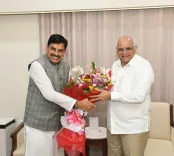
CM Mohan Yadav Reaches Out to Gujarat Over Narmada Ties
Synopsis
Madhya Pradesh CM Dr. Mohan Yadav publicly reached out to Gujarat on 12 August 2026, calling both states 'sons of Mother Narmada' and declaring MP ready to build a new partnership — signalling fresh momentum on Narmada basin cooperation between the two BJP-governed states.
Key Takeaways
Mohan Yadav , Chief Minister of Madhya Pradesh , publicly invited Gujarat to forge a 'new relationship' on 12 August 2026 .
He invoked the Narmada River as the shared cultural and economic bond between the two states.
The Narmada Water Disputes Tribunal (1979) governs water shares among MP, Gujarat, Maharashtra and Rajasthan.
The Sardar Sarovar Dam in Gujarat relies on water originating in Madhya Pradesh, making upstream-downstream cooperation essential.
Both states are currently governed by the BJP , reducing political barriers to inter-state negotiation.
No specific agreement or joint project has been announced; the post signals intent and opens a public dialogue.
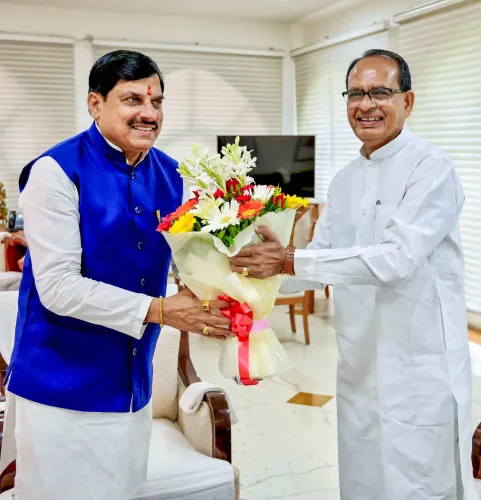
Two states, one river, and a fresh bid for partnership. Madhya Pradesh Chief Minister Dr. Mohan Yadav on Wednesday, 12 August 2026 extended a public hand of cooperation to Gujarat, invoking the sacred Narmada River as the shared bond between the two states and signalling that Madhya Pradesh is ready to forge a 'new relationship' with its western neighbour.
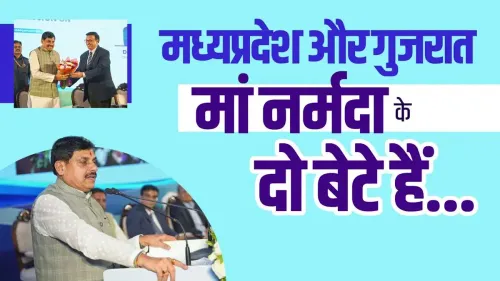
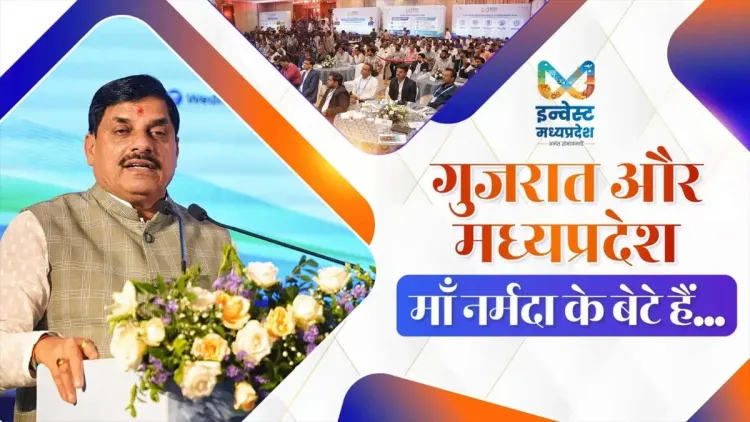
Posting in Hindi on X, Dr. Yadav wrote: 'Madhya Pradesh aur Gujarat Maa Narmada ke do bete hain' — 'Madhya Pradesh and Gujarat are two sons of Mother Narmada; the path to both states' prosperity has opened through Mother Narmada. Madhya Pradesh is ready to forge a new relationship with you.'
The River That Binds Two BJP Heartlands
The Narmada is not merely a cultural symbol — it is the lifeblood of a vast river basin stretching from its origin at Amarkantak in Madhya Pradesh all the way to the Gulf of Khambhat in Gujarat. The Narmada Water Disputes Tribunal award of 1979 fixed water shares among four states — Madhya Pradesh, Gujarat, Maharashtra and Rajasthan — making inter-state cooperation a legal and practical necessity, not just a political gesture.
The Sardar Sarovar Dam, whose reservoir draws water originating in Madhya Pradesh, has been the central vehicle for downstream irrigation and drinking water benefits to Gujarat for decades. Every cubic metre of water released upstream in Madhya Pradesh has a downstream consequence in Gujarat's farms and cities — a hydrological interdependence that no political boundary can erase.
What 'New Relationship' Could Mean for the Basin
The precise contours of the partnership Dr. Yadav has signalled remain to be defined publicly. What the post does establish is intent: Madhya Pradesh, where the Narmada originates, is positioning itself as a proactive upstream partner rather than a passive water-sharer. Indian states sharing major rivers have increasingly combined cultural diplomacy — invoking the river's religious significance — with practical negotiations on water allocation, irrigation scheduling and hydropower revenue-sharing.
Both states are currently governed by the BJP, which reduces the political friction that has historically complicated inter-state river negotiations across India. That alignment, combined with Dr. Yadav's direct public overture, sets the stage for what could be a new chapter in Narmada basin governance — if follow-up meetings and joint statements materialise.
The Narmada has long been called the lifeline of central India. Whether this call from Bhopal translates into binding cooperation on the ground is now Gujarat's move to make.
Point of View
The sanctity of the Narmada — to smooth the path for hard-nosed resource negotiations. With both states under the same political roof, the window for a new bilateral understanding on Narmada basin projects is arguably wider now than at any point in recent decades. The move also burnishes Yadav's profile as a chief minister capable of regional statecraft, not just state administration. The real test will be whether this rhetorical bridge leads to a concrete agreement on water scheduling, irrigation expansion or revenue-sharing from hydropower — or remains a warm gesture without a follow-up framework.
NationPress
12 Aug 2026
Frequently Asked Questions
What did MP CM Mohan Yadav say about Gujarat and the Narmada River?
Dr. Mohan Yadav said Madhya Pradesh and Gujarat are 'two sons of Mother Narmada' and that both states' prosperity flows from the river, declaring MP ready to build a new relationship with Gujarat.
Why is the Narmada River important to both Madhya Pradesh and Gujarat?
The Narmada originates in Madhya Pradesh and flows west into Gujarat, supplying water for irrigation, drinking water and hydropower to both states under the 1979 Narmada Water Disputes Tribunal award.
What is the Sardar Sarovar Dam and how does it connect MP and Gujarat?
The Sardar Sarovar Dam is a major dam on the Narmada in Gujarat whose reservoir depends on water released from upstream Madhya Pradesh, making inter-state cooperation critical for Gujarat's water and power supply.
What new agreement is being discussed between Madhya Pradesh and Gujarat?
No specific agreement has been announced yet. CM Yadav's post signals intent to deepen cooperation; the nature of any 'new relationship' is yet to be defined through official talks or joint statements.
Is the Narmada water dispute between MP and Gujarat resolved?
The broad water-sharing framework was set by the Narmada Water Disputes Tribunal in 1979, but operational coordination on releases, irrigation scheduling and project development remains an ongoing inter-state matter.