CM MP Office Announces Wild Buffalo Rehab at Kanha Reserve
Synopsis
The Chief Minister's Office of Madhya Pradesh announced the rehabilitation of wild buffaloes at Kanha Tiger Reserve on 2 July 2026, marking a significant step in the state's effort to restore native fauna and ecological balance within one of India's oldest protected wildlife areas.
Key Takeaways
The Chief Minister's Office of Madhya Pradesh announced wild buffalo rehabilitation at Kanha Tiger Reserve on 2 July 2026 .
Kanha Tiger Reserve was notified in 1955 and brought under Project Tiger in 1973 , making it one of India's oldest protected areas.
The reserve is located across Mandla and Balaghat districts of Madhya Pradesh .
The rehabilitation aligns with national biodiversity priorities coordinated between the Madhya Pradesh Forest Department and central agencies.
Key stakeholders include tribal communities , wildlife conservationists , and eco-tourism operators in and around the reserve.
Outcomes may influence future revisions to the Kanha management plan and the next All India Tiger Estimation exercise.
The Chief Minister's Office of Madhya Pradesh announced on Thursday, 2 July 2026 the rehabilitation of wild buffaloes at Kanha Tiger Reserve, one of India's foremost protected wildlife areas, signalling a renewed push for native species restoration in the state's forests.
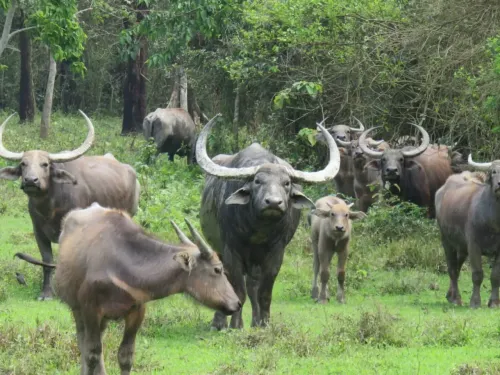
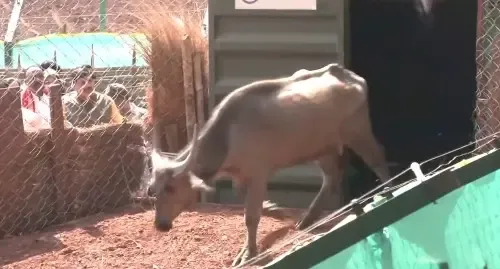
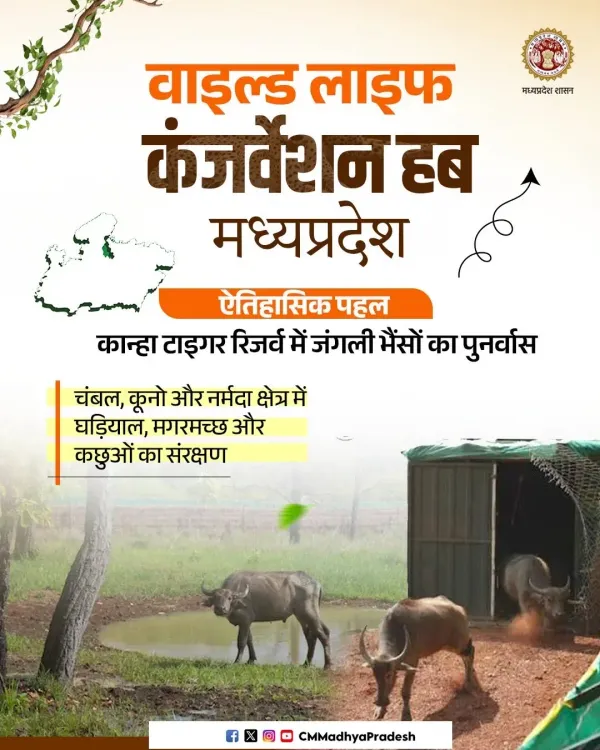
The post, shared on the official @CMMadhyaPradesh X account, read: 'कान्हा टाइगर रिजर्व में जंगली भैंसों का पुनर्वास' ('Rehabilitation of wild buffaloes in Kanha Tiger Reserve'), accompanied by an image from the reserve.
Context
Kanha Tiger Reserve, spread across the Mandla and Balaghat districts of Madhya Pradesh, is one of India's oldest protected areas, notified in 1955 and brought under Project Tiger in 1973. The reserve is widely regarded as a model for wildlife management in South Asia, having contributed significantly to tiger population recovery over the past five decades. Wild buffalo, also known as gaur or Indian bison in some regional contexts, are among the large herbivores whose populations have faced pressure from habitat loss and historical hunting.
Policy Backdrop
Project Tiger, launched by the Government of India in 1973, designated Kanha as a core reserve and laid the framework for species recovery and habitat management across Madhya Pradesh. The Madhya Pradesh Forest Department oversees management of Kanha and other protected areas, including species reintroduction and habitat restoration programmes. Species rehabilitation initiatives of this kind align with national biodiversity priorities coordinated between state and central agencies, and are consistent with India's commitments under international wildlife conservation frameworks.
Madhya Pradesh has positioned itself as a leader in tiger and wildlife conservation, maintaining multiple reserves with documented population recoveries. The rehabilitation of wild buffaloes at Kanha fits into a broader pattern of restoring native fauna to re-establish ecological balance within protected landscapes.
Stakeholders and Impact
The rehabilitation programme has implications for several groups. Tribal communities residing in and around the reserve's buffer zones have historically coexisted with large wildlife and will be key stakeholders in monitoring the programme's outcomes. Wildlife conservationists and researchers are likely to track the integration of reintroduced animals into the existing ecosystem, including their interaction with the reserve's tiger population. Eco-tourism operators who depend on Kanha's biodiversity for visitor attraction may also see longer-term benefits as species diversity in the reserve increases.
The move reflects the state government's intent to go beyond tiger-centric conservation and address the broader ecological web that sustains apex predators and the landscapes they inhabit.
What's Next
Observers will watch for subsequent official updates from the Madhya Pradesh Forest Department on the progress of the buffalo reintroduction, including details on the number of animals, timelines, and implementing partners. The outcomes of this programme could feed into future revisions of the Kanha Tiger Reserve management plan and may be considered in the next All India Tiger Estimation exercise. A successful rehabilitation would reinforce Madhya Pradesh's standing as a frontrunner in India's wildlife conservation agenda and could serve as a template for similar efforts in other reserves across the country.
Point of View
The state is investing in the ecological scaffolding that sustains apex predators — a move that reflects a more systems-level understanding of wildlife management. This fits into a wider national arc where Project Tiger's success is being leveraged to justify and fund broader biodiversity recovery programmes. For a state that competes fiercely on wildlife tourism metrics, expanding species diversity at a marquee reserve like Kanha is both an ecological and an economic calculation.
NationPress
2 Jul 2026
Frequently Asked Questions
What is the wild buffalo rehabilitation at Kanha Tiger Reserve?
The Chief Minister's Office of Madhya Pradesh announced on 2 July 2026 the rehabilitation of wild buffaloes at Kanha Tiger Reserve, an initiative aimed at restoring native large herbivores to the protected landscape in Mandla and Balaghat districts.
Where is Kanha Tiger Reserve located?
Kanha Tiger Reserve is located in the Mandla and Balaghat districts of Madhya Pradesh. It was notified in 1955 and became one of the original reserves under Project Tiger in 1973.
What is Project Tiger and how is it related to Kanha?
Project Tiger is a centrally sponsored conservation programme launched by the Government of India in 1973 to protect tigers and their habitats. Kanha Tiger Reserve was one of the original reserves designated under the project and has been central to tiger population recovery in India.
Who manages Kanha Tiger Reserve?
Kanha Tiger Reserve is managed by the Madhya Pradesh Forest Department, the state agency responsible for overseeing protected areas, species reintroduction programmes, and habitat restoration in Madhya Pradesh.
Why is wild buffalo reintroduction significant for Kanha?
Reintroducing wild buffaloes restores a native large herbivore to Kanha's ecosystem, supporting ecological balance and the food web that sustains apex predators like tigers. It also enhances biodiversity, which benefits eco-tourism and aligns with national wildlife conservation goals.