CM Naidu Flags ₹5,750 Cr Tata Power-Suzlon Project in AP
Synopsis
Andhra Pradesh CM N. Chandrababu Naidu announced that Tata Power Renewables has begun a ₹5,750 crore, 800 MW hybrid solar-wind project in Kurnool and Anantapur, with Suzlon supplying turbines from its in-state factory — positioning AP as a full clean energy manufacturing ecosystem.
Key Takeaways
Tata Power Renewables has commenced work on an 800 MW hybrid renewable energy project in Kurnool and Anantapur , Andhra Pradesh.
The project is valued at ₹5,750 crore and combines 400 MW solar and 400 MW wind capacity.
Suzlon will supply wind turbines from its manufacturing facility located within Andhra Pradesh , keeping supply-chain value inside the state.
The project is expected to generate employment for approximately 4,000 people in the Rayalaseema region.
The investment is a product of Andhra Pradesh's Integrated Clean Energy Policy , which targets both generation capacity and manufacturing ecosystem development.
Andhra Pradesh competes with Rajasthan and Gujarat to attract large-scale hybrid renewable projects tied to local industrial development.
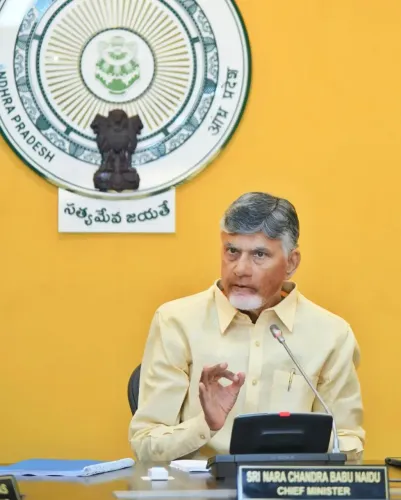
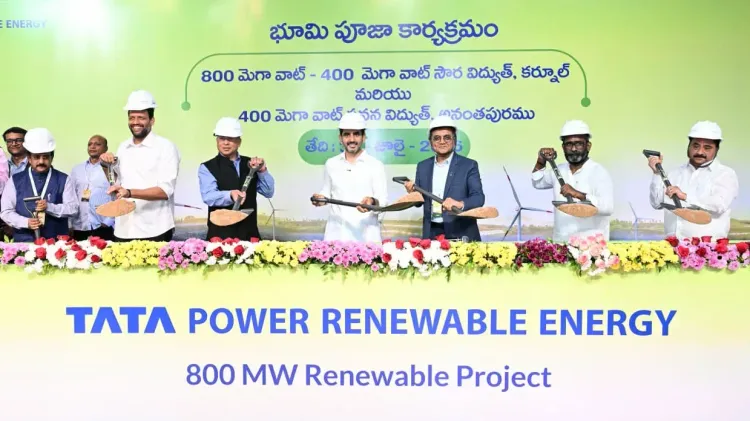
A ₹5,750 crore clean energy bet just broke ground in the heart of Rayalaseema — and it carries the fingerprints of two of India's most recognisable industrial names. Andhra Pradesh Chief Minister N. Chandrababu Naidu announced on Thursday, July 30, 2026 that Tata Power Renewables has commenced work on an 800 MW hybrid renewable energy project spanning Kurnool and Anantapur districts, with wind turbines to be supplied by Suzlon from its own manufacturing base inside the state.
800 MW, Two Fuels, One Industrial Vision
The project is structured as an equal split: 400 MW of solar power paired with 400 MW of wind power — a hybrid configuration that smooths out the intermittency that plagues single-source renewable plants. Kurnool and Anantapur, both in the Rayalaseema belt, have long drawn renewable developers for their high irradiation levels and strong wind corridors. The combined capacity, once commissioned, would represent a meaningful addition to Andhra Pradesh's non-fossil fuel generation base.
Chief Minister Naidu described the commencement as a product of the state's Integrated Clean Energy Policy — a framework designed to attract not just generation investment but the full manufacturing supply chain alongside it. 'Our Integrated Clean Energy Policy is attracting India's finest companies to Andhra Pradesh,' he wrote, framing the Tata Power-Suzlon combination as proof of concept for that ambition.
Suzlon's AP Factory: The Supply-Chain Piece That Changes the Story
The detail that elevates this beyond a standard project announcement is the Suzlon angle. The wind turbines for the project will be sourced from Suzlon's manufacturing facility in Andhra Pradesh — meaning the state is not merely hosting generation capacity, it is supplying the hardware for it. That closes a loop most renewable projects leave open: generation investment typically flows in, but equipment procurement flows out to factories elsewhere.
Naidu called it 'a remarkable example of our vision to build not just renewable energy capacity, but a complete clean energy manufacturing ecosystem within the state.' The logic is deliberate: Rayalaseema, historically one of Andhra Pradesh's more industrially underserved regions, gets both construction jobs and a sustained manufacturing demand signal.
Jobs, Grid Targets, and the Race Among States
The project is projected to generate employment for around 4,000 people — a figure that matters politically in districts where large-scale industrial employment has been scarce. Andhra Pradesh is competing directly with Rajasthan and Gujarat, both of which have aggressively courted hybrid renewable projects with land packages and grid-access guarantees.
The broader national frame is India's push to build substantial non-fossil fuel generation capacity. Hybrid projects — combining solar and wind on shared land and shared grid connections — have become a preferred instrument for state governments because they maximise output per hectare and reduce the per-unit cost of grid infrastructure.
What to watch now: land acquisition timelines, grid connectivity approvals from the state transmission utility, and whether the 4,000-job figure holds through the construction phase. Additional investment announcements under the same Integrated Clean Energy Policy are also likely as the project's groundbreaking signals an open-for-business moment for the sector.
Andhra Pradesh just told the renewable energy industry something loud and clear: the state is not just a destination for electrons — it wants to be the place where the machines that make them are built too.
Point of View
The government attempts to solve a persistent criticism of renewable investment: that it creates generation assets without building local industrial depth. For Naidu personally, this fits a long-running political narrative of positioning AP as a preferred investment destination — a narrative that took a serious hit during the state's bifurcation period and subsequent years of policy uncertainty. The Rayalaseema framing is also pointed: directing large projects toward historically underserved inland districts helps address a development imbalance that has been a source of political tension within the state for decades.
NationPress
30 Jul 2026
Frequently Asked Questions
What is the Tata Power renewable energy project in Andhra Pradesh?
Tata Power Renewables has commenced work on an 800 MW hybrid renewable energy project across Kurnool and Anantapur districts in Andhra Pradesh, combining 400 MW of solar and 400 MW of wind power at a total investment of ₹5,750 crore.
How many jobs will the Tata Power AP project create?
The project is projected to generate employment for around 4,000 people, primarily in the Rayalaseema region of Andhra Pradesh.
What is Andhra Pradesh's Integrated Clean Energy Policy?
The Integrated Clean Energy Policy is a state government framework designed to attract renewable energy generation investments alongside manufacturing supply-chain development, aiming to build a complete clean energy ecosystem within Andhra Pradesh.
What is Suzlon's role in the Tata Power Andhra Pradesh project?
Suzlon will supply the wind turbines for the 800 MW project from its manufacturing facility located within Andhra Pradesh, keeping equipment procurement and associated industrial value inside the state.
Why are Kurnool and Anantapur chosen for the hybrid renewable project?
Kurnool and Anantapur, both in the Rayalaseema belt, offer high solar irradiation and strong wind corridors, making them natural sites for hybrid solar-wind projects. They are also districts where the state government is prioritising industrial employment generation.