CM Chandrababu Reviews AP Heat Wave Preparedness
Synopsis
Chief Minister Chandrababu Naidu reviewed Andhra Pradesh's heat wave preparedness on 22 May 2026, directing deployment of cooling shelters, buttermilk, ORS, and holiday declarations in extreme-temperature districts. Senior officials from disaster management, health, municipal, and panchayati raj departments attended the inter-departmental meeting.
Key Takeaways
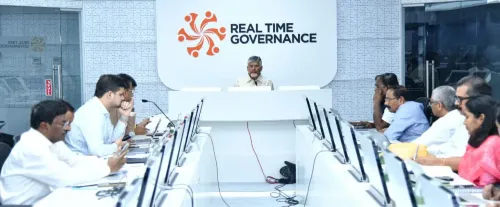
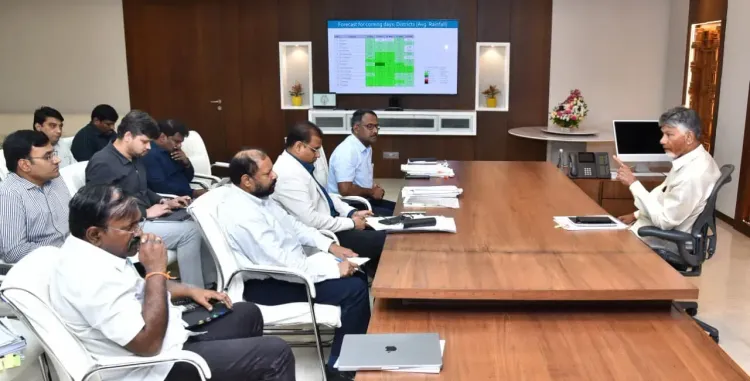
Chief Minister Nara Chandrababu Naidu chaired a heat wave preparedness review on 22 May 2026 .
Districts must deploy tents, cooling shelters (chalivendrams), chilled water, buttermilk, and ORS at accessible public points.
Holidays are to be declared in areas recording extreme temperatures to limit outdoor exposure.
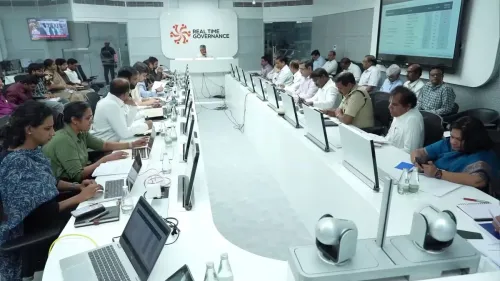
The meeting was attended by Chief Secretary Sai Prasad and senior officials from Disaster Management, Health, Municipal Administration, and Panchayati Raj departments.
The response follows the National Disaster Management Authority's 2016 heat wave guidelines , adapted to Andhra Pradesh's local conditions.
Key at-risk groups include outdoor workers, school children, and rural households across the state.
The Chief Minister's Office of Andhra Pradesh announced on Friday, 22 May 2026 that Chief Minister Nara Chandrababu Naidu chaired a high-level review meeting to assess the state's preparedness against intense heat wave conditions sweeping across Andhra Pradesh. Senior officials from multiple departments attended the session to coordinate an urgent, multi-pronged response.
What the Review Directed
Naidu issued clear instructions that tents, chalivendrams (cooling shelters), chilled water, buttermilk, and Oral Rehydration Salts (ORS) must be made available at accessible points across the state. The directive emphasised that these relief measures must reach people 'wherever they are,' signalling a decentralised, ground-level deployment rather than a centralised distribution model.
The Chief Minister also directed that holidays be declared in regions recording extreme temperatures, a step aimed at reducing outdoor exposure for school children and workers during peak heat hours. This instruction covers both educational institutions and, by implication, outdoor public activity in the most severely affected mandals.
Context
Andhra Pradesh regularly faces intense summer heat, with coastal and Rayalaseema districts frequently recording temperatures well above 40 degrees Celsius between April and June. The state has a dedicated disaster management framework that coordinates with health, municipal, and panchayati raj departments during such emergencies.
The National Disaster Management Authority issued national guidelines on heat wave management in 2016, providing a policy template that state governments are expected to adapt into localised heat-action plans. Andhra Pradesh's inter-departmental review follows this established coordination model.
Policy Backdrop
Indian states have progressively expanded their heat-action plans as summer temperatures intensify and the number of heat wave days recorded by the India Meteorological Department continues to rise year on year. Andhra Pradesh's approach — combining cooling infrastructure, oral hydration support, and administrative closures — mirrors the multi-agency strategy recommended under national guidelines.
The meeting was attended by State Chief Secretary Sai Prasad along with senior officials from the Disaster Management, Health, Municipal Administration, and Panchayati Raj departments, underscoring the whole-of-government character of the response.
Stakeholders and Impact
The populations most at risk include outdoor labourers, agricultural workers, school children, and rural households without access to air conditioning or refrigerated water. The deployment of chalivendrams — a traditional Telugu institution of public water-and-shade shelters — alongside modern ORS packets reflects a blend of community practice and clinical response.
Municipal bodies and panchayats will bear primary responsibility for setting up and maintaining cooling points, making the Panchayati Raj department's participation in the review particularly significant for last-mile delivery.
What's Next
Attention will now shift to the district-level rollout: whether formal orders declaring holidays or work stoppages are issued for the hottest mandals, and how quickly cooling shelters and ORS distribution networks become operational on the ground. The effectiveness of the response will ultimately be measured by whether heat-related illness and mortality figures remain contained as the summer peak continues.
Point of View
Not a routine seasonal exercise. The explicit directive to declare holidays in extreme-heat zones is politically significant: it shifts accountability for heat-related harm directly onto district administrations that fail to act. This fits a broader pattern visible across Indian states of using high-visibility executive reviews to drive bureaucratic urgency on climate-linked public health risks. The real test will be whether the ground-level infrastructure — particularly in remote mandals — matches the ambition of the directives issued from the top.
NationPress
7 Oct 2026
Frequently Asked Questions
What steps is the Andhra Pradesh government taking to tackle the heat wave in 2026?
The Andhra Pradesh government, following a review by Chief Minister Chandrababu Naidu, has directed deployment of cooling tents, chalivendrams, chilled water, buttermilk, and ORS at public points across the state, and ordered holidays in areas with extreme temperatures.
What is a chalivendram?
A chalivendram is a traditional Telugu public shelter that provides shade and cool water to passers-by during summer; the Andhra Pradesh government has revived and expanded this practice as part of its heat wave relief measures.
Which departments are involved in Andhra Pradesh's heat wave response?
The Disaster Management, Health, Municipal Administration, and Panchayati Raj departments are coordinating the response, along with the State Chief Secretary's office.
Will schools be closed due to the heat wave in Andhra Pradesh?
Chief Minister Chandrababu Naidu has directed that holidays be declared in regions recording extreme temperatures, which is expected to result in school closures in the most severely affected districts.
What is ORS and why is it important during a heat wave?
ORS, or Oral Rehydration Salts, is a simple solution of salts and sugar dissolved in water that prevents dehydration; distributing it freely during a heat wave is a standard public health measure recommended under national disaster management guidelines.