CM Nayab Saini Honours Weavers on National Handloom Day
Synopsis
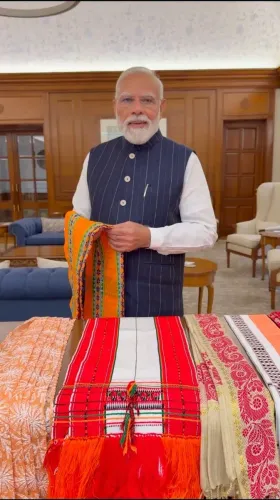
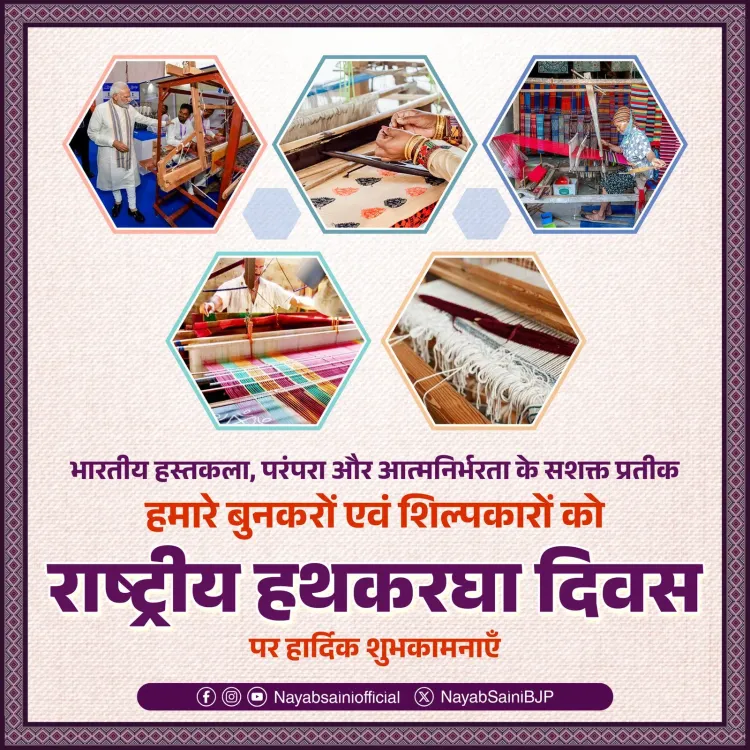
On National Handloom Day 2026, Haryana CM Nayab Singh Saini honoured India's weavers and artisans, calling them symbols of self-reliance and urging citizens to embrace swadeshi products to support handloom families.
Key Takeaways
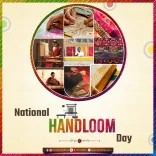
National Handloom Day is observed on 7 August every year, marking the 1905 Swadeshi Movement launch.
The day was institutionalised by the central government in 2015 to recognise weavers and revive the handloom sector.
CM Nayab Singh Saini described weavers as 'powerful symbols of Indian handicraft, tradition, and self-reliance.' His message explicitly called on citizens to adopt swadeshi (indigenous) products to support artisan families.
The appeal aligns with the Atmanirbhar Bharat framework, which includes policy support for traditional crafts and rural textile workers.
Every thread tells a story — and on National Handloom Day, 7 August 2026, Haryana Chief Minister Nayab Singh Saini called on Indians to stand behind the weavers and artisans who keep that story alive.
Posting in Hindi, CM Saini extended warm wishes to the country's weavers and craftspeople, describing them as 'powerful symbols of Indian handicraft, tradition, and self-reliance.' He urged citizens to embrace indigenous products and 'encourage the families of our weavers and artisans' — a direct echo of the swadeshi spirit that the day was built to revive.
A Day Born from the Swadeshi Movement
National Handloom Day is observed every 7 August — a date chosen deliberately to mark the launch of the Swadeshi Movement in 1905, when Indians pledged to buy homegrown goods in defiance of colonial rule. The central government institutionalised the observance in 2015, giving the handloom sector an annual moment of national recognition and a platform to highlight the millions of weaver families whose livelihoods depend on the loom.
India's handloom industry is one of the largest in the world, and it remains deeply rural, deeply gendered, and deeply tied to regional identity — from the Banarasi silk of Uttar Pradesh to the Phulkari embroidery of Haryana itself.
Self-Reliance and the Artisan Economy
Saini's message wove together two threads that have defined central and state policy in recent years: cultural pride and economic self-sufficiency. The Atmanirbhar Bharat initiative, launched in 2020, explicitly included support for traditional crafts and indigenous textiles as part of a broader push to reduce import dependence and boost rural employment. State governments across India have aligned their artisan-support messaging with that framework ever since.
The call to 'adopt swadeshi products' is not merely ceremonial. It is a consumer-behaviour nudge with real stakes — handloom weaver families often operate on thin margins, and a sustained shift in urban buying habits toward handwoven fabric can translate directly into rural income.
As the annual National Handloom Expo circuit gathers momentum each August, the question worth watching is whether state governments back the sentiment with scheme allocations and market-access support — or whether the day remains, for most weavers, a moment of recognition without a policy dividend to match.
Point of View
A framing successive governments have found politically durable. What the message does not do is announce new schemes or funds, which keeps it firmly in the ceremonial tier. The real test of political commitment to weavers lies in budget allocations and market-access programmes that rarely make it into an August morning post.
NationPress
7 Aug 2026
Frequently Asked Questions
Why is National Handloom Day celebrated on 7 August?
National Handloom Day is observed on 7 August to commemorate the launch of the Swadeshi Movement on 7 August 1905 , when Indians pledged to use homegrown goods. The central government formally instituted the observance in 2015.
What did Haryana CM Nayab Singh Saini say on National Handloom Day 2026?
CM Saini extended wishes to weavers and artisans, calling them 'powerful symbols of Indian handicraft, tradition, and self-reliance,' and urged citizens to adopt swadeshi products to support handloom families.
What is the Atmanirbhar Bharat scheme and how does it relate to handloom?
Atmanirbhar Bharat , launched in 2020 , is a central government initiative promoting self-reliance across sectors, including explicit support for traditional crafts, indigenous textiles, and rural artisan communities.
How big is India's handloom industry?
India's handloom sector is one of the largest in the world, employing millions of weaver families in rural areas. It encompasses iconic regional traditions such as Banarasi silk, Phulkari embroidery, and many other craft forms.
What is the National Handloom Expo?
The National Handloom Expo is an annual exhibition circuit organised around August to provide weavers and artisans a direct market platform, helping them reach urban consumers and boost sales of indigenous handwoven products.