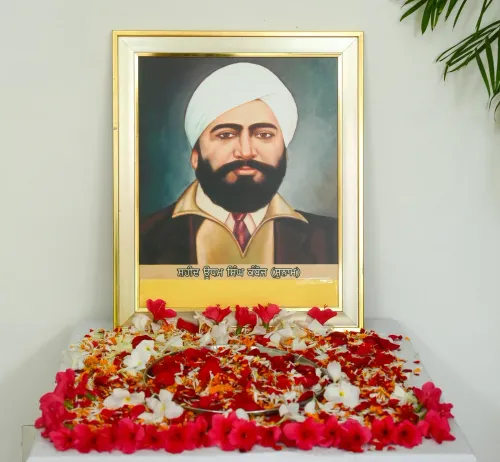
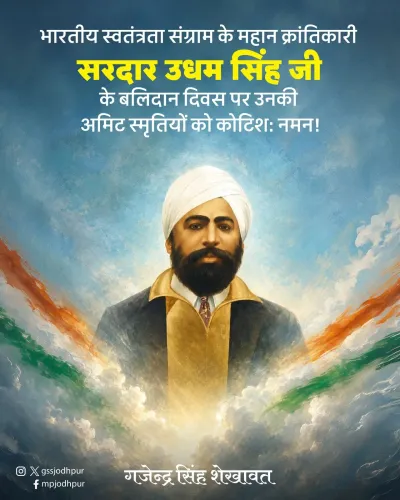
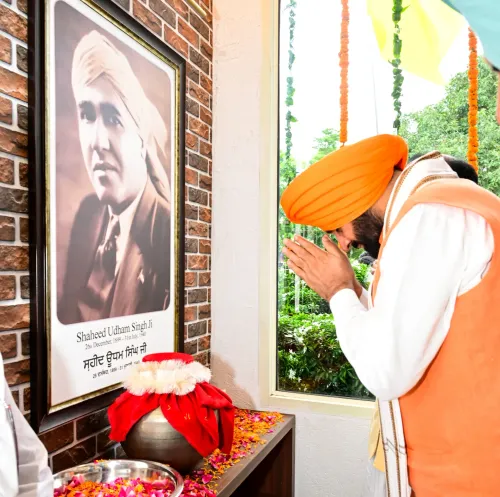
CM Nayab Saini Pays Tribute to Shaheed Udham Singh on Martyrdom Day
Synopsis
Haryana Chief Minister Nayab Singh Saini honoured Shaheed Udham Singh on his martyrdom day, 31 July 2026, calling his 1940 execution in London — carried out after he assassinated former Punjab Lt Governor Michael O'Dwyer to avenge the 1919 Jallianwala Bagh massacre — an immortal chapter in Indian history.
Key Takeaways
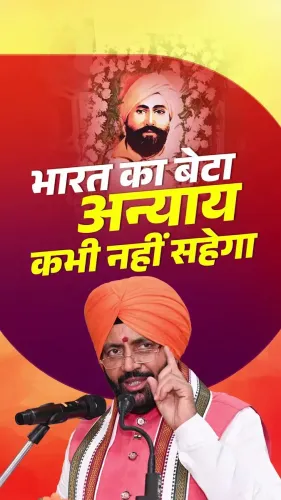
Haryana CM Nayab Singh Saini posted a Hindi tribute to Shaheed Udham Singh on 31 July 2026 , his martyrdom anniversary.
Udham Singh assassinated Michael O'Dwyer , former Lieutenant Governor of Punjab, in London on 13 March 1940 to avenge the Jallianwala Bagh massacre of 13 April 1919 .
He was executed by hanging at Pentonville Prison, London, on 31 July 1940 , aged 40 .
His remains were repatriated to India in 1974 and cremated with state honours in Sunam, Punjab .
Saini described Udham Singh's sacrifice as an 'immortal chapter' that will inspire future generations toward patriotism and self-respect.
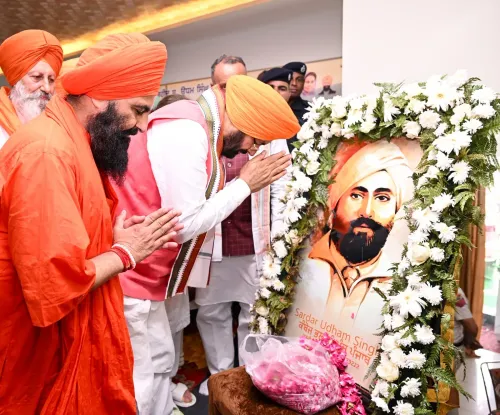
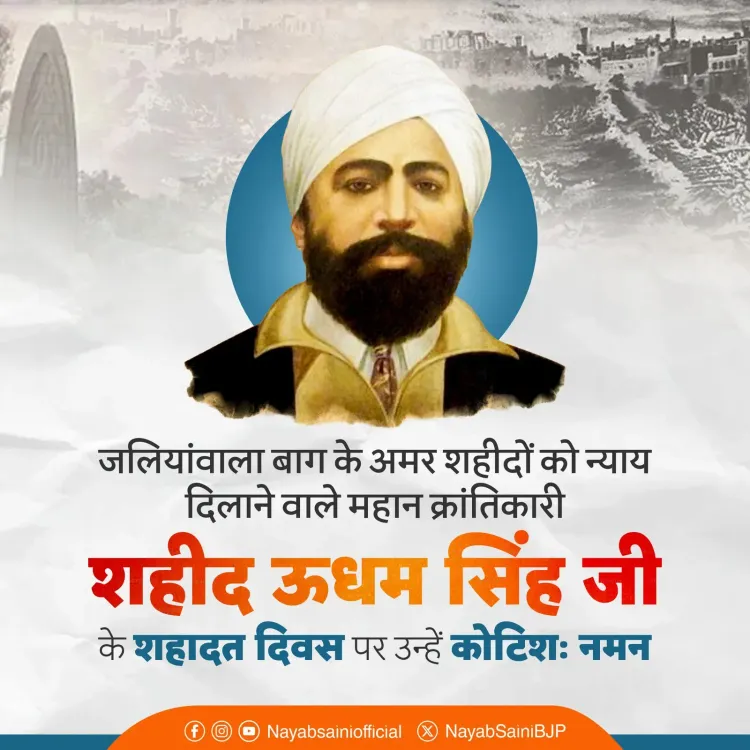
Eighty-six years after a London courtroom sentenced him to death, Shaheed Udham Singh remains one of the most electric names in India's freedom struggle — a man who waited two decades to deliver justice for the dead of Jallianwala Bagh. On 31 July 2026, Haryana Chief Minister Nayab Singh Saini marked the revolutionary's martyrdom day with a solemn tribute on X, calling his sacrifice an immortal chapter in Indian history.
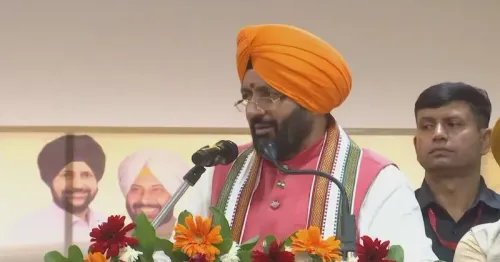
Saini wrote in Hindi: 'Jallianwala Bagh ke amar shaheedon ko nyay dilaane waale mahan krantikari Shaheed Udham Singh ji ke shahadat divas par unhe kotishaha naman.' ('Countless salutes to the great revolutionary Shaheed Udham Singh, who delivered justice to the immortal martyrs of Jallianwala Bagh, on his martyrdom day.') He added that Udham Singh's 'indomitable courage, unwavering patriotism, and supreme sacrifice for the honour of the motherland' would forever inspire coming generations to walk the path of patriotism and self-respect.
The Wound That Started It All: Jallianwala Bagh, 1919
On 13 April 1919, British troops under General Reginald Dyer opened fire on an unarmed crowd gathered at Jallianwala Bagh in Amritsar — a walled garden with few exits. Hundreds were killed in minutes. The massacre became a defining rupture in India's relationship with British rule and galvanised an entire generation of nationalists.
Udham Singh, a young man from Sunam in Punjab, is believed to have witnessed the carnage as a teenager. He carried that wound across continents for over two decades.
London, 1940: A Vow Fulfilled
On 13 March 1940, Udham Singh walked into a public meeting at Caxton Hall, London, and shot dead Michael O'Dwyer — the former Lieutenant Governor of Punjab who had sanctioned Dyer's action. It was a calculated act of political retribution, not random violence. He made no attempt to flee.
Tried and convicted of murder, Udham Singh was hanged on 31 July 1940 at Pentonville Prison, London. He was 40 years old. His remains were repatriated to India in 1974, and he was cremated with full state honours in his hometown of Sunam.
Remembrance as a Political Ritual
The annual tribute on 31 July has become a fixture across the political calendar — from central government accounts to state chief ministers in Punjab and Haryana, where Udham Singh's legacy carries particular regional resonance. For BJP leaders, invoking revolutionary martyrs like Udham Singh forms part of a broader nationalist remembrance framework that links colonial-era sacrifice to contemporary expressions of patriotism.
Saini's message closes with a forward-looking note — that the nation will 'remain forever grateful' and that Udham Singh's example will guide future generations. The sentiment is restrained and dignified, as befits the gravity of the occasion.
A teenager who watched his countrymen gunned down in a garden, a man who crossed oceans to settle a debt of honour, and a revolutionary who faced the gallows without flinching — Udham Singh's story is not just history. It is the kind of story a nation keeps returning to when it needs to remember what conviction looks like.
Point of View
Where Udham Singh's legacy intersects with a large Punjabi community, the gesture carries regional political weight beyond mere ceremony. The pairing of Jallianwala Bagh with Udham Singh's retributive act is deliberate — it frames the freedom struggle as a story of justice ultimately delivered, not just suffering endured. As India's independence centenary approaches, such remembrance posts are likely to intensify in frequency and scale.
NationPress
1 Aug 2026
Frequently Asked Questions
Why is 31 July observed as Udham Singh martyrdom day?
31 July is observed as Udham Singh's martyrdom day because he was hanged at Pentonville Prison in London on 31 July 1940 after being convicted of murdering former Punjab Lieutenant Governor Michael O'Dwyer .
Who was Udham Singh and what did he do?
Udham Singh was a Punjabi revolutionary who assassinated Michael O'Dwyer in London on 13 March 1940 to avenge the Jallianwala Bagh massacre of 13 April 1919 , in which British troops killed hundreds of unarmed civilians in Amritsar.
What was the Jallianwala Bagh massacre?
The Jallianwala Bagh massacre occurred on 13 April 1919 in Amritsar, Punjab , when British troops under General Reginald Dyer opened fire on a peaceful crowd in a walled garden, killing hundreds and wounding many more.
Who was Michael O'Dwyer?
Michael O'Dwyer was the Lieutenant Governor of Punjab during the Jallianwala Bagh massacre and is widely held to have sanctioned General Dyer's order to fire on the crowd. He was shot dead by Udham Singh in London in 1940 .
When were Udham Singh's remains brought back to India?
Udham Singh's remains were repatriated from Britain to India in 1974 and cremated with full state honours in his hometown of Sunam, Punjab .