CM Nayab Saini Vows Drug-Free India by December 2029
Synopsis
Haryana Chief Minister Nayab Singh Saini has pledged to free the entire country from drug addiction by 31 December 2029, echoing the Centre's Nasha Mukt Bharat Abhiyan and spotlighting the Punjab-Haryana drug corridor as a national concern.
Key Takeaways
Haryana CM Nayab Singh Saini publicly pledged a drug-free India by 31 December 2029 in a post on 21 October 2026 .
The commitment aligns with the Centre's Nasha Mukt Bharat Abhiyan , launched in August 2020 targeting 272 priority districts .
Haryana shares a border with Punjab, and the Punjab-Haryana drug corridor has been a long-standing narcotics-control concern.
Saini framed the pledge at a national level — unusual for a state chief minister — signalling alignment with central government anti-drug policy.
No specific operational plan or inter-agency mechanism has been publicly confirmed to back the 2029 deadline as yet.
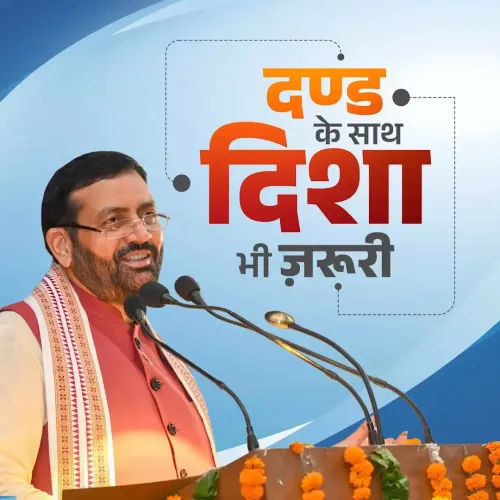
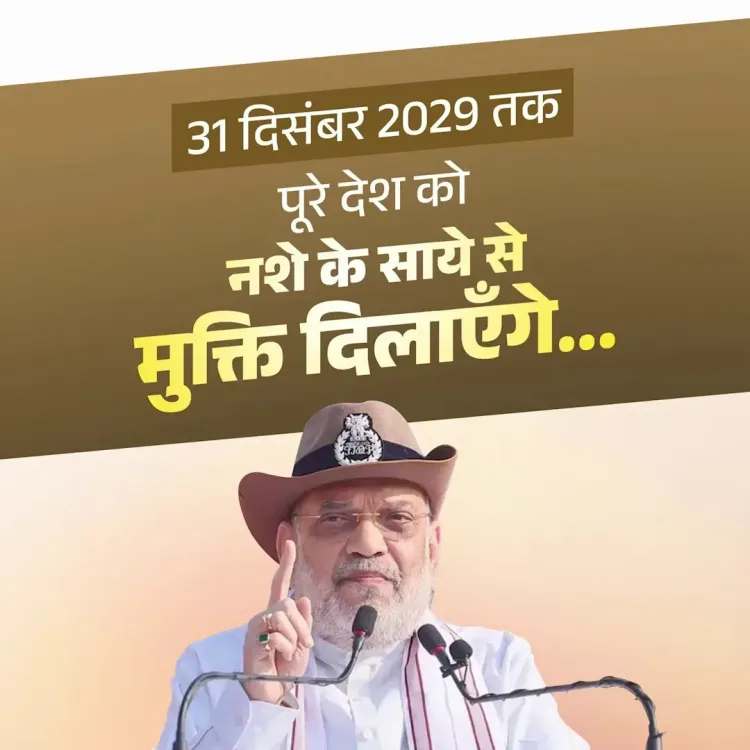
A deadline. A pledge. And a state chief minister putting a national ambition on the record. Haryana Chief Minister Nayab Singh Saini on Wednesday, 21 October 2026 declared that the entire country would be freed from the shadow of drug addiction by 31 December 2029 — a bold, time-bound commitment that plants a political stake in the ground on one of northern India's most persistent crises.
The pledge and what it signals
Saini's post carried a single, unambiguous line in Hindi: '31 disambar 2029 tak pure desh ko nashe ke saaye se mukti dilaenge' — 'By 31 December 2029, we will free the entire country from the shadow of addiction.' Short. Categorical. The choice of a national frame — not just Haryana — is notable coming from a state leader, signalling alignment with the central government's own demand-reduction agenda and, perhaps, an appetite for a larger role in shaping it.
Nasha Mukt Bharat Abhiyan and the 2029 horizon
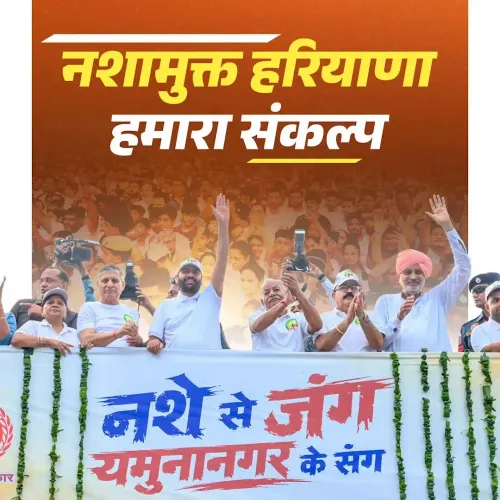
The backdrop matters here. The Centre launched the Nasha Mukt Bharat Abhiyan in August 2020 under the Ministry of Social Justice and Empowerment, targeting 272 priority districts through awareness drives, community counselling, and expansion of de-addiction facilities. Haryana sits at the heart of the problem: the state shares a long border with Punjab, and the Punjab-Haryana drug corridor has been a recurring concern in narcotics-control discussions for over a decade.
State-level BJP leaders have periodically amplified the central campaign's messaging, but a hard 2029 deadline referenced by a sitting chief minister gives that alignment a sharper edge. It also puts a clock on coordination — between Haryana's own enforcement apparatus, the Narcotics Control Bureau, and the social welfare machinery that handles demand-side interventions.
Youth, families, and the stakes across northern India
The human cost behind such pledges is real. Substance abuse across northern India — particularly among young men in rural and semi-urban areas — has hollowed out families and strained public health infrastructure for years. Campaigns that combine police enforcement with rehabilitation have shown mixed results; the research consistently points to counselling access and community-level awareness as the harder, slower, more durable levers. Whether Saini's 2029 target comes attached to an operational plan — new de-addiction centres, inter-state task forces, updated district-level targets — will determine whether this pledge becomes policy or remains rhetoric.
What to watch: any announcement from the upcoming Union social welfare ministry review that formalises the 2029 timeline, and whether Haryana and Punjab convene joint coordination mechanisms to address the corridor problem head-on.
A deadline of 31 December 2029 is now public and political — the real test is what gets built before the clock runs out.
Point of View
A space historically dominated by Punjab's crisis. Whether this translates into coordinated inter-state and central policy action, or remains an aspirational posture, will shape its long-term political weight.
NationPress
21 Oct 2026
Frequently Asked Questions
What did Haryana CM Nayab Singh Saini say about making India drug-free?
Saini pledged on 21 October 2026 that the entire country would be freed from the shadow of drug addiction by 31 December 2029, posting the commitment publicly on X.
What is the Nasha Mukt Bharat Abhiyan?
Nasha Mukt Bharat Abhiyan is a national campaign launched in August 2020 by the Ministry of Social Justice and Empowerment to reduce drug demand across 272 priority districts through awareness, counselling, and de-addiction facilities.
Why is Haryana significant in India's drug problem?
Haryana shares a border with Punjab and sits along what is often called the Punjab-Haryana drug corridor, making it a frontline state in narcotics control efforts in northern India.
Is there a confirmed government plan to make India drug-free by 2029?
No specific operational plan or formally notified national target for 2029 has been publicly confirmed; Saini's pledge reflects political intent and alignment with the Centre's existing Nasha Mukt Bharat Abhiyan framework.
Which central agency handles drug control in India?
The Narcotics Control Bureau, under the Ministry of Home Affairs, leads enforcement, while the Ministry of Social Justice and Empowerment manages demand-reduction and rehabilitation programmes like Nasha Mukt Bharat Abhiyan.