CM Bhupendra Patel Wraps Day 3 of Dahod Tribal Tour
Synopsis
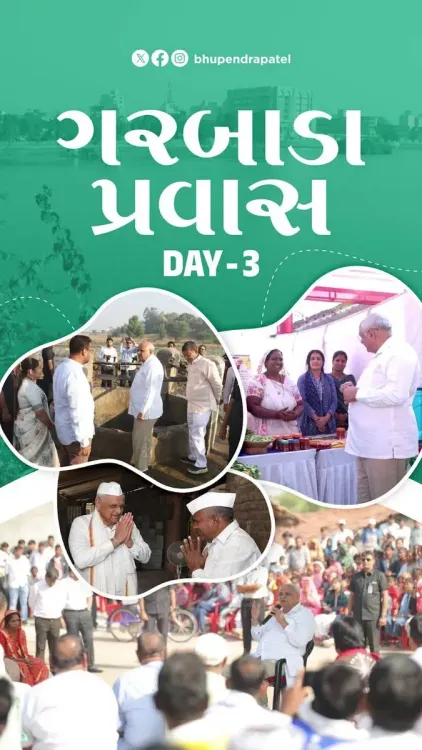
Gujarat Chief Minister Bhupendra Patel concluded the third day of his Dahod tribal belt tour on 20 November 2026, engaging fishing families at Thakkar Bapa Sarovar, attending a folk-dance community sit-in at Chandavada, visiting the ancient Bavka Shivmandir, and discussing natural farming with Sakhi Mandal women in border village Khangela.
Key Takeaways
Day 3 of Chief Minister Bhupendra Patel 's multi-day tour of Dahod , a tribal-majority district in eastern Gujarat, took place on 20 November 2026 .
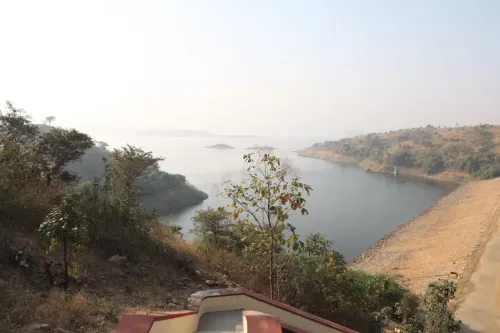
Morning began at Thakkar Bapa Sarovar , Pata Dungri , named after tribal-welfare reformer Amritlal Vithaldas Thakkar , with a dialogue with fishermen families.
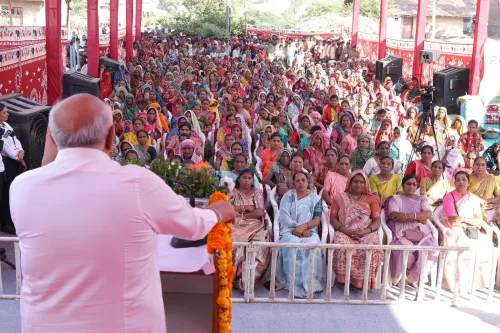
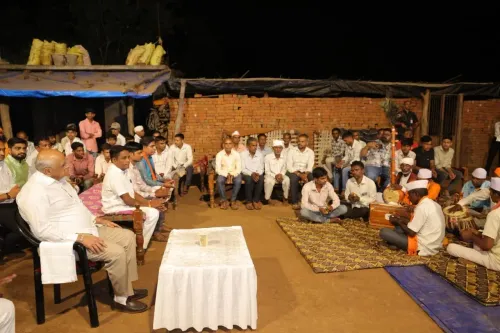
A khata baithak community session in Chandavada featured local folk dance and a warm reception by differently-abled residents.
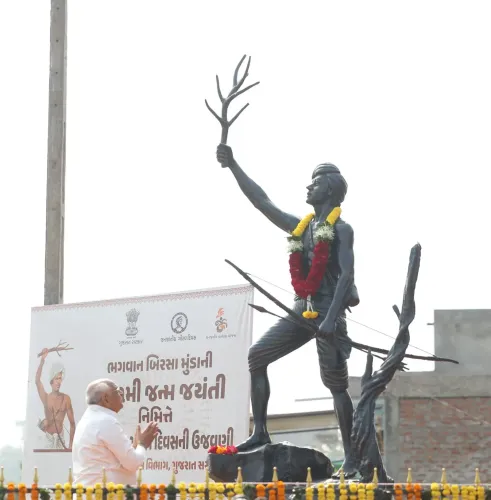
The ancient Bavka Shivmandir was visited for religious observance before the day's key policy stop.
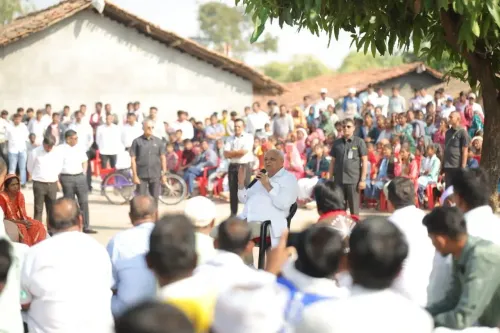
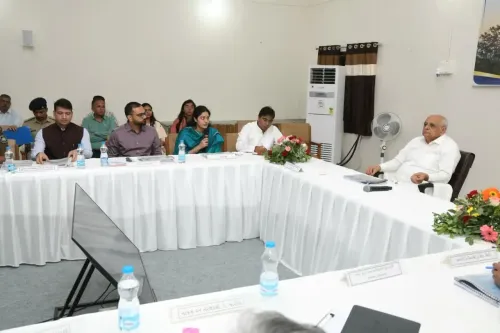
At border village Khangela , Patel held discussions on development and natural farming with villagers and Sakhi Mandal women's self-help group members.
The tour aligns with Gujarat's Vanbandhu Kalyan Yojana (active since 2007 ), the flagship scheme for accelerated development in tribal districts.
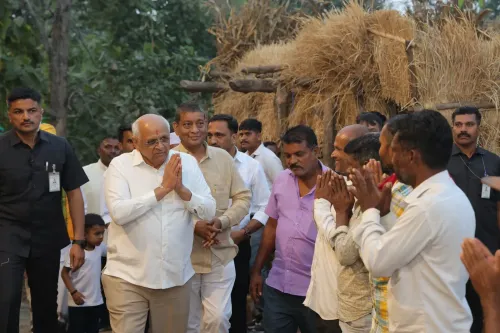
Before the morning mist had lifted over eastern Gujarat's hills, Gujarat Chief Minister Bhupendra Patel was already at the water's edge — visiting Thakkar Bapa Sarovar at Pata Dungri on the third consecutive day of his immersion tour of Dahod, one of the state's most tribal-intensive districts, on Friday, 20 November 2026.
The Chief Minister opened his day with a conversation with fishing families at the reservoir — named after Amritlal Vithaldas Thakkar, the celebrated social reformer who devoted his life to tribal welfare. It was a deliberate choice of setting: a space that links Gujarat's past commitment to its tribal belt to its present-day governance tour.
A 'Khata Baithak' in Chandavada — and a Welcome From the Differently-Abled
From the lakeside, Patel moved to Chandavada, where a khata baithak — a ground-level community sitting — brought together folk-dance performances and a reception led by differently-abled residents of the area. In his post, the Chief Minister described the moment as one that 'bhavvibhor kari didhu' — deeply moved him. These open-floor community sessions are a signature feature of the Gujarat government's tribal outreach model, designed to collapse the distance between administration and citizen.
Temple Visit, Then Ground-Level Talks on Natural Farming in Khangela
The afternoon took Patel to the ancient Bavka Shivmandir, a historic Shiva temple in the Dahod region, for darshan and pujan. The spiritual pause preceded perhaps the day's most substantive stop: Khangela, a border village on the edges of the district, where the Chief Minister sat with villagers and women members of Sakhi Mandals — the self-help groups that have become a core pillar of rural economic activity across Gujarat — for discussions on local development and natural farming.
Natural farming has been a consistent policy emphasis in Gujarat's tribal eastern districts, running alongside long-standing infrastructure investments under the Vanbandhu Kalyan Yojana, the state's flagship tribal-development programme active since 2007. Village-level conversations like the one in Khangela are where policy intent meets lived reality — and where the state takes stock of what is, and is not, working on the ground.
Three Days Deep in Dahod's Tribal Belt
Patel's post frames the tour not as an inspection but as a listening exercise — an opportunity, in his words, to 'directly know the feelings and expectations of the people.' The three-day format gives the administration time beyond ribbon-cutting: enough days to visit fishing communities, border villages, heritage temples, and women's collectives within a single district visit.
Dahod's tribal population has long been a political and developmental focal point for the Gujarat government, and high-profile CM visits signal continued priority at the top. Whether the Khangela discussions on natural farming or the Sakhi Mandal dialogue translate into scheme announcements in the assembly session ahead will be the real measure of this tour's weight.
Point of View
Allowing them to associate directly with marginalised communities without being filtered through bureaucratic reportage. For Bhupendra Patel, whose political identity is closely tied to Gujarat's development record, a three-day stay in Dahod — covering fishing communities, the differently-abled, border villages, and women's SHGs — ticks multiple constituency boxes simultaneously. The emphasis on natural farming discussions in a tribal border village is notable: it plugs into a statewide agrarian pivot that the Gujarat government has been pushing for several years, and village-level conversations of this kind often precede formal pilot announcements. The real test will come in the assembly session that follows, where demands and aspirations surfaced on such tours are expected to find expression in allocations and policy notifications.
NationPress
20 Nov 2026
Frequently Asked Questions
Why did CM Bhupendra Patel visit Dahod for three days?
Chief Minister Bhupendra Patel undertook a three-day immersion tour of Dahod, a tribal-majority district in eastern Gujarat, to directly engage with tribal communities, fishing families, differently-abled residents, and women's self-help groups and understand their development needs and aspirations.
What is Thakkar Bapa Sarovar in Dahod?
Thakkar Bapa Sarovar is a reservoir at Pata Dungri in Dahod district, named after social reformer Amritlal Vithaldas Thakkar, who dedicated his life to working with tribal communities across India.
What is a Sakhi Mandal in Gujarat?
Sakhi Mandals are women's self-help groups promoted across Gujarat's villages to support economic empowerment and community activities, playing a key role in rural development especially in tribal regions.
What is the Vanbandhu Kalyan Yojana?
The Vanbandhu Kalyan Yojana is Gujarat's flagship tribal-development programme, launched in 2007, aimed at accelerating infrastructure, education, health, and livelihood improvements in tribal-majority districts including Dahod.
What did CM Bhupendra Patel discuss in Khangela village?
In Khangela, a border village in Dahod district, CM Bhupendra Patel held discussions with villagers and Sakhi Mandal members on local development priorities and natural farming practices as part of his tribal-belt outreach tour.