CM Bhupendra Patel hails Modi's push for last-mile inclusion
Synopsis
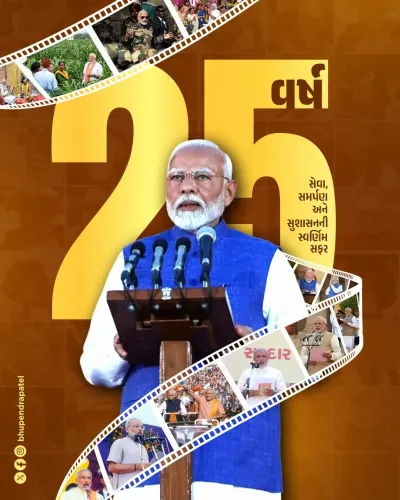
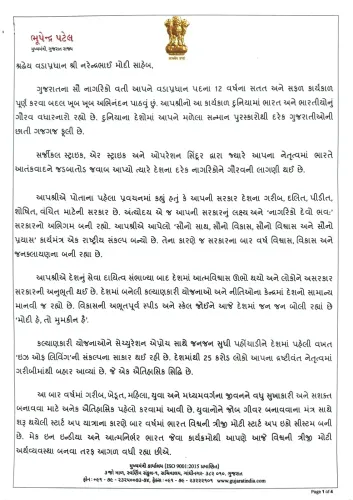
Gujarat Chief Minister Bhupendra Patel publicly credited Prime Minister Narendra Modi with championing inclusive development for India's poorest citizens, calling his welfare mission a sacred undertaking and honouring those previously ignored by the system.
Key Takeaways
Gujarat CM Bhupendra Patel posted a tribute to PM Narendra Modi on June 12, 2026 , praising his focus on the poor and marginalised.
Patel used the Gujarati word yagna (sacred ritual) to describe Modi's development mission, underscoring its cultural framing.
The tribute references Modi's 'Sabka Saath, Sabka Vikas' inclusive growth philosophy, active since 2014 .
Key welfare schemes cited in the research background include PM Jan Dhan Yojana (2014) and Ujjwala Yojana (2016) , both targeting last-mile beneficiaries.
The post continues an established pattern of BJP state leaders publicly aligning with the Union government's social-sector narrative.
Gujarat holds symbolic importance in this narrative as the state where Modi first developed his governance model as Chief Minister.
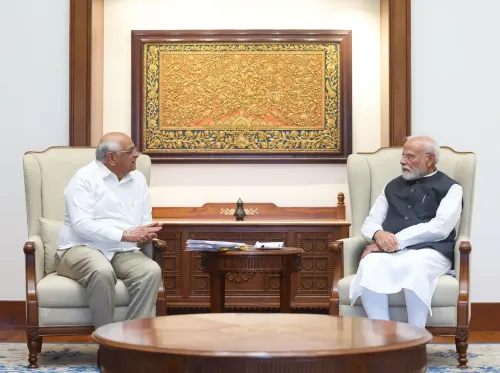
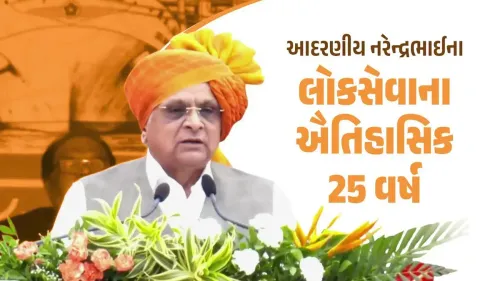
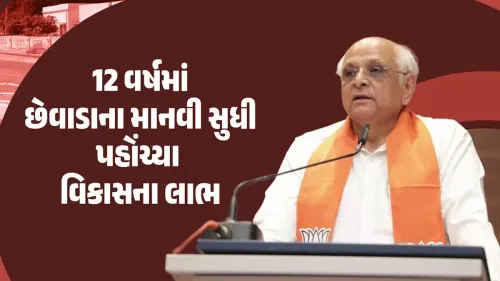
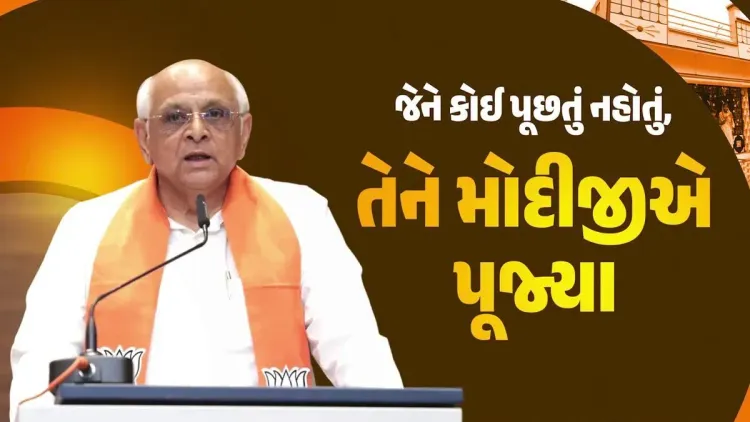
Gujarat Chief Minister Bhupendra Patel on Friday, June 12, 2026, publicly credited Prime Minister Narendra Modi with bringing the poorest and most marginalised citizens into the mainstream of development, saying those who were once ignored have now been honoured by Modi's governance approach.
Context
Posting in Gujarati on X, Chief Minister Patel wrote: 'Modi saahebe garib, vanchit ane chhevadana maanvine vikaasni mukhya dharaama laavavano yagna aadaryo chhe. Jemne koi puchhatu nahotun temne Modijiye pujya chhe.' Translated, this reads: 'Modi saheb has undertaken a sacred mission to bring the poor, the deprived, and the last person in line into the mainstream of development. Those whom nobody cared to ask, Modi has revered them.'
The statement is a direct tribute to the Prime Minister's welfare-oriented governance philosophy, framing social inclusion as a near-spiritual endeavour — the word yagna (sacred fire ritual) carrying strong cultural weight in Gujarati public discourse.
Policy Backdrop
The tribute aligns closely with the 'Sabka Saath, Sabka Vikas' (Together with all, Development for all) vision that Prime Minister Modi articulated upon assuming office in 2014. That framework underpinned a series of Antyodaya-oriented — or 'last person first' — programmes designed to reach households historically excluded from formal welfare systems.
Flagship initiatives such as the PM Jan Dhan Yojana, launched in 2014 to provide universal banking access to unbanked households, and the Ujjwala Yojana, launched in 2016 to supply clean cooking fuel to below-poverty-line families, became central examples of this approach. Both schemes targeted beneficiaries who had previously fallen outside the reach of state services.
Gujarat itself served as an early laboratory for several development models under Modi when he was Chief Minister of the state before moving to the Centre, giving the state a particular symbolic resonance in BJP's narrative of inclusive growth.
Stakeholders and Impact
The communities most directly referenced in Patel's post are poor households, marginalised communities, and those described as chhevadana maanvi — the person at the furthest edge, a phrase that maps closely onto the Antyodaya concept of the most deprived individual as the primary target of policy.
Chief Minister Patel's public endorsement reinforces the communication link between Gujarat's state administration and the Union government's welfare narrative, signalling continued alignment on social-sector priorities. Such messaging also serves to remind constituents of the perceived personal commitment of national leadership to grassroots welfare.
What's Next
Observers will watch for follow-through in the form of state-level scheme rollouts or implementation updates in Gujarat that give operational weight to the inclusive development rhetoric. With BJP chief ministers across states echoing similar themes ahead of national policy reviews, Patel's post is part of a broader coordinated messaging pattern that is likely to intensify as central welfare scheme anniversaries and review cycles approach.
Point of View
It signals a coordinated messaging cycle likely tied to upcoming policy reviews or electoral groundwork.
NationPress
26 Oct 2026
Frequently Asked Questions
What did Gujarat CM Bhupendra Patel say about PM Modi?
Chief Minister Bhupendra Patel said PM Modi has undertaken a sacred mission to bring the poor, deprived, and last-mile citizens into the mainstream of development, and has honoured those who were previously ignored.
What does 'Sabka Saath, Sabka Vikas' mean?
'Sabka Saath, Sabka Vikas' translates to 'Together with all, Development for all' — it is the inclusive growth slogan adopted by Prime Minister Modi's government since 2014 to emphasise welfare for all sections of society.
What welfare schemes did Modi launch for the poor?
Key schemes include PM Jan Dhan Yojana (2014), which provided bank accounts to unbanked households, and Ujjwala Yojana (2016), which supplied clean cooking gas to below-poverty-line families.
Who is Bhupendra Patel?
Bhupendra Patel is the Chief Minister of Gujarat and a BJP leader who took office in 2021, succeeding Vijay Rupani.
Why does Gujarat have significance in BJP's development narrative?
Gujarat is significant because Prime Minister Modi served as its Chief Minister before 2014, and the state's governance model is often cited as a precursor to the development policies later implemented nationally.