CM Bhupendra Patel Credits Gokul Mission for India's Dairy Rise
Synopsis
Gujarat CM Bhupendra Patel highlighted Rashtriya Gokul Mission, IVF cattle technology, free livestock vaccination and Bio-CNG plants as the pillars behind India's rise to become the world's largest milk producer, tagging PM Modi on 30 October 2026.
Key Takeaways
Gujarat CM Bhupendra Patel posted on 30 October 2026 crediting central livestock schemes for India's global dairy leadership.
He named four specific interventions: Rashtriya Gokul Mission , modern IVF technology , free vaccination , and Bio-CNG plants .
Rashtriya Gokul Mission was launched in December 2014 to conserve indigenous breeds and improve milk productivity through scientific breeding.
Bio-CNG plants convert cattle waste into commercially sellable compressed biogas, adding a second income stream for livestock owners.
Gujarat has historically been a demonstration state for national dairy policy, with roots in the cooperative model behind Operation Flood .
Annual milk production data from the Department of Animal Husbandry and Dairying will be key to verifying scheme-linked income gains at the household level.
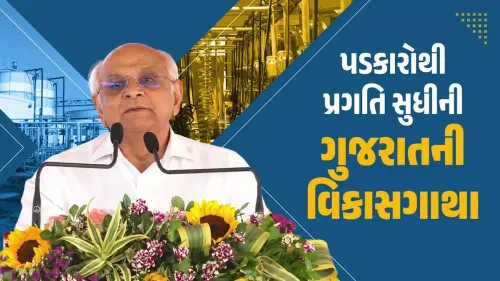
India's dairy sector has quietly become a global benchmark — and Gujarat Chief Minister Bhupendra Patel wants the country to know why. On Friday, 30 October 2026, the CM posted on X crediting a suite of central interventions for pushing India to the top of world milk production rankings, tagging Prime Minister Narendra Modi and the hashtag #KisanKalyanSeRashtraKalyan (meaning 'from farmer welfare to national welfare').
CM Patel's post names four specific drivers: the Rashtriya Gokul Mission, modern IVF technology for cattle breeding, free vaccination programmes for livestock, and Bio-CNG plants that convert cattle waste into clean fuel. His argument, in translation: 'Through Rashtriya Gokul Mission, modern IVF technology, free vaccination, and Bio-CNG plants, livestock keepers are gaining new momentum in income. That is why, with the protection and modernisation of livestock, India is today number one in the world in milk production.'
Rashtriya Gokul Mission and the Science of Better Cattle
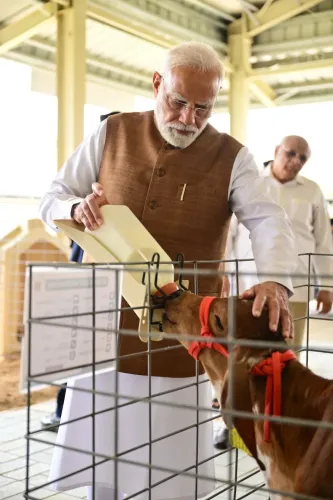
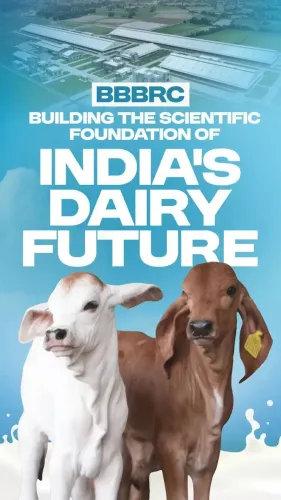
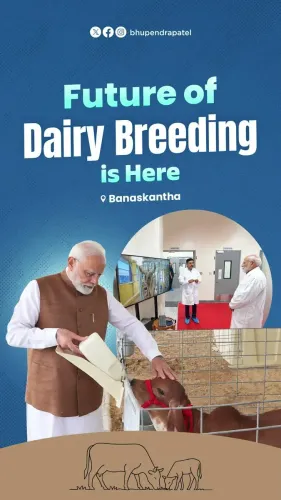
The Rashtriya Gokul Mission was launched in December 2014 with a specific mandate: conserve indigenous bovine breeds — Gir, Sahiwal, Red Sindhi — and improve their milk yield through scientific breeding. The scheme brought embryo transfer and IVF techniques out of elite research farms and into the field, enabling ordinary dairy farmers to access high-productivity genetics without replacing their native stock. That is a meaningful distinction — productivity gains without breed homogenisation.
Free vaccination under animal-husbandry programmes has lowered the cost of disease management for small holders, while Bio-CNG plants represent a newer revenue layer: cattle dung processed into compressed biogas that can be sold commercially, giving livestock owners income beyond milk. Gujarat has historically served as a demonstration state for national dairy initiatives, home to the cooperative model that inspired Operation Flood — the world's largest dairy development programme — decades ago.
India at Number One: What the Global Ranking Reflects
India's position as the world's largest milk producer is not new — it has held that rank for several years — but the policy conversation has shifted from volume to value. The question being asked now is whether higher output is translating into higher incomes for the roughly 80 million rural households dependent on livestock. CM Patel's framing positions the current scheme architecture as the answer to that question, linking modern reproductive technology and waste monetisation directly to farmer income.
Successive governments have layered interventions on the foundation of Operation Flood, and the current combination of IVF-driven genetics, disease prevention, and bio-energy creation represents the most technology-intensive iteration yet. The Department of Animal Husbandry and Dairying tracks annual milk production data — the next release will be closely watched to see whether scheme-era investments show up in per-animal and per-household yield statistics.
From the cooperative villages of Anand to a global production summit — India's dairy story keeps writing itself. The real test now is whether the numbers on scheme dashboards are reaching the farmer's pocket.
Point of View
And doing so under a hashtag that fuses farmer welfare with national progress. It reinforces a rural messaging strategy the BJP has used consistently since 2014, positioning livestock modernisation as a proxy for broader agrarian uplift. The inclusion of Bio-CNG plants is notable: it signals an effort to frame livestock policy as also contributing to India's clean-energy narrative, broadening the appeal beyond dairy-belt farmers. Whether scheme intent has translated into verifiable household-income gains remains the empirical question that will determine if this framing holds beyond the political cycle.
NationPress
30 Oct 2026
Frequently Asked Questions
What is the Rashtriya Gokul Mission?
Rashtriya Gokul Mission is a central government scheme launched in December 2014 to conserve indigenous cattle breeds and improve their milk productivity through modern breeding techniques including IVF and embryo transfer technology.
Is India really the world's largest milk producer?
Yes, India has held the position of the world's largest milk producer for several years, a status rooted in the dairy cooperative movement and subsequent government-backed productivity programmes.
What are Bio-CNG plants in the context of animal husbandry?
Bio-CNG plants process cattle dung and other organic waste into compressed biogas that can be used as clean fuel or sold commercially, giving livestock keepers an additional income stream beyond milk.
What did Gujarat CM Bhupendra Patel say about dairy farmers?
On 30 October 2026, CM Patel posted on X stating that Rashtriya Gokul Mission, IVF technology, free vaccination and Bio-CNG plants are giving livestock keepers new momentum in income and have helped India become number one in milk production globally.
How does Gujarat fit into India's national dairy policy?
Gujarat has historically been a model state for dairy development in India — it was home to the cooperative movement that inspired Operation Flood — and continues to serve as a demonstration ground for central animal-husbandry schemes.