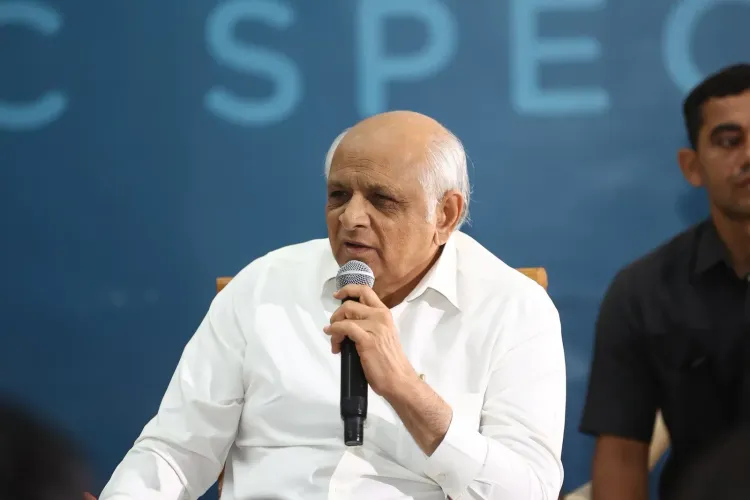
CM Bhupendra Patel Meets Cochlear Implant Beneficiary Kids at Science City
Synopsis
Chief Minister Bhupendra Patel met 20 children at Science City, Ahmedabad, who benefited from Gujarat's free Cochlear Implant External Speech Processor Replacement Programme. Parents thanked the RBSK team and state Health Department. The CM urged attendees to guide other eligible families to access the scheme.
Key Takeaways
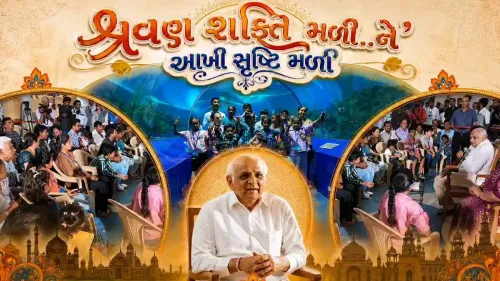
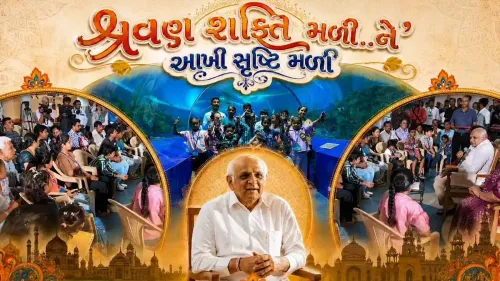
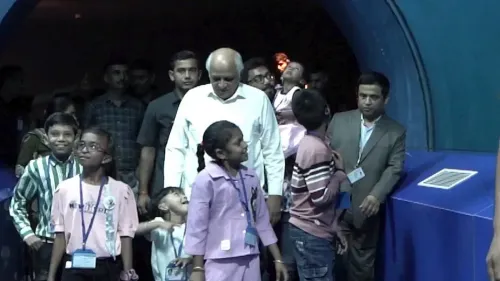
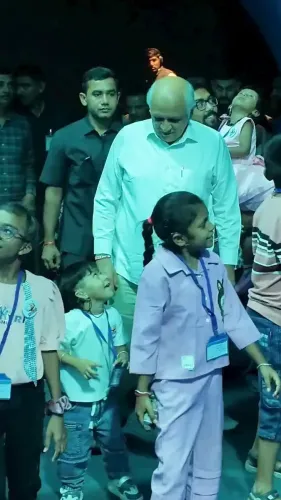
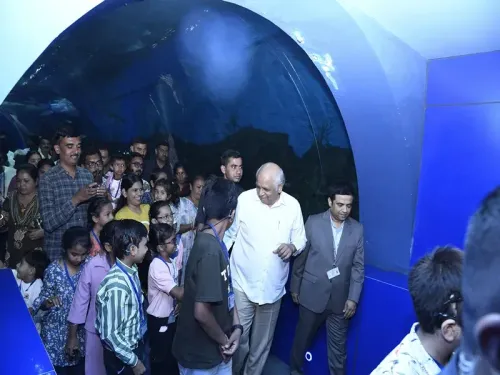
CM Bhupendra Patel held an informal interaction with 20 children who are beneficiaries of Gujarat's free cochlear implant processor replacement scheme at Science City, Ahmedabad on 23 May 2026 .
The Cochlear Implant External Speech Processor Replacement Programme provides free external speech processors to hearing-impaired children, removing a recurring high-cost barrier after initial implant surgery.
The programme operates under the national RBSK (Rashtriya Bal Swasthya Karyakram) framework, launched in 2013 under the National Health Mission .
Parents of beneficiaries thanked the state government, the RBSK team, the Health Department , and hospitals including Sola Civil Hospital for free access to the costly devices.
CM Patel urged all present to spread awareness and guide eligible families in their communities to avail the scheme's benefits.
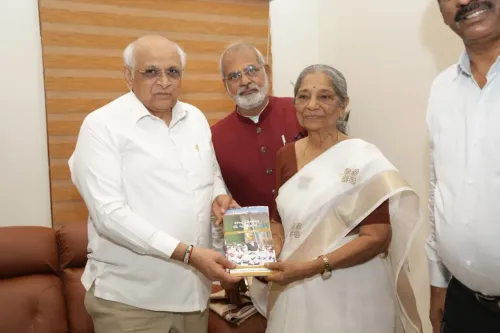
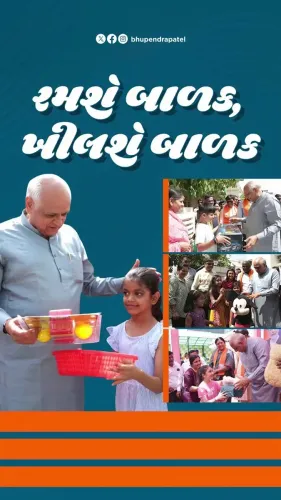
The Chief Minister's Office of Gujarat announced on Saturday, 23 May 2026, that Chief Minister Bhupendra Patel held a warm, informal interaction with 20 children who have benefited from the state government's Cochlear Implant External Speech Processor Replacement Programme, at Science City, Ahmedabad. The children, many of whom have recently gained the ability to hear and speak, were seen smiling as they conversed with the Chief Minister.
Context
The post, shared by the official Chief Minister's Office account, describes the event in Gujarati as a 'sahaj ane vatsalyasabhar samvad' — a 'natural and affectionate conversation' — between CM Patel and the young beneficiaries. The children, who had received free replacement external speech processors under the state scheme, interacted directly with the Chief Minister, an opportunity their parents described as deeply meaningful. The faces of the children, the post noted, 'broke into smiles at the chance to speak with the Chief Minister after finding their voice.'
Parents of the beneficiaries used the occasion to express gratitude to the state government, the RBSK (Rashtriya Bal Swasthya Karyakram) team, the state Health Department, and hospitals including Sola Civil Hospital, Ahmedabad, for providing the costly implant processors free of charge.
Policy Backdrop
RBSK, launched in 2013 under the National Health Mission, is a national child health screening and early intervention programme that covers birth defects, developmental delays, and hearing loss in children aged 0 to 18 years. Gujarat's Cochlear Implant External Speech Processor Replacement Programme builds on this national framework by specifically addressing the recurring cost of external processors — a significant financial barrier for low-income families who have already undergone initial implant surgery.
Cochlear implant systems consist of an internal surgically implanted component and an external speech processor. While initial surgeries are expensive, the external processor also requires periodic replacement, a cost that can run into several lakhs of rupees and is often unaffordable for economically vulnerable families. Gujarat's programme removes this recurring burden entirely for eligible beneficiaries. Similar state-level expansions of assistive device coverage have been observed in Maharashtra, Tamil Nadu, and Karnataka since the mid-2010s.
Stakeholders and Impact
The primary beneficiaries are hearing-impaired children from families that would otherwise be unable to afford replacement processors, effectively cutting off a child's ability to hear and speak years after a successful implant surgery. By providing free replacements, the programme ensures continuity of hearing rehabilitation through critical developmental years. Parents at the Science City event specifically acknowledged the RBSK field teams for identifying eligible children and facilitating access to the scheme.
CM Patel used the occasion to appeal to all parents and attendees to actively guide other families in their communities who may have hearing-impaired children toward this scheme. He urged those present to spread awareness so that no eligible child is left without access to the programme's benefits.
What's Next
The Chief Minister's public appeal for community-level outreach signals that the state government is looking to expand the programme's reach beyond current beneficiaries through grassroots awareness. District-level drives and any revision to annual beneficiary targets under the Gujarat health budget will be key indicators of the programme's scale-up. Continued coordination between RBSK teams, government hospitals, and local health workers will determine how effectively the scheme reaches children in rural and semi-urban areas of the state.
Point of View
One that recognises the lifecycle cost of disability management rather than treating a single intervention as sufficient. CM Patel's personal interaction with beneficiaries at a high-visibility venue like Science City is a deliberate act of political communication, reinforcing the government's welfare credentials ahead of continued scrutiny of public health spending. The appeal for community-level outreach shifts part of the programme's expansion burden onto civil society, a common strategy in Indian public health that can accelerate reach but also exposes gaps in formal district-level delivery infrastructure. The event fits a broader national pattern of state governments using RBSK as a platform to layer additional high-cost interventions, signalling competitive welfare positioning among larger states.
NationPress
20 Sept 2026
Frequently Asked Questions
What is Gujarat's Cochlear Implant External Speech Processor Replacement Programme?
It is a Gujarat state government scheme that provides free replacement of external speech processors to children who have already received cochlear implants, eliminating the recurring out-of-pocket cost of the device for eligible families.
What is RBSK and how does it relate to this scheme?
RBSK, or Rashtriya Bal Swasthya Karyakram, is a national child health screening and early intervention programme launched in 2013 under the National Health Mission. Gujarat's cochlear implant processor scheme builds on the RBSK framework, using its field teams to identify and support eligible hearing-impaired children aged 0 to 18.
How much does a cochlear implant external speech processor cost?
External speech processors for cochlear implants can cost several lakh rupees, making periodic replacement unaffordable for many low-income families. Gujarat's programme covers this cost entirely for eligible beneficiaries.
Which hospitals in Gujarat are involved in the cochlear implant scheme?
Sola Civil Hospital in Ahmedabad has been specifically named as a participating institution. The scheme is implemented in coordination with the state Health Department and RBSK teams across Gujarat.
How can families access Gujarat's free cochlear implant processor scheme?
Families with hearing-impaired children can reach out to their nearest RBSK team or government health facility. CM Bhupendra Patel has also urged community members to actively guide eligible families toward the scheme.