CM Bhupendra Patel Meets Children Who Got Free Cochlear Implants
Synopsis
Gujarat Chief Minister Bhupendra Patel visited Science City Ahmedabad to meet children who received free cochlear implants under a state scheme. He called the outing his greatest achievement of the day and urged citizens to help needy children access the programme.
Key Takeaways
Gujarat CM Bhupendra Patel met cochlear-implant beneficiary children at Science City, Ahmedabad on 24 May 2026 .
The state scheme provides free cochlear implant surgery to children up to six years of age .
A one-time free replacement of the external speech processor is also covered if the device fails.
The Gujarat programme supplements the central ADIP scheme , which has funded implants since 2014 .
CM Patel appealed to citizens to guide eligible children toward the scheme so no child is left without treatment .
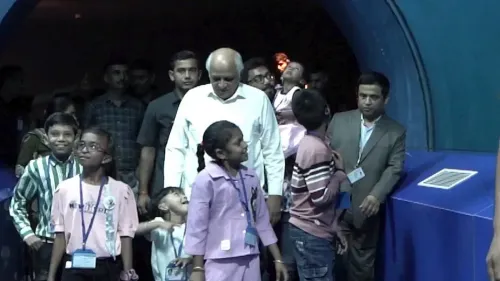
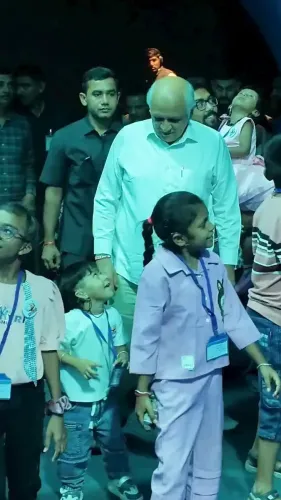
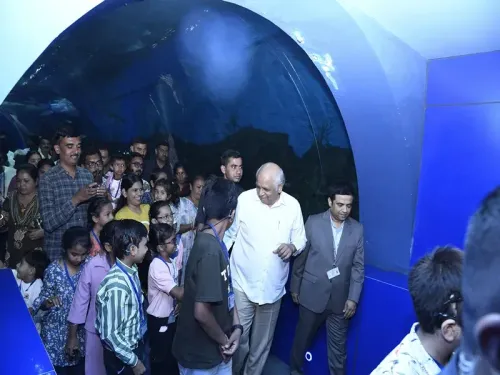
The Chief Minister accompanied the children on a tour of the Aquatic Gallery , describing their enthusiasm as the 'biggest achievement of the day.'
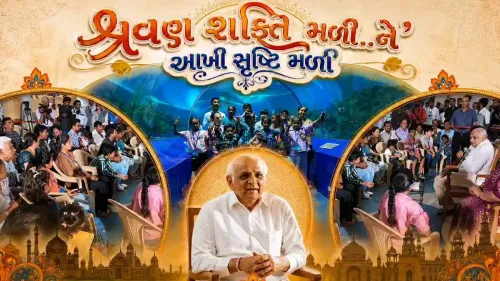
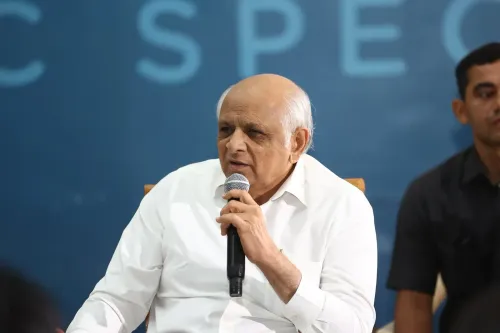
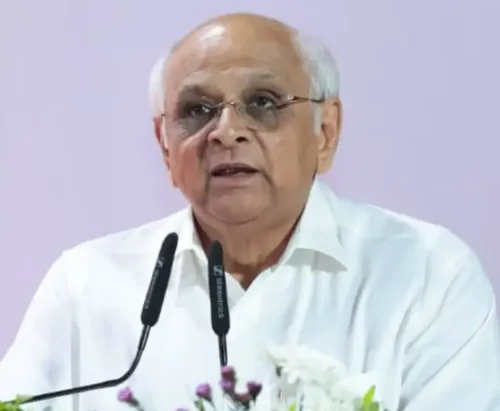
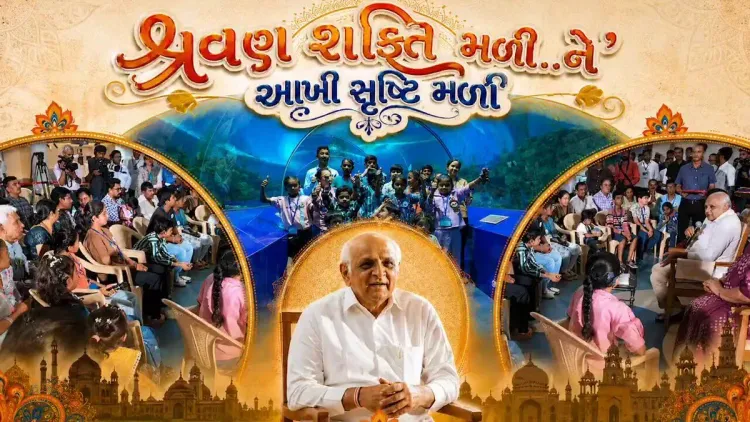
Gujarat Chief Minister Bhupendra Patel on Sunday, 24 May 2026, met a group of hearing-impaired children at Science City, Ahmedabad, who have benefited from the state government's free cochlear implant programme. The Chief Minister accompanied the children on a tour of the facility's Aquatic Gallery and shared his experience on X, calling the outing the 'biggest achievement of the day.'
In his post, written in Gujarati, CM Patel reflected on the anguish families face when they discover their child cannot hear — 'માતાપિતાને જ્યારે ખ્યાલ આવે કે તેમનું બાળક સાંભળી શકતું નથી, ત્યારે કેટલો મોટો આઘાત લાગે' ('When parents realise their child cannot hear, what a tremendous shock it is'). He described watching the children speak and listen as evoking feelings of 'affection, hope, trust, and satisfaction all at once.'
Context
The visit centred on children who have received cochlear implants under a Gujarat government scheme that provides the surgery free of cost to children up to six years of age. The scheme also covers a one-time free replacement of the external speech processor should it fail — a significant provision given that replacement devices are otherwise expensive.
CM Patel noted that the children toured the Aquatic Gallery together, marvelling at colourful fish and aquatic life. 'For these children, it is not just hearing that has opened up — an entire world has opened up,' he wrote. 'The smiles on their faces and the sound of their voices became the greatest achievement of my day.'
Policy Backdrop
The Gujarat scheme builds on the central ADIP (Assistance to Disabled Persons) scheme, which has funded cochlear implants for children with severe hearing loss since 2014. Gujarat has supplemented the central provision with state-funded after-care, including the processor replacement benefit, as part of a broader push to expand assistive devices and surgeries for childhood disabilities.
Early intervention through cochlear implantation is widely recognised as critical to enabling hearing-impaired children to develop speech, attend mainstream schools, and integrate socially. The state's approach prioritises children under six because that window is considered optimal for auditory and language development.
Stakeholders and Impact
The primary beneficiaries are children born with severe or profound hearing loss and their families, particularly those from lower-income households who could not otherwise afford the procedure. Cochlear implant surgery and hardware together can run into several lakh rupees in the private sector, making the state subsidy a decisive factor for most families.
CM Patel used the post to appeal to the wider public: 'If there are any needy children in society, let us all guide them to the benefits of this scheme and ensure that no child is left without treatment.' He closed with the hashtag #SoundsOfJoy and a call for collective action to 'fill every child's life with the sound of happiness.'
What's Next
Attention will now turn to the Gujarat state health budget allocations for 2026-27 and whether the government expands the age limit or increases the annual intake of beneficiaries under the scheme. The Chief Minister's public engagement with programme beneficiaries signals continued political priority for the initiative.
Officials and civil-society groups working with hearing-impaired children are likely to use the renewed visibility of the scheme to push for wider community outreach, especially in rural districts where awareness of available government support remains limited.
Point of View
The BJP government in Gujarat positions health-welfare delivery as a compassionate, hands-on endeavour rather than a policy output. The appeal to citizens to spread awareness of the scheme doubles as a community-mobilisation message, extending the programme's reach without additional fiscal outlay. The post fits a broader pattern in which BJP-governed states use early-childhood health interventions to build political goodwill while aligning with the central government's disability-inclusion agenda.
NationPress
13 Oct 2026
Frequently Asked Questions
What is the Gujarat government cochlear implant scheme?
The Gujarat government provides free cochlear implant surgery to children up to six years of age and covers a one-time free replacement of the external speech processor if it stops working.
Who is eligible for the free cochlear implant in Gujarat?
Children up to six years of age with severe or profound hearing loss are eligible for a free cochlear implant under the Gujarat government scheme.
What did CM Bhupendra Patel do at Science City Ahmedabad?
CM Bhupendra Patel visited Science City Ahmedabad on 24 May 2026 to meet children who had received free cochlear implants, accompanying them on a tour of the Aquatic Gallery.
How much does a cochlear implant cost in India?
In the private sector, cochlear implant surgery and hardware can cost several lakh rupees, making government-funded schemes critical for lower-income families.
What is the ADIP scheme for cochlear implants?
The central government's ADIP (Assistance to Disabled Persons) scheme has funded cochlear implants for children with severe hearing loss since 2014, and states like Gujarat have added their own free provisions on top of it.