CM Bhupendra Patel Meets Children Who Regained Hearing via Free Cochlear Surgery
Synopsis
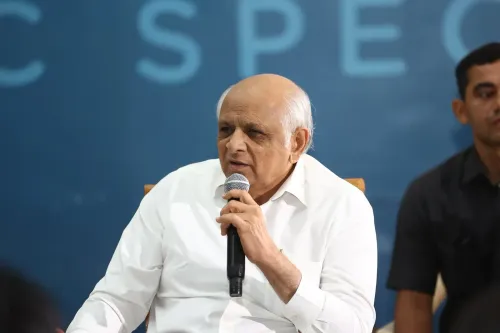
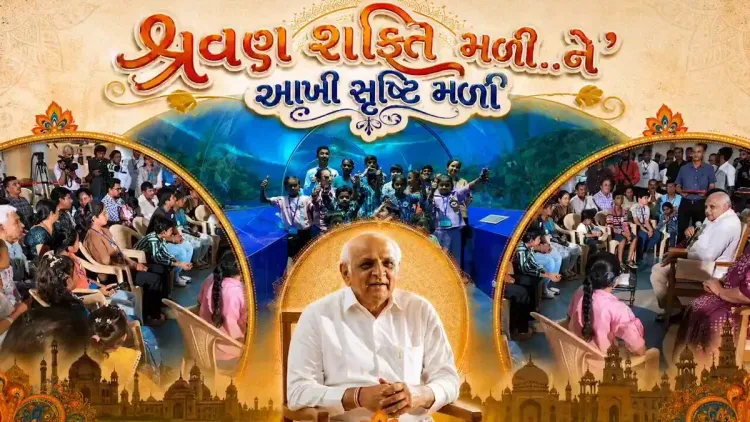
Chief Minister Bhupendra Patel met children who can now hear and speak after receiving free cochlear implant surgeries under Gujarat's state welfare scheme, at an emotional interaction held at Science City, Ahmedabad, on 24 May 2026.
Key Takeaways
CM Bhupendra Patel held a direct interaction with children who regained hearing and speech through the state's free cochlear implant programme at Science City, Ahmedabad on 24 May 2026 .
Gujarat's free cochlear implant surgery scheme has been operational for over a decade as part of the state's disability welfare measures.
The programme targets children with severe-to-profound hearing loss from families unable to afford the procedure privately, where costs can run into several lakh rupees.
Early cochlear implantation is critical for language development and educational integration, making timely state intervention especially significant.
The beneficiary interaction at Science City signals continued political commitment to disability-inclusive healthcare under the Bhupendra Patel government.
Possible expansion of the scheme — including wider screening camps and increased hospital empanelment — may feature in upcoming state health budget discussions.
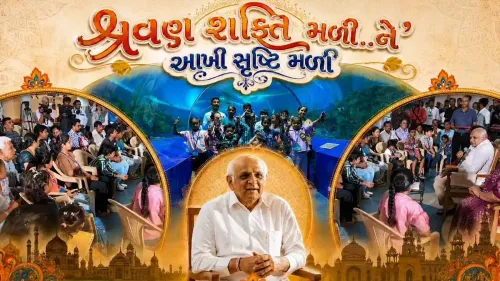
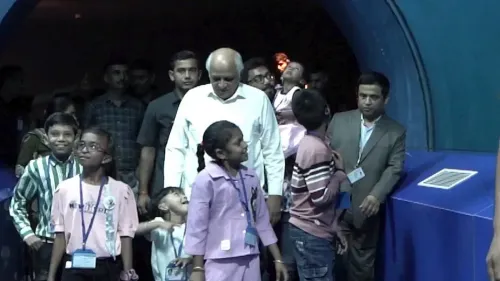
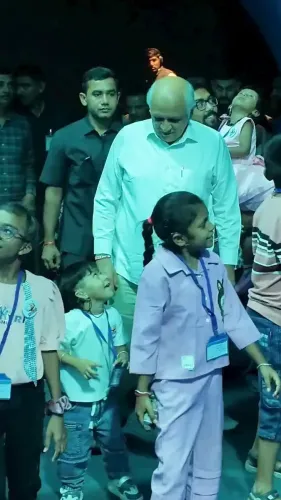
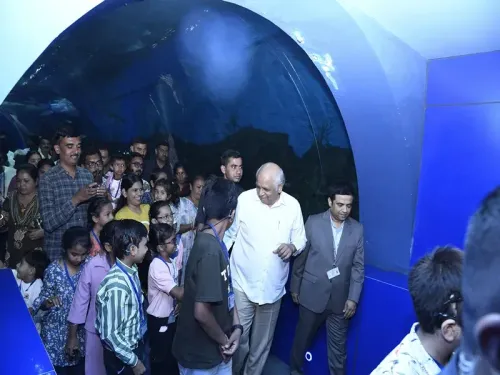
The Chief Minister's Office of Gujarat announced on Sunday, 24 May 2026 that Chief Minister Bhupendra Patel held a warm interaction with children who regained their hearing and speech through the state government's free cochlear implant surgery programme, along with their parents, at Science City, Ahmedabad.
The post, shared with the hashtag #SoundsOfJoy, captured the occasion in Gujarati: 'બાળકના સ્વાસ્થ્ય સાથે આખા પરિવારની ખુશીઓ જોડાયેલી હોય છે' — 'A child's health is intertwined with the happiness of the entire family.' The gathering resounded with, as the post described, 'the joy of children, the satisfaction of families, and the commitment to public welfare.'
Context
Science City in Ahmedabad served as the venue for this beneficiary outreach event, where children who had undergone cochlear implant surgeries at no cost under a state government scheme were brought together with the Chief Minister. Such interactions are designed to put a human face on policy outcomes, allowing elected officials to hear directly from those whose lives the programmes have changed.
Cochlear implants are surgically placed electronic devices that bypass damaged portions of the inner ear and directly stimulate the auditory nerve, enabling profoundly deaf individuals — especially children — to perceive sound and develop speech. Early intervention is considered critical for language acquisition and educational integration.
Policy Backdrop
Gujarat has offered free cochlear implant surgeries for children with severe hearing loss as part of its disability welfare measures for over a decade. The programme falls within a broader state commitment to assistive health interventions, targeting families that would otherwise be unable to afford the procedure, which can cost several lakh rupees in the private sector.
Several Indian states run similar targeted programmes providing assistive devices and surgical interventions for hearing disability, either under state budgets or in coordination with centrally sponsored health schemes. Gujarat's model, with its emphasis on state-funded surgeries and periodic beneficiary events, reflects an approach centred on early intervention to improve long-term educational and social outcomes for hearing-impaired children.
Stakeholders and Impact
The primary beneficiaries are children born with or who develop severe-to-profound hearing loss, along with their families — many from economically weaker sections who rely entirely on state support for such high-cost medical procedures. For these families, a successful cochlear implant surgery represents not just restored hearing but access to mainstream schooling and improved life prospects.
CM Bhupendra Patel's direct engagement with beneficiaries at a public venue like Science City underscores the government's effort to keep welfare delivery visible and accountable, while also reinforcing the programme's reach to communities across Gujarat.
What's Next
Observers will watch whether Gujarat's upcoming state health budget sessions include announcements on expanded allocations for the cochlear implant programme, wider newborn hearing-screening camps, or an increase in the number of empanelled hospitals authorised to perform the surgery. Events like this beneficiary interaction often precede or accompany policy announcements aimed at scaling successful schemes.
The broader implication is a renewed political signal that disability-inclusive healthcare — particularly for children — remains a stated priority for the Bhupendra Patel government, with Science City's public platform lending visibility to outcomes that are otherwise rarely seen by the general public.
Point of View
Emotional outcomes ahead of potential budget cycles. Gujarat's model of state-funded high-cost surgeries for disabled children sits within a competitive landscape where states increasingly use beneficiary events to demonstrate delivery credentials. The choice of Science City as venue broadens the audience beyond policy circles, projecting the programme as a mainstream success story. If followed by concrete expansion announcements, this interaction could mark the beginning of a renewed push to scale one of the state's quieter but impactful health interventions.
NationPress
19 Sept 2026
Frequently Asked Questions
What is Gujarat's free cochlear implant surgery scheme?
Gujarat's free cochlear implant surgery scheme is a state government programme that provides cochlear implant surgeries at no cost to children with severe-to-profound hearing loss, particularly from economically weaker families who cannot afford the procedure privately.
What did CM Bhupendra Patel do at Science City Ahmedabad on 24 May 2026?
CM Bhupendra Patel held a warm interaction with children who had regained their hearing and speech through the state's free cochlear implant programme, along with their parents, at Science City, Ahmedabad.
How much does a cochlear implant surgery cost in India?
Cochlear implant surgery in the private sector in India can cost several lakh rupees, making it inaccessible for many families without state support or insurance coverage.
Why is early cochlear implantation important for children?
Early cochlear implantation is critical because it allows children to develop hearing and speech during the formative years of language acquisition, significantly improving their educational and social outcomes.
Which other Indian states have free cochlear implant or hearing disability programmes?
Several Indian states run targeted programmes providing assistive devices and surgeries for hearing disability, either through state budgets or in coordination with centrally sponsored health schemes, though the scope and scale vary by state.