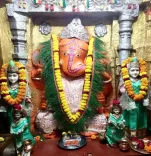
CM Bhupendra Patel shares 'Om Namah Shivaya' on X
Synopsis
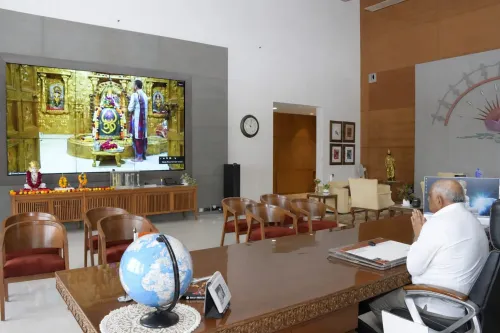
Gujarat Chief Minister Bhupendra Patel shared the sacred mantra 'Om Namah Shivaya' on X on 8 July 2026, accompanied by a video. The devotional post reflects the BJP's established practice of public Hindu cultural expression and aligns with Gujarat's strong religious tourism identity.
Key Takeaways
Gujarat Chief Minister Bhupendra Patel posted the mantra ॐ नमः शिवाय on X on 8 July 2026 .
The post included a video and carried no additional text beyond the sacred Shaivite invocation.
BJP leaders routinely share Hindu religious content on social media as expressions of personal faith and cultural identity.
Gujarat has been BJP-governed since 1995 and hosts major Shiva-linked pilgrimage sites including the Somnath Jyotirlinga .
Patel has served as Chief Minister since 2021 and was re-elected in 2022 .
No specific festival or policy event was linked to the post at the time of publication.
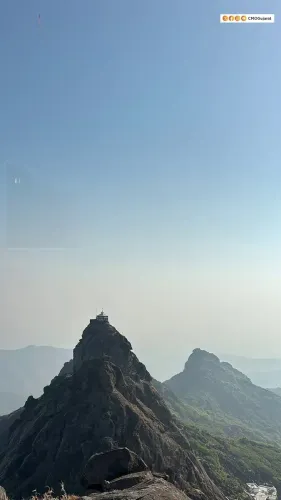
Gujarat Chief Minister Bhupendra Patel posted the sacred Shaivite mantra ॐ नमः शिवाय ('Om Namah Shivaya') on his official X account on Wednesday, 8 July 2026, accompanied by a video, in what appears to be a personal devotional expression shared with his followers.
Context
The five-syllable mantra Namah Shivaya is among the most widely recited invocations in Hindu tradition, addressed to Lord Shiva. Chief Minister Patel's post carried no accompanying text beyond the mantra itself, making it a standalone devotional statement rather than a policy announcement.
Indian political leaders, particularly those from the Bharatiya Janata Party (BJP), regularly share religious mantras and cultural expressions on social media as markers of personal faith and cultural identity. Such posts are a common feature of BJP leaders' public communication.
Policy Backdrop
Gujarat, governed by the BJP continuously since 1995, has invested significantly in religious and cultural tourism infrastructure. The state is home to several prominent Shiva-associated pilgrimage sites, including the Somnath temple on the southern coast, one of the twelve Jyotirlingas, and Dwarka, a major Hindu pilgrimage destination.
The BJP's broader political philosophy emphasises visible Hindu symbolism in public life, and senior leaders routinely use social media platforms to reinforce this cultural positioning with their voter base. Such posts typically draw high engagement from the party's core constituency of Hindu devotees across Gujarat and nationally.
Stakeholders and Impact
The post is directed primarily at Gujarat's large community of Shaivite devotees and the broader Hindu electorate that forms a key constituency for the BJP. For many followers, a Chief Minister publicly invoking a sacred mantra carries both spiritual resonance and political signalling about the government's cultural orientation.
Religious tourism boards and temple trusts in Gujarat often benefit from the visibility that senior political figures lend to Hindu pilgrimage culture through such public expressions, even when no direct policy linkage is stated.
What's Next
While the post itself is devotional in nature, observers of Gujarat state politics will watch for any subsequent government announcements related to temple development, Shiva-linked pilgrimage circuits, or cultural events that may follow. The state government has in recent years actively promoted religious tourism as part of its broader economic development agenda.
Chief Minister Bhupendra Patel, who took office in 2021 and was re-elected in 2022, has maintained a consistent public profile that blends administrative focus with visible religious expression, a pattern common among senior BJP leaders across India.
Point of View
Patel signals personal piety while reinforcing the party's broader civilisational identity project. In Gujarat, where religious tourism is an active policy priority, such expressions by the Chief Minister carry implicit weight even when no policy announcement accompanies them. The post fits a well-established pattern across BJP-governed states where the boundary between personal devotion and political communication is deliberately kept fluid.
NationPress
7 Oct 2026
Frequently Asked Questions
Why did Gujarat CM Bhupendra Patel post 'Om Namah Shivaya' on X?
The post appears to be a personal devotional expression. No specific festival or policy event was officially linked to it at the time of publication on 8 July 2026 .
What does 'Om Namah Shivaya' mean?
'Om Namah Shivaya' is a five-syllable Sanskrit mantra from Hindu tradition meaning 'I bow to Shiva.' It is one of the most widely recited invocations addressed to Lord Shiva.
Who is Bhupendra Patel?
Bhupendra Patel is the Chief Minister of Gujarat , serving since 2021 . He is a senior BJP leader who was re-elected to the post after the 2022 Gujarat Assembly elections.
Do BJP leaders often share religious posts on social media?
Yes. BJP leaders across India regularly share Hindu mantras, festival greetings, and devotional content on social media, consistent with the party's emphasis on Hindu cultural expression in public life.
What are Gujarat's major Shiva pilgrimage sites?
Gujarat is home to the Somnath temple , one of the twelve Jyotirlingas, and Dwarka , among other significant Hindu pilgrimage destinations that the state government actively promotes for religious tourism.