CM Bhupendra Patel Calls Industry to Drive Gujarat's $5 Trillion Vision
Synopsis
Chief Minister Bhupendra Patel attended the GCCI office-bearers' installation in Ahmedabad on 30 July 2026, citing Udyog Niti 2026 and urging Gujarat's industrialists to pursue the 'Make in Gujarat, Make for the World' goal in service of India's five-trillion-dollar economy and Viksit Bharat @ 2047 vision.
Key Takeaways
CM Bhupendra Patel attended the GCCI installation ceremony of newly appointed office-bearers in Ahmedabad on 30 July 2026 .
He invoked Gujarat's historic mahajan parampara (merchant guild tradition) to frame the state's modern industrial ambition.
CM Patel urged industrialists to maximise benefits from the state's new Udyog Niti 2026 industrial policy.
The rallying slogan set before the chamber: 'Make in Gujarat, Make for the World' , mirroring the Centre's Atmanirbhar Bharat push.
Gujarat's industrial drive was explicitly linked to India's five-trillion-dollar economy target and the Viksit Bharat @ 2047 national vision.
The GCCI serves as a key bridge between the state government and Gujarat's broader trading and industrial community.
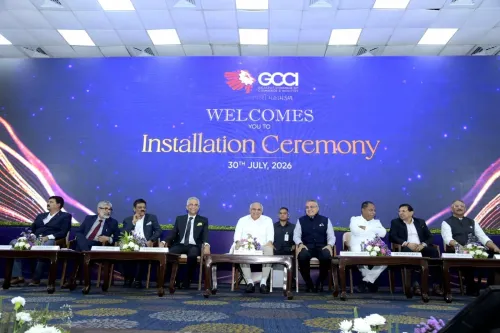
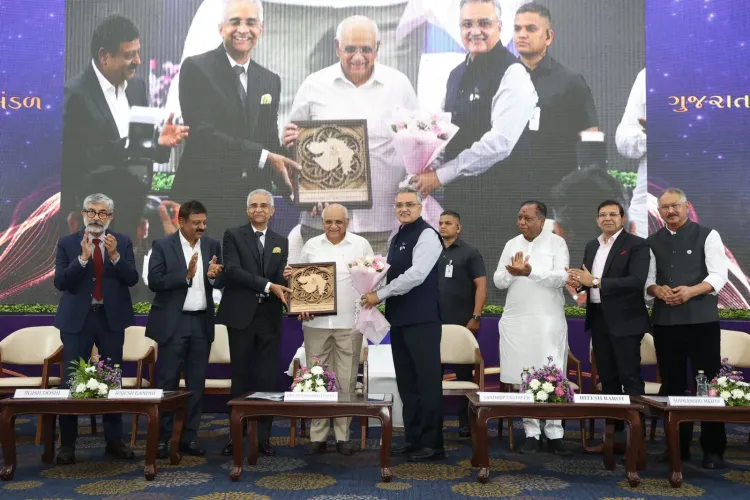
Gujarat's centuries-old trading identity met its modern industrial ambition on Thursday, 30 July 2026, when Chief Minister Bhupendra Patel attended the installation ceremony of newly appointed office-bearers of the Gujarat Chamber of Commerce and Industries (GCCI) in Ahmedabad — and turned the occasion into a direct call to action for the state's business community.
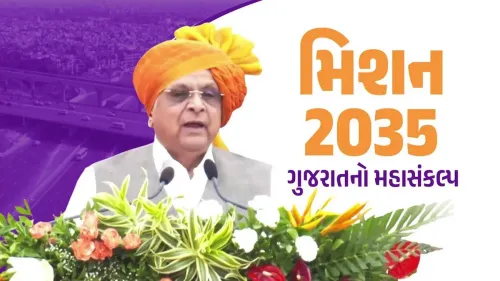
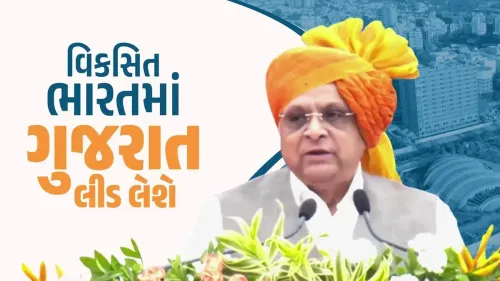
Speaking at the event, CM Patel invoked the state's deep-rooted mahajan parampara (merchant guild tradition) to frame a forward-looking argument: that under the leadership of Prime Minister Narendra Modi, Gujarat is no longer just a trading land but is emerging as a global confluence of innovation, industry, trade, and tradition. The framing was deliberate — rooting an ambitious economic target in cultural memory to make the ask feel earned, not imposed.
Udyog Niti 2026 and the 'Make in Gujarat' Mandate
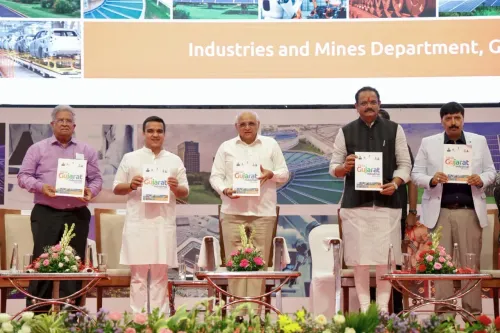
The Chief Minister specifically cited the state government's new Udyog Niti 2026 — Gujarat's latest industrial policy — urging every industrialist present to extract maximum benefit from its provisions. The rallying cry he set before the room: 'Make in Gujarat, Make for the World' — a state-level echo of the Centre's Atmanirbhar Bharat manufacturing push. The message was unambiguous: the chamber's new leadership has a policy framework ready; the question is how aggressively they use it.
The GCCI, Gujarat's apex business body representing traders, industrialists, and commerce interests across the state, has historically served as a key implementation partner for successive state governments. Its installation ceremonies carry political weight precisely because they offer a direct channel between the Chief Minister's office and the people who actually move capital and create jobs on the ground.
Gujarat's Role in the $5 Trillion Economy and Viksit Bharat @ 2047
CM Patel anchored his address in two larger national goals: India's five-trillion-dollar economy target and the Viksit Bharat @ 2047 vision — the central government's blueprint for India to achieve developed-nation status by the centenary of Independence. Gujarat, which has consistently positioned itself as India's industrial vanguard since the first Vibrant Gujarat summit in 2003, is clearly staking a claim to be the engine of that national ambition.
The state's pitch — innovation meeting tradition, global manufacturing meeting local enterprise — is not new, but the Udyog Niti 2026 gives it fresh policy scaffolding. How quickly the government translates the policy into sector-specific incentives and investment commitments, particularly ahead of the next Vibrant Gujarat summit, will determine whether the vision stays rhetoric or becomes runway.
For Gujarat's industrialists, the Chief Minister just handed them both a challenge and a roadmap. The chamber's new office-bearers now carry the weight of that ask.
Frequently Asked Questions
What is Gujarat's Udyog Niti 2026?
Udyog Niti 2026 is the Gujarat government's new industrial policy, referenced by CM Bhupendra Patel at the GCCI ceremony on 30 July 2026 as a framework to promote innovation, manufacturing and trade in the state. Specific provisions and fiscal outlay have not yet been officially detailed.
What is GCCI and why does it matter?
The Gujarat Chamber of Commerce and Industries (GCCI) is the apex business body representing traders, industrialists and commerce interests across Gujarat. It acts as a key implementation partner for state industrial policies and a direct channel between the government and the business community.
What is the 'Make in Gujarat, Make for the World' slogan?
'Make in Gujarat, Make for the World' is the state government's manufacturing rallying call, mirroring the central government's Make in India and Atmanirbhar Bharat frameworks. CM Patel used it at the GCCI event to urge industrialists to align with both state and national economic goals.
What is Viksit Bharat @ 2047?
Viksit Bharat @ 2047 is the central government's national vision for India to achieve developed-nation status by 2047, the centenary of Independence. CM Patel asked Gujarat's industrialists to contribute to this goal through the state's new industrial policy.
What is Gujarat's role in India's five-trillion-dollar economy target?
Gujarat, as one of India's most industrialised states, is positioning itself as a key driver of the national five-trillion-dollar economy goal. CM Patel's address to GCCI on 30 July 2026 framed Udyog Niti 2026 as the state's primary vehicle for that contribution.