CM Bhupendra Patel spotlights Dahod woman's rise via NRLM loan
Synopsis
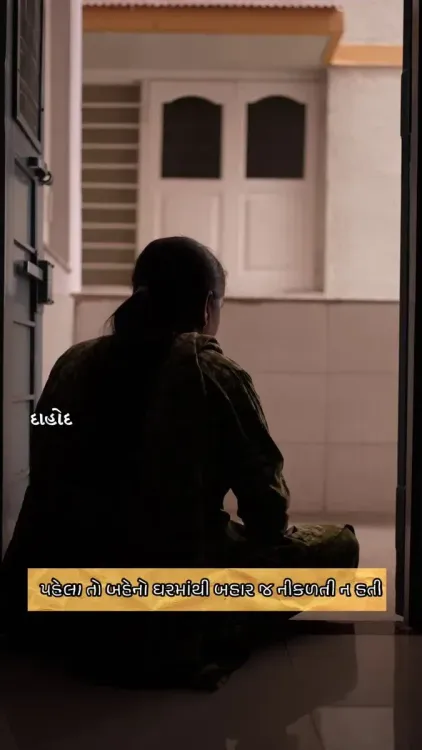
Gujarat CM Bhupendra Patel shared the success story of Ushaben Bhuriya from Dahod's Bhativada village, who used a ₹3 lakh interest-free NRLM loan through the Jay Ambe Sakhi Mandal self-help group to build a handicraft business, framing it as evidence of women's empowerment under PM Modi's governance.
Key Takeaways
Ushaben Bhuriya of Bhativada village, Dahod district received a ₹3 lakh interest-free loan under the Rashtriya Gramin Aajivika Mission.
She is a member of Jay Ambe Sakhi Mandal , a local self-help group engaged in handicraft production.
She now sells products at fair stalls, generating income that supports her family and children's education.
DAY-NRLM , launched in 2011, organises rural women into SHGs and connects them to credit and markets.
Dahod is a tribal-dominated district in eastern Gujarat historically marked by economic vulnerability.
CM Patel's post is part of the #SevaSankapAbhiyaan campaign, linking individual beneficiary outcomes to PM Modi's governance record.
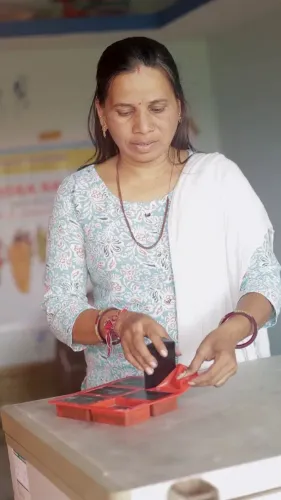
A woman from a tribal village in eastern Gujarat is now running her own handicraft business — and her story has reached the top of the state. Gujarat Chief Minister Bhupendra Patel shared the journey of Ushaben Bhuriya of Bhativada village, Dahod district, on Wednesday, 14 October 2026, using her success to highlight the on-ground impact of a flagship rural welfare scheme.
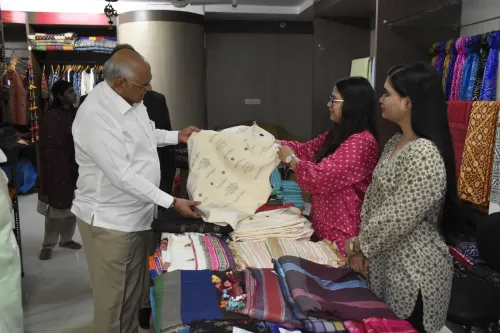
Posting in Gujarati, CM Patel wrote that Ushaben joined the 'Jay Ambe Sakhi Mandal' self-help group and took up handicraft work. Under the Rashtriya Gramin Aajivika Mission (NRLM), she received an interest-free loan of ₹3 lakh along with additional financial support to launch her enterprise. Today, she sells her products directly from stalls at local fairs, generating steady income that, in her own words, keeps her family comfortable and is improving her children's futures.
Dahod's tribal belt and the NRLM footprint
Dahod is one of Gujarat's most tribal-dominated districts, sharing borders with Madhya Pradesh and Rajasthan, and has historically ranked among the state's more economically vulnerable regions. The National Rural Livelihoods Mission — formally relaunched as Deendayal Antyodaya Yojana-NRLM (DAY-NRLM) — was first set up in 2011 to organise rural poor households, particularly women, into self-help groups (SHGs), connect them to institutional credit, and open pathways to markets. Interest-free or subsidised loans are a core instrument of the scheme, designed to eliminate the grip of informal moneylenders on rural micro-entrepreneurs. For artisans in a district like Dahod, access to a fair stall is as consequential as the loan itself — it converts production capacity into actual income. Ushaben's model, moving from SHG membership to fair-based retail, is precisely the end-to-end chain the mission was built to enable.A story framed inside #SevaSankapAbhiyaan
CM Patel's post carries the hashtags #SevaSankapAbhiyaan and #SevaKiKahani, situating Ushaben's story within a broader BJP communication campaign centred on individual beneficiary narratives. The post explicitly links her gratitude to Prime Minister Narendra Modi, describing her economic and social empowerment as a result of his 'uninterrupted 25 years of public service' — a reference to Modi's tenure in public life beginning with his role in Gujarat from 2001 onwards. This style of beneficiary-forward storytelling — a real name, a real village, a specific loan figure — has become a signature format in state-level communications on central rural development schemes, grounding policy outcomes in human detail rather than aggregate statistics. For Ushaben Bhuriya, the numbers are local and personal: one loan, one SHG, one stall, one family looking at a more stable horizon.Point of View
Named, verifiable human story from a historically marginalised tribal district. By naming Dahod, specifying the ₹3 lakh loan, and attaching Ushaben's gratitude directly to PM Modi, CM Patel reinforces a dual narrative: that central schemes are delivering on the ground in Gujarat, and that the BJP's women's empowerment agenda has tangible rural outcomes. The framing of Modi's 'uninterrupted 25 years of service' as the source of this empowerment also signals an ongoing effort to consolidate the PM's legacy ahead of future electoral cycles. For analysts watching rural welfare implementation, the more substantive question is the scale of NRLM penetration across Gujarat's tribal belt — one story is a signal, not a data point.
NationPress
14 Oct 2026
Frequently Asked Questions
What is the Rashtriya Gramin Aajivika Mission (NRLM)?
The Rashtriya Gramin Aajivika Mission, also known as Deendayal Antyodaya Yojana-NRLM (DAY-NRLM), is a central government scheme launched in 2011 to organise rural poor women into self-help groups, provide them with interest-free or subsidised loans, and link them to markets and livelihood opportunities.
Who is Ushaben Bhuriya and where is she from?
Ushaben Bhuriya is a woman from Bhativada village in Dahod district, eastern Gujarat. She is a member of the Jay Ambe Sakhi Mandal self-help group and runs a handicraft business supported by an NRLM interest-free loan.
How much loan did Ushaben Bhuriya receive under NRLM?
According to CM Bhupendra Patel's post, Ushaben Bhuriya received an interest-free loan of ₹3 lakh under the Rashtriya Gramin Aajivika Mission, along with additional financial support, to start her handicraft enterprise.
What is Jay Ambe Sakhi Mandal?
Jay Ambe Sakhi Mandal is a self-help group based in Dahod district, Gujarat, that supports women in handicraft production and helps them access markets and institutional credit under government livelihood schemes.
What is the #SevaSankapAbhiyaan campaign?
#SevaSankapAbhiyaan is a BJP-led communication campaign that uses individual beneficiary stories — tagged as #SevaKiKahani — to highlight the real-world outcomes of central and state government welfare schemes, often framed around PM Modi's governance record.