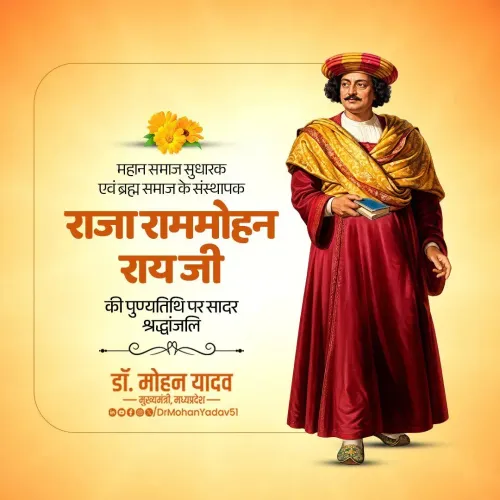
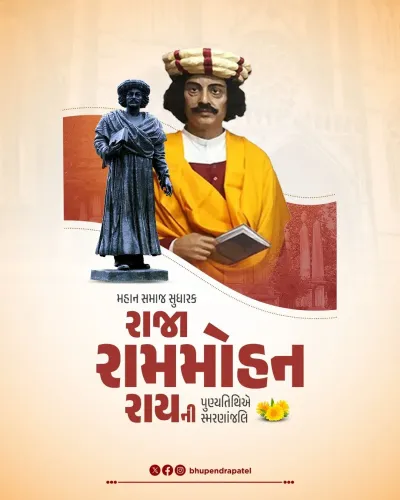
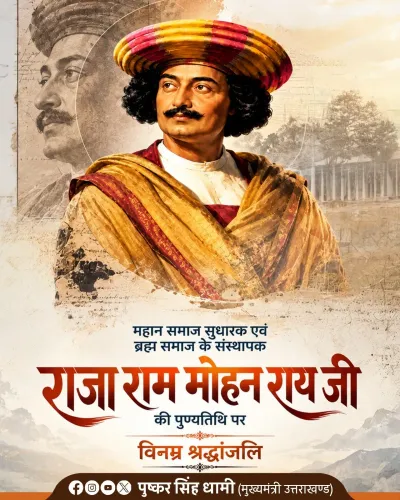
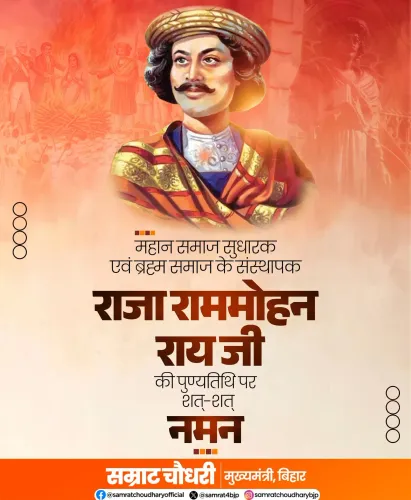
CM Bhupendra Patel Pays Tribute to Raja Ram Mohan Roy on Jayanti
Synopsis
Gujarat Chief Minister Bhupendra Patel on 22 May 2026 paid tribute to Raja Ram Mohan Roy on his birth anniversary, honouring the 19th-century reformer's campaigns against sati, child marriage and casteism, and his enduring contributions to women's empowerment and education in India.
Key Takeaways
Gujarat CM Bhupendra Patel paid tribute to Raja Ram Mohan Roy on his birth anniversary on 22 May 2026 .
Roy ( 1772–1833 ) founded the Brahmo Sabha in 1828 and led campaigns against sati, child marriage and caste discrimination.
His advocacy directly led to the Bengal Sati Regulation of 1829 , which formally banned the practice of sati.
CM Patel highlighted Roy's contributions to women's empowerment, education and equality as a continuing source of national inspiration.
The tribute reflects a broader BJP pattern of invoking 19th-century reformers to reinforce themes of social equity and educational progress.
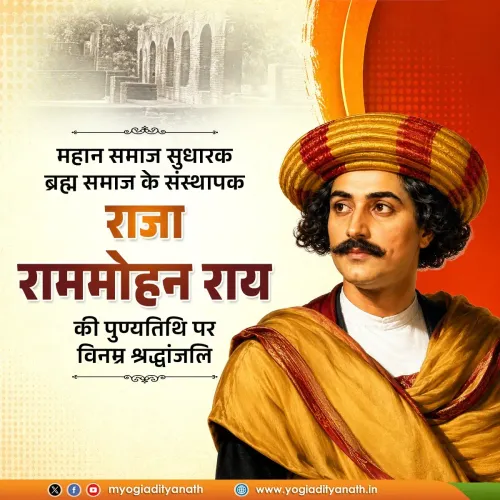
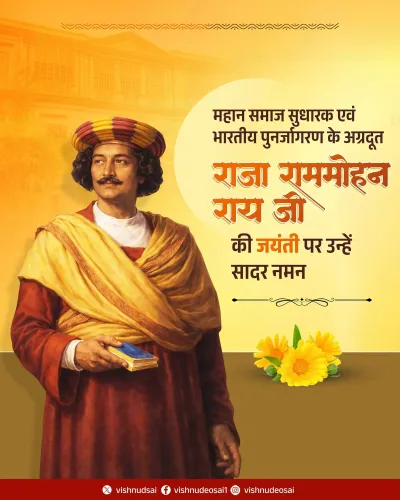
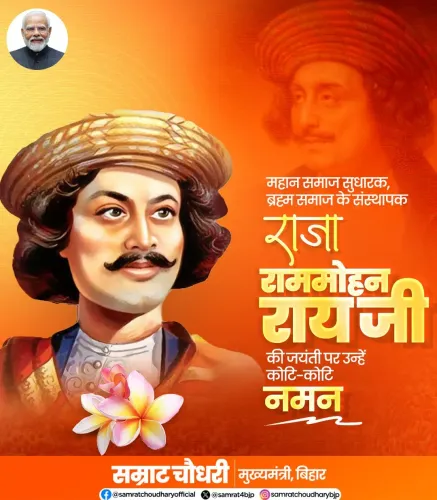
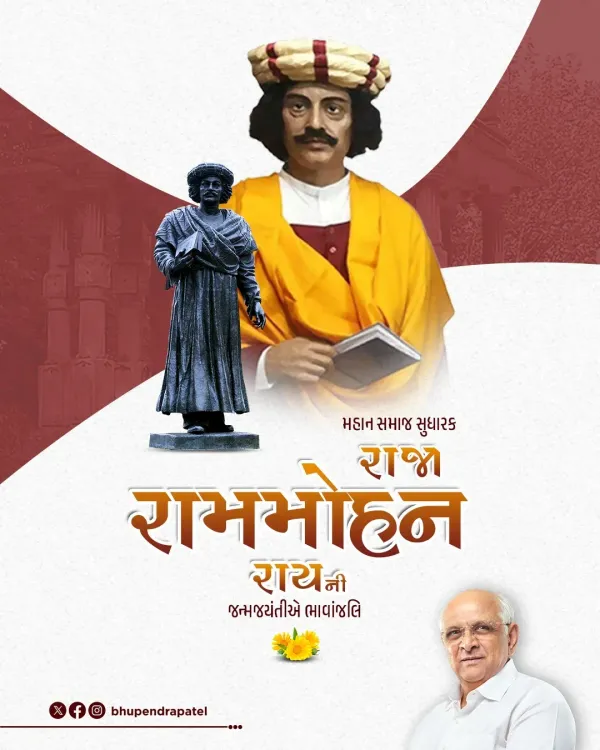
Gujarat Chief Minister Bhupendra Patel on Friday, 22 May 2026, paid tribute to Raja Ram Mohan Roy on the reformer's birth anniversary, honouring him as a pioneer of India's renaissance, a sharp thinker, and a great social reformer.
Posting in Gujarati on X, CM Patel wrote: 'Bharatiya punarjagaranna praneta, prakhar chintak ane mahan samaj sudharak Raja Ram Mohan Rayni jayantie bhavpurn vandan.' — meaning, 'Heartfelt salutations on the birth anniversary of the pioneer of the Indian renaissance, eminent thinker and great social reformer Raja Ram Mohan Roy.'
Context
Raja Ram Mohan Roy (1772–1833) was a Bengali scholar whose campaigns against entrenched social evils reshaped 19th-century India. His relentless advocacy against sati, child marriage, and caste discrimination laid the intellectual and moral groundwork for modern Indian society. CM Patel's post noted that Roy 'opposed social evils such as sati, child marriage and casteism and laid the foundation for building modern Indian society.'
The Chief Minister further observed that Roy's contributions to women's empowerment, education and equality 'will continue to inspire the people of this country.'
Policy Backdrop
Roy founded the Brahmo Sabha in 1828 to promote monotheism, women's rights, and modern education — an institution that became one of the earliest organised reform movements in India. His sustained advocacy directly influenced the Bengal Sati Regulation of 1829, through which the British colonial administration formally banned the practice of sati, marking a landmark moment in Indian legal and social history.
Roy's emphasis on modern, rational education also shaped the trajectory of institutional learning in India, making him a touchstone figure in discussions around curriculum reform and social equity that continue to this day.
Stakeholders and Impact
Roy's legacy is most directly felt by women and students — the two communities he most sought to empower through his reform work. His campaigns against child marriage and for women's education remain reference points in contemporary policy debates around gender equality and school education in India.
State-level BJP leaders, including those in Gujarat, regularly mark the birth anniversaries of 19th-century reformers to reinforce themes of social equality and educational progress, connecting historical reform movements to present-day government programmes.
What's Next
Tributes such as this one often precede or accompany announcements from state education departments on curriculum modules that cover social reformers. In Gujarat, observers will watch for any related initiatives from the education ministry that draw on Roy's legacy to advance ongoing programmes in gender equality and school-level social-studies education.
Roy's birth anniversary serves as an annual reminder of the unfinished agenda of social reform — one that contemporary policymakers across party lines invoke to signal commitment to equity and inclusion.
Point of View
A state with its own rich reform tradition, such tributes also carry regional resonance. The reference to women's empowerment and education aligns closely with the Centre's flagship programmes in those areas, subtly reinforcing the party's messaging on social progress without requiring a direct policy announcement.
NationPress
6 Oct 2026
Frequently Asked Questions
Who was Raja Ram Mohan Roy and why is he remembered?
Raja Ram Mohan Roy (1772–1833) was a Bengali scholar and reformer who founded the Brahmo Sabha in 1828 and campaigned against sati, child marriage and caste discrimination, earning him the title 'Father of the Indian Renaissance.'
When is Raja Ram Mohan Roy's birth anniversary celebrated?
Raja Ram Mohan Roy was born on 22 May 1772, and his birth anniversary is observed on 22 May each year across India.
What did Raja Ram Mohan Roy do to end sati?
Roy persistently lobbied colonial authorities against the practice of sati, which directly resulted in the Bengal Sati Regulation of 1829 — the first law banning the practice in India.
Why did Gujarat CM Bhupendra Patel pay tribute to Raja Ram Mohan Roy?
CM Patel posted a tribute on X on 22 May 2026 to mark Roy's birth anniversary, acknowledging his role in opposing social evils and advancing women's empowerment and education in India.
What was the Brahmo Sabha founded by Raja Ram Mohan Roy?
The Brahmo Sabha, founded by Roy in 1828, was one of India's earliest organised social-reform movements, promoting monotheism, women's rights and modern rational education.