CM Patel's Gujarat wins GI Tags for Unjha Jeera and Unjha Fennel
Synopsis
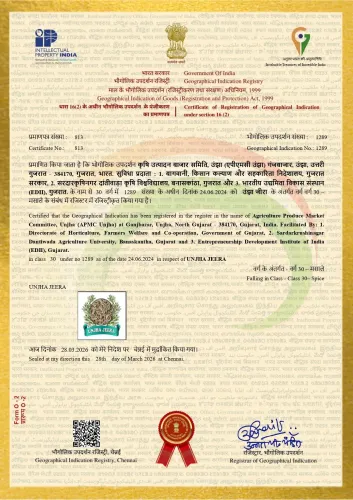
The Chief Minister's Office of Gujarat announced on 13 July 2026 that 'Unjha Jeera' and 'Unjha Fennel' from Asia's largest spice market have received official GI Tags from India's GI Registry, giving both products protected international brand identities and boosting prospects for spice farmers and exporters.
Key Takeaways
Unjha Jeera and Unjha Fennel have been awarded Geographical Indication (GI) Tags by the Government of India's GI Registry.
Both products will now carry legally protected global identities as 'UNJHA JEERA' and 'UNJHA FENNEL' in international markets.
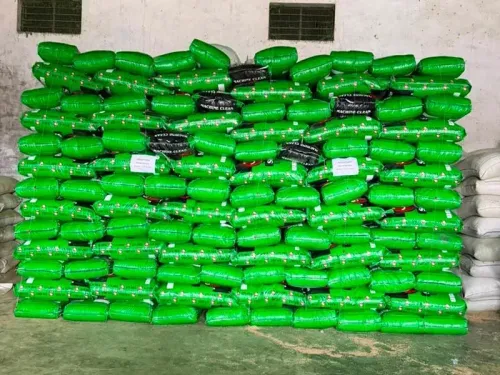
Unjha APMC in Mehsana district, Gujarat is recognised as Asia's largest spice market yard .
The GI tags follow earlier recognitions for Gir Kesar mango and Bhaliya wheat , expanding Gujarat's GI agricultural portfolio.
The announcement aligns with Prime Minister Narendra Modi 's 'Vocal for Local, Local to Global' campaign launched in 2020 .
Primary beneficiaries include spice farmers, APMC traders , and exporters who can now command premium pricing under a protected designation of origin.
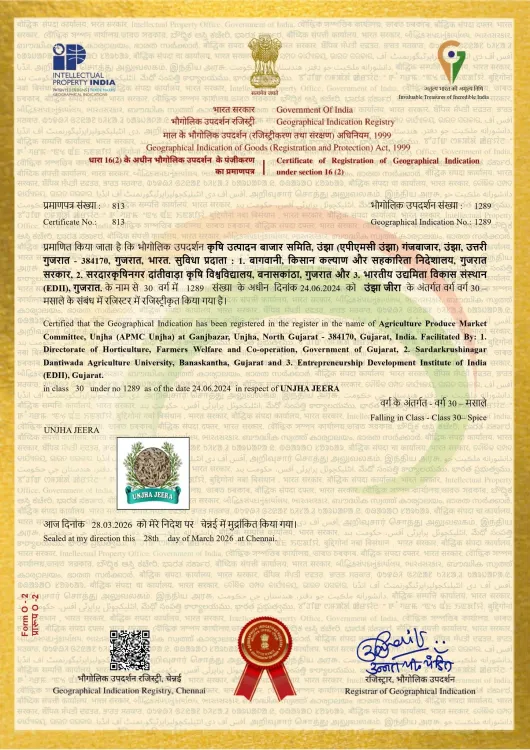
The Chief Minister's Office of Gujarat announced on Monday, 13 July 2026 that Unjha Jeera (cumin) and Unjha Fennel (variyali) from Unjha APMC — Asia's largest spice market yard — have been officially awarded Geographical Indication (GI) Tags by the Geographical Indication Registry of India, marking a landmark achievement for the state's agricultural sector under the guidance of Chief Minister Bhupendra Patel.
Context
The CMO Gujarat post, written in Gujarati, captures the milestone with the phrase 'ગામથી ગ્લોબલ' ('From village to global'), invoking Prime Minister Narendra Modi's 'Vocal for Local, Local to Global' mantra. The GI certificates — issued by the Government of India's GI Registry under the Geographical Indications of Goods (Registration and Protection) Act, 1999 — formally recognise that the identity, quality, and reputation of these two spices are essentially attributable to their origin in Unjha, Gujarat. With this recognition, the products will now be known internationally as 'UNJHA JEERA' and 'UNJHA FENNEL', carrying a protected global brand identity.
Policy Backdrop
The GI Act of 1999 was designed to protect goods whose qualities, reputation, or other characteristics are linked to their geographical origin, granting legal protection against misuse and enabling premium positioning in export markets. The Vocal for Local campaign, launched nationally in 2020, gave fresh political momentum to GI tagging as a tool for connecting rural production clusters with international markets under the broader Atmanirbhar Bharat framework. Gujarat has previously secured GI Tags for Gir Kesar mango and Bhaliya wheat, and the addition of Unjha's two flagship spices deepens the state's portfolio of protected agricultural commodities.
Unjha, a town in Mehsana district, hosts the Unjha APMC, widely regarded as Asia's largest spice market. The yard is the primary trading hub for cumin and fennel grown across North Gujarat and parts of Rajasthan, with a significant share of produce destined for export markets in the Middle East, Europe, and the United States.
Stakeholders and Impact
The CMO's post described the GI Tag not merely as a government certificate but as 'an honour for our farmers who toil day and night in the fields, our trader friends, and the very soil of Unjha' — 'GI Tag ફક્ત એક સરકારી પ્રમાણપત્ર નથી, પરંતુ રાત-દિવસ એક કરીને ખેતરોમાં પરસેવો પાડતા આપણા ધરતીપુત્રો, વેપારી મિત્રો અને ઊંઝાની માટીનું બહુમાન છે.' The primary beneficiaries are spice farmers across North Gujarat, APMC traders at Unjha, and exporters who can now market their produce under a legally protected designation of origin. GI status typically enables producers to command a price premium and deters counterfeit labelling in international markets, strengthening the negotiating position of Indian exporters of cumin and fennel.
What's Next
Industry observers and state agriculture officials will watch whether the GI certification translates into measurable gains in export unit prices and volumes for Unjha cumin and Unjha fennel in the coming trade cycles. Gujarat's spice clusters beyond Unjha — including other APMC yards dealing in coriander and fenugreek — may pursue their own GI applications, following the template established by this latest recognition. The broader test will be whether the 'Local to Global' branding ambition converts into sustained income gains for the farming and trading communities of Mehsana district and surrounding regions.
Point of View
Premium exports, fitting neatly into the Centre's Atmanirbhar Bharat and Vocal for Local narratives ahead of election cycles. Gujarat has now built a credible portfolio of GI-protected agricultural goods, signalling that the state views intellectual property protection as a tool of rural economic policy, not just cultural preservation. For farmers and traders at Unjha APMC, the real dividend will depend on whether export infrastructure, quality-assurance systems, and market-development investments follow the certificate. The broader pattern — GI tagging as a political deliverable paired with economic aspiration — will be closely watched by other spice-growing states seeking similar recognition for their own regional produce.
NationPress
13 Jul 2026
Frequently Asked Questions
What is the GI Tag given to Unjha Jeera and Unjha Fennel?
A Geographical Indication (GI) Tag is an official certification under India's GI Act of 1999 that legally links a product's identity, quality, or reputation to its specific place of origin. Unjha Jeera and Unjha Fennel have received this tag from India's GI Registry, allowing them to be marketed globally under those protected names.
Where is Unjha APMC and why is it significant?
Unjha APMC is located in Mehsana district, North Gujarat , and is widely regarded as Asia's largest spice market yard . It is the primary trading hub for cumin and fennel grown across Gujarat and parts of Rajasthan, with a large share of produce exported internationally.
How does a GI Tag benefit farmers and traders in Unjha?
A GI Tag provides legal protection against counterfeit or mislabelled products, enables producers to command a price premium in domestic and international markets, and gives exporters a recognised brand identity. Farmers, APMC traders, and exporters at Unjha can now differentiate their produce as 'UNJHA JEERA' or 'UNJHA FENNEL' in global trade.
What other Gujarat products have received GI Tags?
Gujarat had previously secured GI Tags for Gir Kesar mango and Bhaliya wheat . The addition of Unjha Jeera and Unjha Fennel further expands the state's portfolio of GI-protected agricultural commodities.
What is the 'Vocal for Local, Local to Global' initiative?
'Vocal for Local' is a campaign promoted by Prime Minister Narendra Modi , launched nationally in 2020 , to encourage Indians to use and promote indigenous products. The 'Local to Global' extension aims to take these locally recognised goods into international markets, with GI tagging serving as a key instrument of that strategy.