CM Pema Khandu Hails PhD Thesis on Monpa Village Councils
Synopsis
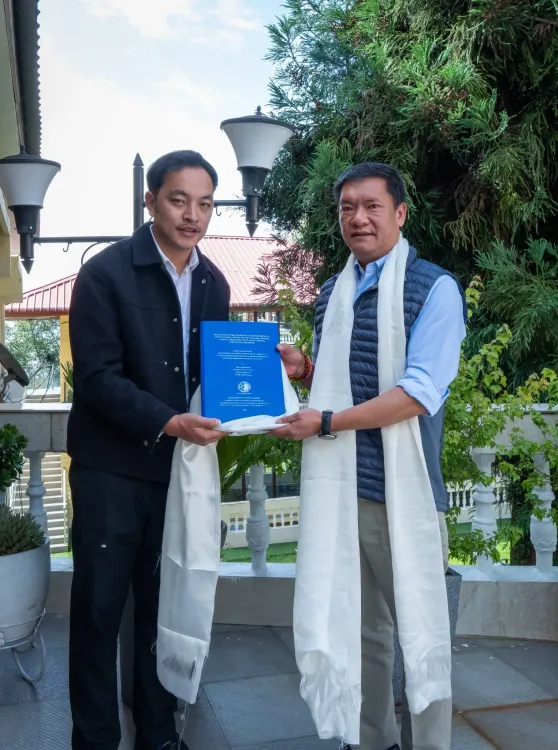
Arunachal Pradesh Chief Minister Pema Khandu on June 25, 2026 welcomed the submission of a PhD thesis studying the evolution of the traditional Monpa village council system in Tawang, calling academic documentation of indigenous institutions vital for preserving tribal heritage.
Key Takeaways
Chief Minister Pema Khandu publicly endorsed a PhD thesis on the Monpa village council system on June 25, 2026 .
Scholar Nima Tsering Rhomo submitted the thesis to the University of Science and Technology Meghalaya , established in 2011 .
The thesis examines 'Transition in the Traditional Socio-Political Institutions' among the Monpas of Tawang .
Arunachal Pradesh is home to over 100 indigenous tribes , with state support for tribal documentation dating to the 2000s .
Tawang district borders both China and Bhutan and is a focal point for cultural preservation efforts amid rapid infrastructure growth.
The research could inform state policy on village council roles and may encourage similar studies across other Arunachal tribes.
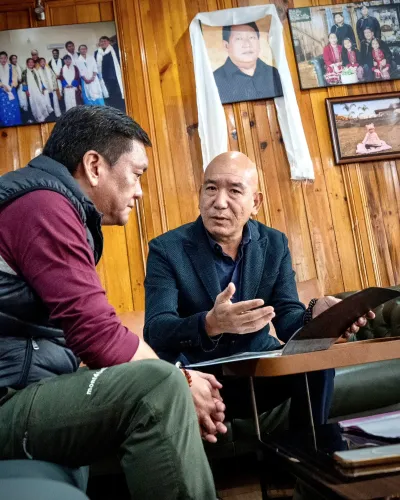
Arunachal Pradesh Chief Minister Pema Khandu on Thursday, June 25, 2026, praised the academic documentation of the traditional village council system practised by the Monpa community of Tawang, extending his best wishes to a doctoral scholar who has submitted a thesis on the subject to a northeastern university.
Context
Research scholar Shri Nima Tsering Rhomo has submitted his Ph.D. thesis titled 'Transition in the Traditional Socio-Political Institutions: A Study of the Village Council System among the Monpas of Tawang, Arunachal Pradesh' to the University of Science and Technology Meghalaya. The Chief Minister described the submission as a significant step toward preserving indigenous heritage, stating that 'the traditional village council system has been central to governance and community life among the Monpas of Tawang for generations.'
Khandu underscored that 'documenting its evolution is vital for preserving our indigenous heritage,' reflecting the state government's consistent emphasis on recording tribal customs and institutions through academic channels.
Policy Backdrop
Arunachal Pradesh is home to more than 100 indigenous tribes, and the state has backed academic documentation of customary laws and village councils through research bodies since the 2000s. This work builds on constitutional recognition of tribal customs, drawing from the framework that governs tribal self-governance in northeastern India.
The University of Science and Technology Meghalaya, established in 2011 in Ri-Bhoi district, offers doctoral programmes spanning tribal studies and social sciences, making it a regional hub for research on indigenous communities across the Northeast. The Monpa village council system, which has historically regulated land use, dispute resolution, and community affairs in Tawang district, is now undergoing scrutiny as the region integrates into modern administrative structures.
Stakeholders and Impact
The Monpa community of Tawang stands at the centre of this research. Tawang, which borders both China and Bhutan and is home to the historic Tawang Monastery, has seen rapid infrastructure development in recent years, raising questions about how traditional governance structures adapt alongside modern administration.
For indigenous researchers and community leaders, scholarly work of this nature serves a dual purpose: it creates an archival record of institutions that risk being diluted, and it generates policy-relevant analysis that state governments can draw on when designing frameworks for tribal self-governance. Broader northeastern states have increasingly backed similar studies, recognising that rapid connectivity and administrative integration can erode customary institutions if left undocumented.
What's Next
The completion of Nima Tsering Rhomo's doctoral journey will be closely watched by researchers and policymakers working on tribal governance in the region. Recommendations emerging from the thesis could inform state-level discussions on the evolving role of village councils in Arunachal Pradesh.
There is also potential for similar academic initiatives to be extended to other tribes across the state, given the Chief Minister's public endorsement of this work. As Tawang continues to grow in strategic and cultural significance, the interplay between traditional institutions and modern governance is likely to remain a defining question for the Monpa community and policymakers alike.
Point of View
Not merely ceremonial memory. For a district like Tawang — strategically sensitive and culturally distinct — legitimising indigenous governance research carries both cultural and political weight. The move fits a broader northeastern pattern where state governments use academic endorsements to signal sensitivity toward tribal identities without committing to legislative change. Whether the thesis findings translate into concrete policy on village council roles will be the real test of this engagement.
NationPress
25 Jun 2026
Frequently Asked Questions
Who is Nima Tsering Rhomo?
Nima Tsering Rhomo is a research scholar who submitted a PhD thesis on the transition of traditional socio-political institutions, specifically the village council system among the Monpas of Tawang, to the University of Science and Technology Meghalaya.
What is the Monpa village council system?
The Monpa village council system is a traditional form of community governance practised by the Monpa tribe of Tawang district in Arunachal Pradesh, historically managing local disputes, land use, and community affairs across generations.
Where is Tawang and why is it significant?
Tawang is a district in Arunachal Pradesh bordering China and Bhutan. It is home to the historic Tawang Monastery and the Monpa community, and holds strategic importance along the Line of Actual Control.
What is the University of Science and Technology Meghalaya?
The University of Science and Technology Meghalaya is a private university established in 2011 in Ri-Bhoi district, Meghalaya, offering doctoral programmes including tribal and social science studies relevant to northeastern India.
Why did CM Pema Khandu comment on a PhD thesis submission?
Khandu highlighted the thesis to underscore the importance of documenting indigenous governance institutions, consistent with Arunachal Pradesh's broader policy of supporting academic research on tribal customs and customary law.