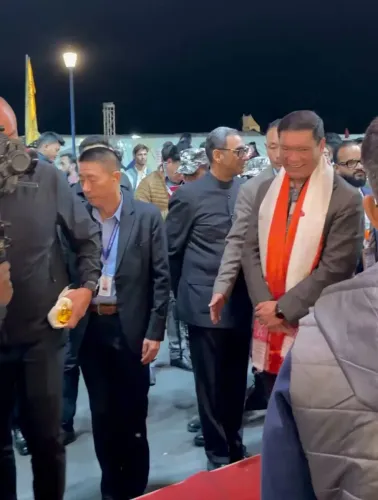
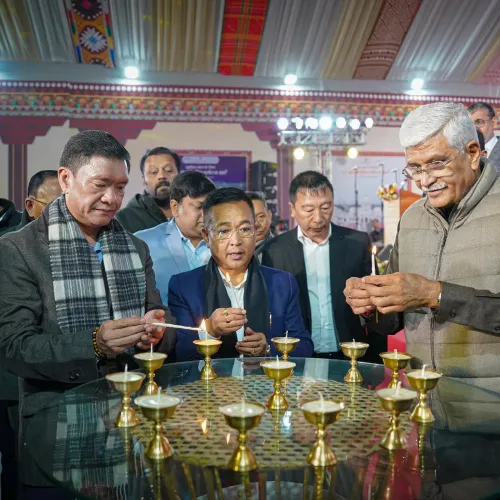
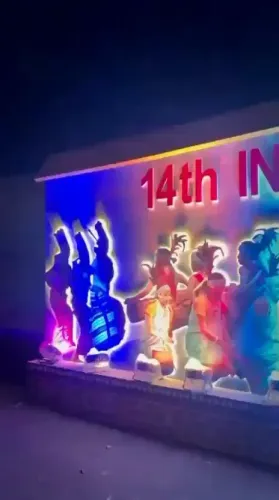
CM Pema Khandu: Tawang hosts 14th Int'l Tourism Mart 2026
Synopsis
The 14th International Tourism Mart 2026 in Tawang brought global buyers and delegates to Arunachal Pradesh, spotlighting the Northeast's indigenous cultures, handlooms, and local enterprises through B2B interactions and cultural exchanges, CM Pema Khandu said.
Key Takeaways
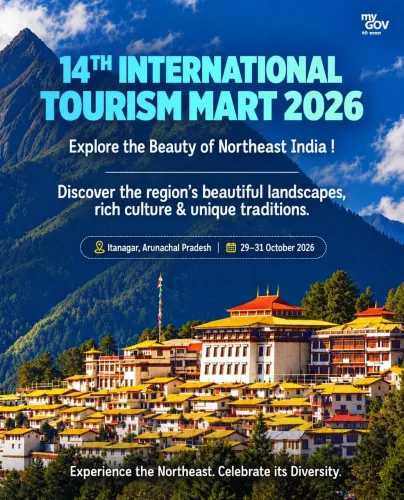
The 14th International Tourism Mart 2026 was held in Tawang, Arunachal Pradesh on 30 October 2026 .
The event brought together international buyers, delegates , and tourism stakeholders from across the world.
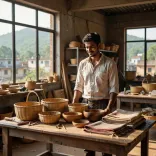
The Mart showcased indigenous cultures, traditional crafts, handlooms , and local community enterprises of the Northeast.
B2B interactions at the platform aimed to connect local tourism operators and artisans directly with global markets.
The event aligns with India's Act East Policy (2014) and the Swadesh Darshan scheme (2014-15) promoting Northeast tourism.
Hosting in Tawang signals progress in border-district connectivity and openness to international visitors.
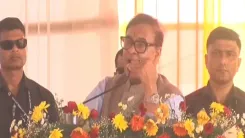
Tawang — a Himalayan district better known for its ancient Buddhist monastery and contested border terrain — stepped onto the world tourism stage this week as Arunachal Pradesh Chief Minister Pema Khandu announced the successful conclusion of the 14th International Tourism Mart 2026, held in Tawang on 30 October 2026.
Tawang as a global tourism address
The Mart drew international buyers, delegates, and tourism stakeholders from across the world to one of India's most remote yet scenically striking border districts. CM Khandu framed the event's ambition in three words: 'From Tawang to the World' — a phrase that doubled as the event's rallying hashtag and, more pointedly, as a strategic declaration of intent for the Northeastern region.
The platform was designed not merely as a destination showcase but as a live B2B marketplace — connecting local tourism operators, indigenous artisans, handloom weavers, and community enterprises directly with international buyers who could convert cultural curiosity into commercial traffic.
Indigenous crafts and cultures at the centre
Beyond hotel bookings and tour packages, the Mart put Arunachal Pradesh's indigenous cultures, traditional crafts, and handlooms in the spotlight. This framing matters: the state is home to over 26 major tribes and dozens of sub-tribes, each with distinct craft and weaving traditions that rarely reach mainstream tourism circuits. A mart of this scale offers those communities a shortcut to markets that would otherwise take years to access organically.
Cultural exchanges and direct community participation were highlighted by Khandu as a signal of what such platforms can achieve when done right — moving beyond glossy brochures to genuine economic linkages.
Act East Policy and the Northeast tourism push
The ITM did not arrive in a vacuum. India's Act East Policy, announced in 2014, made the Northeast a strategic gateway to Southeast Asia, with tourism, connectivity, and people-to-people links as explicit pillars. The Swadesh Darshan scheme, also launched in 2014-15, earmarked funding for thematic tourist circuits across the region, laying some of the infrastructure groundwork that makes hosting an international event in Tawang possible today.
Choosing Tawang — a high-altitude border district that historically required an inner-line permit and limited road access — as the venue is itself a message about how far the region's connectivity and administrative openness have come.
What the mart leaves behind
The concrete follow-through — new tourism projects, investment commitments, or state-level policy announcements triggered by the Mart — will be the real measure of its success. The B2B interactions and international delegate participation Khandu cited are the inputs; what Tawang and the broader Northeast actually see in visitor numbers, artisan incomes, and infrastructure investment in the coming months will be the output that counts.
The stage was set in Tawang. Now the Northeast has to hold the audience it just earned.
Point of View
New Delhi and state governments are attempting to convert strategic geography into economic dividend, reducing the region's dependence on central transfers. For CM Khandu, a high-profile international event on home turf also reinforces his governance credentials ahead of any future electoral cycle. The real test, however, is whether the B2B energy generated in the mart's halls translates into sustained visitor flows and artisan incomes — a leap that has historically eluded Northeast tourism initiatives despite years of policy backing.
NationPress
30 Oct 2026
Frequently Asked Questions
What is the International Tourism Mart and where was the 2026 edition held?
The International Tourism Mart is an annual platform that brings international buyers, delegates, and tourism stakeholders together to promote Indian destinations. The 14th edition in 2026 was held in Tawang, Arunachal Pradesh.
Why was Tawang chosen to host the International Tourism Mart 2026?
Tawang was chosen to highlight Arunachal Pradesh's tourism potential and showcase the Northeast's indigenous cultures and biodiversity. It also signals improved connectivity in border districts and aligns with India's Act East Policy of opening the Northeast to international tourism.
What is the Act East Policy and how does it relate to Northeast tourism?
The Act East Policy, announced in 2014, prioritises tourism, connectivity, and people-to-people links between India's Northeast and Southeast Asia. The International Tourism Mart is one of its key platforms for attracting international buyers to the region.
What did the 14th ITM 2026 in Tawang promote beyond tourist destinations?
Beyond destinations, the Mart showcased Arunachal Pradesh's indigenous cultures, traditional crafts, handlooms, and local enterprises, connecting community artisans and operators directly with international buyers through B2B interactions.
What is the Swadesh Darshan scheme and its role in Arunachal Pradesh tourism?
Swadesh Darshan, launched in 2014-15, funds the development of thematic tourist circuits across India, including the Northeast. It has helped build some of the infrastructure that supports tourism access to districts like Tawang.