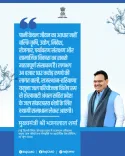
CM Pema Khandu, Union Ministers Survey Arunachal Flood Areas
Synopsis
Chief Minister Pema Khandu joined Union Ministers Shivraj Singh Chouhan and Kiren Rijiju on 1 July 2026 to survey flood-affected areas of Arunachal Pradesh and review relief, rescue, and rehabilitation efforts amid the active monsoon season.
Key Takeaways
CM Pema Khandu accompanied Union Ministers Shivraj Singh Chouhan and Kiren Rijiju on a joint survey of flood-affected areas in Arunachal Pradesh on 1 July 2026 .
The visit covered an assessment of ongoing relief, rescue, and rehabilitation operations already under way across the state.
Arunachal Pradesh faces annual flooding and landslides due to its Himalayan terrain and heavy monsoon rainfall, making it one of India's most disaster-prone states.
India's disaster response is governed by the Disaster Management Act, 2005 , with NDMA and NDRF coordinating central assistance to states.
The presence of two senior Union Ministers signals potential acceleration of central financial assistance and rehabilitation funding for the state.
Analysts will watch for release of NDRF/SDRF funds, rehabilitation tenders, and new infrastructure announcements for the 2026-27 monsoon season.
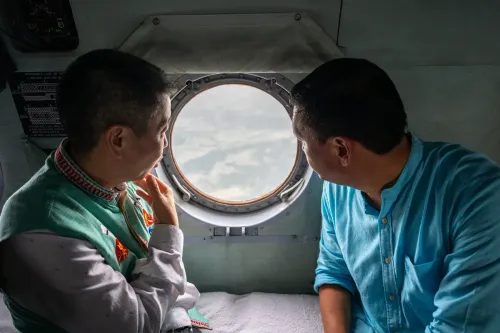
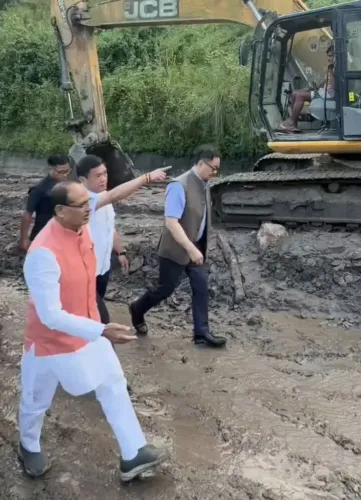
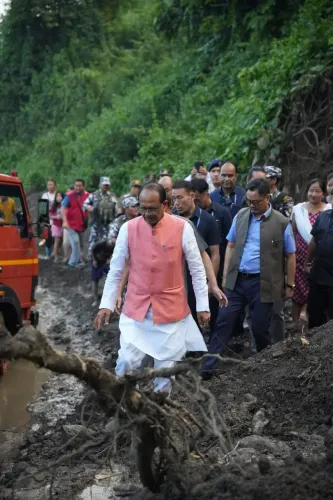
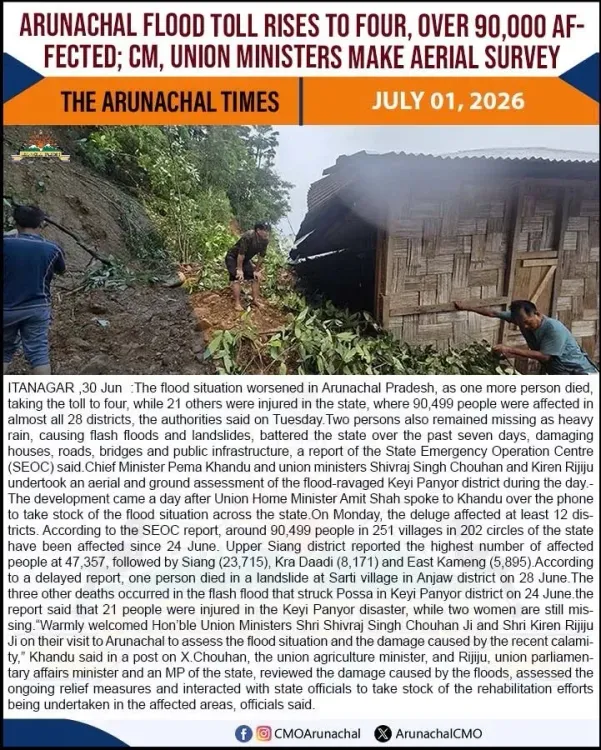
The Chief Minister's Office of Arunachal Pradesh announced on Wednesday, 1 July 2026 that Chief Minister Pema Khandu accompanied Union Ministers Shivraj Singh Chouhan and Kiren Rijiju on a joint aerial and ground survey of flood-affected areas across the state, reviewing ongoing relief, rescue, and rehabilitation operations.
Context
Arunachal Pradesh, a mountainous northeastern state bordering China and Myanmar, is among the most flood-prone regions in India owing to its Himalayan terrain, heavy monsoon rainfall, and transboundary river systems. Annual flooding and landslides routinely displace communities, damage infrastructure, and disrupt supply lines to remote districts. The joint visit by the Chief Minister alongside two senior central ministers signals the severity of this year's flood situation and the Centre's direct engagement.
The post from the official @ArunachalCMO account stated that the delegation accompanied CM Pema Khandu 'to assess the flood-affected areas of Arunachal Pradesh and review the ongoing relief, rescue and rehabilitation efforts,' indicating that operations were already under way at the time of the visit.
Policy Backdrop
India's disaster response framework is anchored in the Disaster Management Act, 2005, which established the National Disaster Management Authority (NDMA) and the National Disaster Response Force (NDRF) to coordinate multi-agency relief across states. Northeastern states, including Arunachal Pradesh, have historically drawn on the National Disaster Response Fund (NDRF) for emergency financial assistance during monsoon events, with central teams deployed to the region annually since the early 2010s.
Union Minister Shivraj Singh Chouhan, a former Chief Minister of Madhya Pradesh with direct experience overseeing large-scale flood relief operations, brings institutional knowledge of state-Centre coordination in disaster scenarios. Kiren Rijiju, a senior BJP leader and Union Minister from Arunachal Pradesh itself, has consistently served as a bridge between the state administration and New Delhi on security, development, and disaster matters in the Northeast.
Stakeholders and Impact
The most immediate stakeholders are flood-affected residents across Arunachal Pradesh's districts, whose access to food, shelter, and medical aid depends on the speed and scale of the relief machinery. District administrations and State Disaster Response Force (SDRF) units are the primary operational bodies on the ground, working alongside NDRF teams deployed from central reserves.
The presence of two Union Ministers alongside the Chief Minister is significant for communities in border districts, where infrastructure damage can compound strategic vulnerabilities. Rehabilitation timelines in such areas tend to intersect with broader connectivity and border-area development priorities that the central government has emphasised for the Northeast under successive policy frameworks.
What's Next
Following joint assessment visits of this nature, the standard federal protocol involves the submission of a memorandum of damage to the central government, which then triggers release of additional NDRF or SDRF funds. Observers will watch for announcements on financial assistance packages, tendering of rehabilitation works, and any new embankment or early-warning investments tied to the 2026-27 monsoon season. The involvement of senior Union Ministers at this early stage suggests that a formal central assistance request may be expedited.
Point of View
Designed to signal both administrative urgency and political accountability to affected communities. Kiren Rijiju's participation as a son of the soil carries particular weight, reinforcing the Centre's ownership of the Northeast's recurring monsoon crisis rather than leaving it as a purely state-level concern. The visit fits a broader pattern under the current government of deploying senior central figures to disaster zones early in the relief cycle, which typically fast-tracks fund releases and media attention. Whether this translates into durable infrastructure investment — embankments, early-warning systems, resilient road networks — or remains confined to immediate relief will be the real measure of the visit's policy impact.
NationPress
1 Jul 2026
Frequently Asked Questions
Why did Union Ministers visit flood-affected Arunachal Pradesh in July 2026?
Union Ministers Shivraj Singh Chouhan and Kiren Rijiju visited flood-affected areas of Arunachal Pradesh on 1 July 2026 alongside CM Pema Khandu to assess the damage firsthand and review ongoing relief, rescue, and rehabilitation operations.
Which areas of Arunachal Pradesh were affected by floods in 2026?
The official post from the Chief Minister's Office of Arunachal Pradesh confirmed that flood-affected areas across the state were surveyed, though specific district names were not detailed in the announcement.
What is the NDRF and how does it help during Arunachal Pradesh floods?
The National Disaster Response Force (NDRF) , established under the Disaster Management Act, 2005 , deploys trained rescue teams and provides financial assistance through the National Disaster Response Fund to states like Arunachal Pradesh during flood emergencies.
Who is Kiren Rijiju and what is his connection to Arunachal Pradesh?
Kiren Rijiju is a senior BJP leader and Union Minister who hails from Arunachal Pradesh , making him a key liaison between the state government and the central government on development, security, and disaster management matters.
What happens after a central minister visits a flood-affected state in India?
After such visits, the standard protocol involves the state submitting a damage memorandum to the Centre, which can trigger the release of NDRF or SDRF funds, deployment of additional NDRF teams, and announcement of rehabilitation and infrastructure projects.