CM Pema Khandu Unveils Arunachal Vision 2036 Skilling Plan
Synopsis
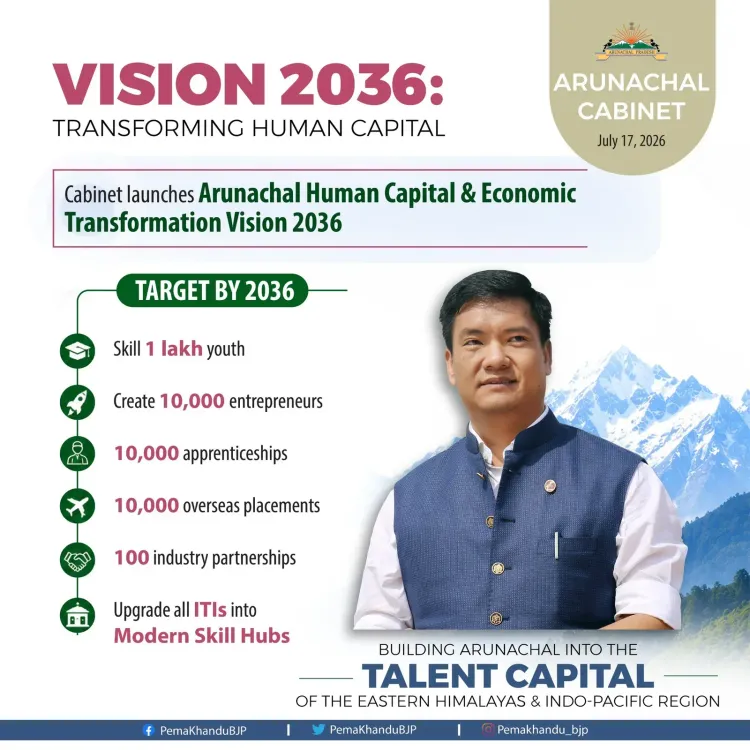
The Arunachal Pradesh cabinet has approved Vision 2036, a human-capital roadmap targeting 1 lakh skilled youth, 10,000 entrepreneurs, 10,000 apprenticeships, 10,000 overseas placements, 100 industry partnerships, and the transformation of all 10 ITIs into Modern Skill Hubs by 2036.
Key Takeaways
The Arunachal Pradesh State Cabinet approved the Arunachal Human Capital & Economic Transformation Vision 2036 on 17 July 2026 .
The plan targets skilling 1 lakh youth and creating 10,000 entrepreneurs within a decade.
It also aims to facilitate 10,000 apprenticeships and 10,000 overseas placements by 2036 .
All 10 ITIs in the state will be upgraded into Modern Skill Hubs and Centres of Excellence.
100 industry partnerships are planned to provide market linkages and investment pipelines for local entrepreneurs.
The initiative aligns with national frameworks including Skill India , NEP 2020 , and the broader Viksit Bharat 2047 agenda.
Arunachal Pradesh Chief Minister Pema Khandu announced on Friday, 17 July 2026 that the state cabinet has approved the Arunachal Human Capital & Economic Transformation Vision 2036, a decade-long roadmap targeting large-scale youth skilling, entrepreneurship creation, and industry integration across the frontier state.
Context
The cabinet-cleared vision document lays out six headline targets to be achieved by 2036. These include skilling 1 lakh youth, creating 10,000 entrepreneurs, facilitating 10,000 apprenticeships, enabling 10,000 overseas placements, building 100 industry partnerships, and transforming all 10 Industrial Training Institutes (ITIs) into Modern Skill Hubs and Centres of Excellence. The Chief Minister described the plan as 'a game-changing roadmap to make Arunachal a powerhouse of talent, innovation, and opportunity.'
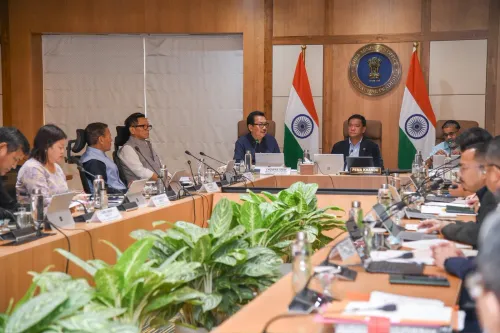
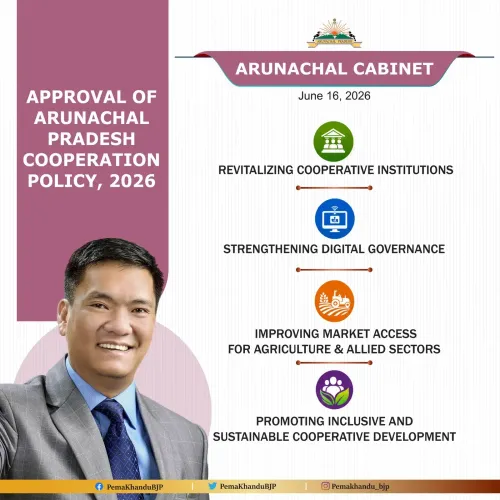
The announcement coincides with the #10YearsOfTeamArunachal milestone, marking a decade of the current political leadership's governance in the state. The hashtags accompanying the post — #ArunachalCabinet and #ArunachalCabinetDecisions — signal that the vision document was formally cleared at a cabinet sitting on the same day.
Policy Backdrop
The Vision 2036 initiative builds on a layered national policy architecture. The Skill India Mission, launched in 2015, extended vocational training infrastructure to states including Arunachal Pradesh, while the National Education Policy 2020 deepened the integration of skill development into school and higher-education frameworks. The state's new roadmap draws on these foundations while setting state-specific, time-bound targets that extend to a 10-year horizon.
The 2036 planning window mirrors longer-term national frameworks such as the Viksit Bharat 2047 agenda, reflecting a broader trend among state governments of anchoring development plans to multi-decade national goals. For Arunachal Pradesh, a state that shares sensitive borders with China, Myanmar, and Bhutan, human-capital investment is also viewed as a strategic tool to retain skilled youth within the region.
Stakeholders and Impact
The primary beneficiaries are Arunachal Pradesh's youth population, who have historically faced limited formal employment options, pushing many toward out-migration to larger urban centres. The 10,000 overseas placements target is particularly notable, suggesting the state intends to channel international labour-market demand — especially in sectors such as healthcare, hospitality, and manufacturing — toward its trained workforce.
Local entrepreneurs stand to gain from the dedicated target of 10,000 new enterprises, supported by the planned 100 industry partnerships which could provide mentorship, market linkages, and investment pipelines. The upgrade of all 10 ITIs into Modern Skill Hubs is expected to directly improve training quality at the district level, making vocational education more accessible to students from remote and tribal communities.
Northeastern states governed by the Bharatiya Janata Party have increasingly prioritised human-capital programmes to diversify economies beyond agriculture and tourism. The Vision 2036 fits squarely within this regional pattern, and its implementation will likely seek convergence with centrally sponsored schemes such as the Pradhan Mantri Kaushal Vikas Yojana (PMKVY).
What's Next
With cabinet approval secured, the immediate focus will shift to institutional architecture — defining nodal agencies, funding mechanisms, and annual milestones for each of the six targets. Observers will watch closely for the state's next budget cycle, where allocations tied to the Vision 2036 framework are expected to surface.
Progress on ITI upgrades and the pace of industry partnership signings will serve as early indicators of implementation seriousness. Integration with central skilling and apprenticeship schemes during upcoming Union Budget negotiations could significantly amplify the reach and funding base of the plan, making inter-governmental coordination a critical variable in its success.
Point of View
Target-driven human-capital strategy — a shift that reflects a maturing governance approach in the Northeast. The overseas placement target is the most politically consequential element: it acknowledges that the domestic economy alone cannot absorb a rapidly growing trained workforce, and it bets on global labour demand as a release valve. Anchoring the plan to a 10-year horizon also insulates it, at least rhetorically, from electoral cycles, lending it the appearance of a state-level structural reform rather than a pre-election promise. Whether the institutional machinery — funding, nodal agencies, monitoring frameworks — can match the ambition of the targets will be the real test of the vision's credibility.
NationPress
17 Jul 2026
Frequently Asked Questions
What is the Arunachal Human Capital and Economic Transformation Vision 2036?
It is a cabinet-approved state roadmap unveiled on 17 July 2026 that sets targets to skill 1 lakh youth, create 10,000 entrepreneurs, facilitate 10,000 apprenticeships, enable 10,000 overseas placements, build 100 industry partnerships, and upgrade all 10 ITIs into Modern Skill Hubs by 2036.
Who approved the Arunachal Vision 2036 plan?
The Arunachal Pradesh State Cabinet approved the plan, with Chief Minister Pema Khandu announcing the decision on 17 July 2026.
How many ITIs will be upgraded under Vision 2036?
All 10 Industrial Training Institutes in Arunachal Pradesh will be transformed into Modern Skill Hubs and Centres of Excellence under the plan.
What is the overseas placement target under Arunachal Vision 2036?
The vision document targets 10,000 overseas placements for trained youth from Arunachal Pradesh by 2036, aiming to connect the state's workforce with international labour markets.
How does Arunachal Vision 2036 relate to national skilling schemes?
The plan builds on the Skill India Mission launched in 2015 and the National Education Policy 2020, and is expected to seek convergence with centrally sponsored schemes such as PMKVY during future budget cycles.