CM Pema Khandu: Watong Village Backs 1200 MW Kalai-II Hydro Project
Synopsis
Arunachal Pradesh CM Pema Khandu met Watong village residents in Anjaw district on June 28, 2026, and confirmed community consent for the Centre-sanctioned 1,200 MW Kalai-II Hydro Electric Project, calling it a landmark step for the state's energy security and employment.
Key Takeaways
Arunachal Pradesh CM Pema Khandu visited Watong village , Anjaw district , on June 28, 2026 .
The community of Watong has given full consent for the proposed Kalai-II Hydro Electric Project .
The project has a capacity of 1,200 MW and has been sanctioned by Prime Minister Narendra Modi .
Cabinet Ministers Dasanglu Pul and Mama Natung were present at the community interaction.
CM Khandu said the project will boost Arunachal Pradesh's growth, energy security, and employment opportunities .
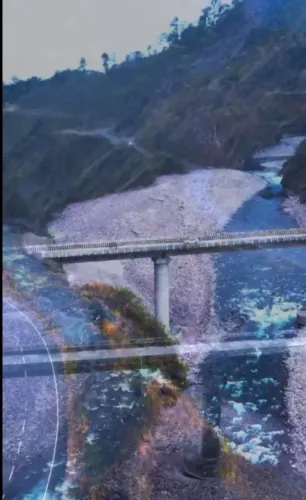
Anjaw district is a strategically sensitive frontier district bordering China and Myanmar, adding geopolitical significance to the project.
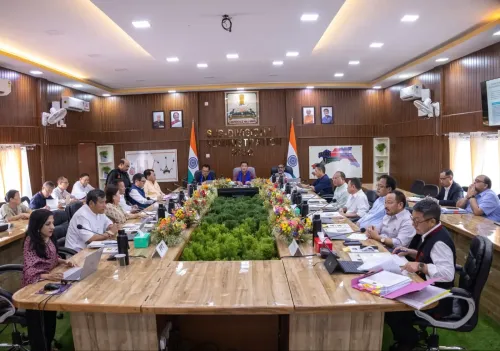
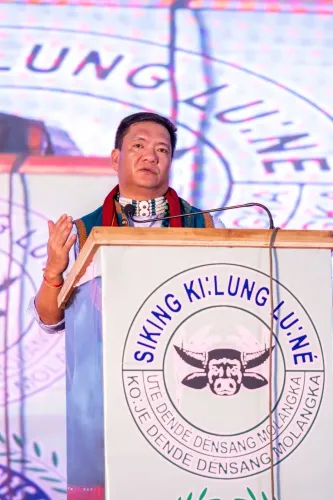
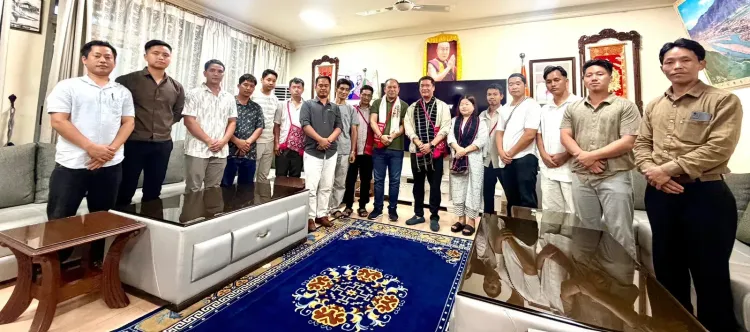
Arunachal Pradesh Chief Minister Pema Khandu on Sunday, June 28, 2026, met with residents of Watong village in Anjaw district, announcing that the local community has given its full consent for the proposed Kalai-II Hydro Electric Project, a 1,200 MW hydropower initiative sanctioned by the Centre. The Chief Minister expressed gratitude to Prime Minister Narendra Modi for approving what he described as a 'landmark project' for the state's energy future.
Context
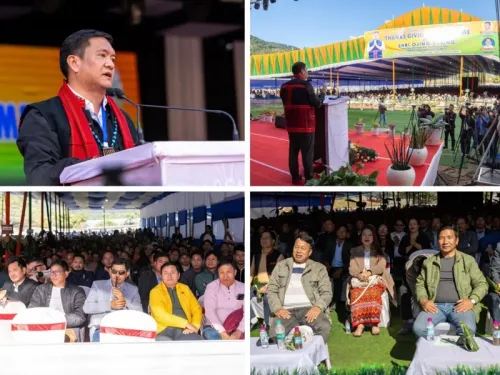
CM Khandu held an interaction with community members of Watong village, accompanied by Cabinet Minister Smt Dasanglu Pul and Cabinet Minister Shri Mama Natung. He noted that the people of Watong have 'wholeheartedly welcomed and given their consent' for the project — a critical step in community-based clearance processes for large infrastructure in tribal and ecologically sensitive areas of the Northeast.
The meeting underscores the state government's approach of direct community engagement before advancing major hydropower projects, particularly in remote frontier districts like Anjaw, which borders China and Myanmar.
Policy Backdrop
Arunachal Pradesh holds an estimated hydropower potential of over 50,000 MW, making it one of the most resource-rich states in India for clean energy generation. Despite this, the state has historically seen slow project execution due to complex terrain, environmental scrutiny, and the need for community consent in areas inhabited by indigenous tribal communities.
The Kalai-II Hydro Electric Project at 1,200 MW is a significant addition to the national hydropower pipeline. Its sanction by Prime Minister Modi aligns with the Union government's push to develop Northeast India's hydropower capacity as part of broader energy security and clean energy transition goals. Projects of this scale also carry strategic importance given Anjaw district's location in a sensitive border zone.
Stakeholders and Impact
The residents of Watong village and the wider Anjaw district stand to be the most directly affected. Community consent signals a willingness to engage with project developers on land use, rehabilitation, and local employment — areas that have historically been flashpoints in hydro project disputes across the Northeast.
CM Khandu specifically highlighted that the project 'will significantly contribute to Arunachal Pradesh's growth, energy security and employment opportunities,' indicating that job creation for local youth is a central commitment tied to the project's approval. State ministers Dasanglu Pul and Mama Natung being present at the interaction signals the government's intent to keep senior political leadership involved in community-level consultations.
What's Next
With community consent secured at Watong, the Kalai-II project is expected to move toward subsequent clearance stages, including environmental and forest approvals, detailed project report finalisation, and developer appointment. The pace of these processes will determine when construction activity begins in the ecologically and strategically significant Anjaw corridor.
For Arunachal Pradesh, successful execution of the 1,200 MW Kalai-II project could serve as a template for community-first hydropower development — a model that balances the state's immense energy potential with the rights and aspirations of its indigenous frontier communities.
Point of View
Not merely a technical one. The emphasis on 'wholeheartedly welcomed' consent is a deliberate counter-narrative to the contentious history of hydro projects in the Northeast, where local resistance has stalled development for decades. By publicly crediting PM Modi for the sanction, Khandu also reinforces the Centre-state alignment that has defined BJP governance in Arunachal Pradesh since 2016. If the Kalai-II model of early community engagement holds, it could reshape how large infrastructure is pursued across India's ecologically and strategically sensitive border regions.
NationPress
28 Jun 2026
Frequently Asked Questions
What is the Kalai-II Hydro Electric Project?
The Kalai-II Hydro Electric Project is a proposed 1,200 MW hydropower project in Arunachal Pradesh , sanctioned by Prime Minister Narendra Modi . It is located in the Anjaw district and is intended to boost the state's energy security and create local employment.
Why did CM Pema Khandu visit Watong village?
CM Pema Khandu visited Watong village in Anjaw district on June 28, 2026 , to interact with residents about the proposed Kalai-II Hydro Electric Project and to receive their community consent for the initiative.
Has the Watong village community agreed to the Kalai-II project?
Yes. According to CM Pema Khandu , the people of Watong village have 'wholeheartedly welcomed and given their consent' for the proposed Kalai-II Hydro Electric Project .
Which ministers accompanied CM Khandu to Anjaw district?
Cabinet Minister Smt Dasanglu Pul and Cabinet Minister Shri Mama Natung accompanied CM Pema Khandu during his interaction with residents of Watong village in Anjaw district .
What is Arunachal Pradesh's hydropower potential?
Arunachal Pradesh has an estimated hydropower potential of over 50,000 MW , making it one of India's most resource-rich states for clean energy. However, complex terrain, environmental requirements, and community consent processes have historically slowed project development.