CM Pema Khandu Reviews Arunachal Hydro Power Portfolio
Synopsis
Arunachal Pradesh CM Pema Khandu on 16 June 2026 chaired a Steering Committee review of all hydroelectric projects under CPSUs and IPPs in the state, issuing a firm zero-tolerance directive on delays as the state seeks to unlock its 50,000 MW hydropower potential.
Key Takeaways
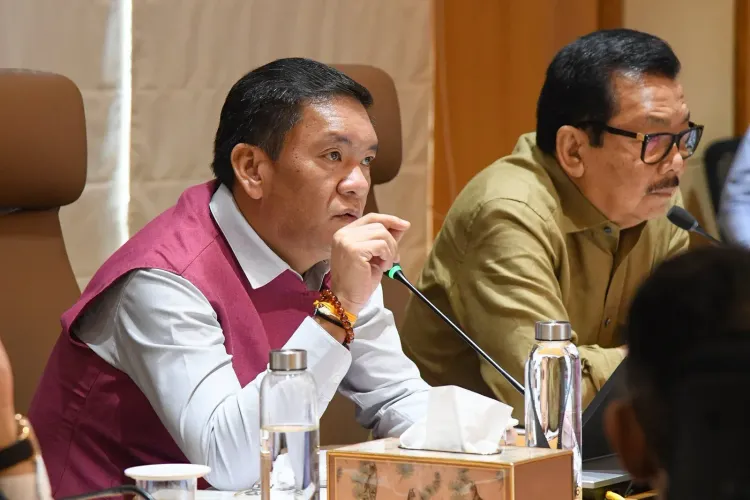
CM Pema Khandu chaired a Steering Committee meeting on Hydroelectric Power Development on 16 June 2026 .
The review covered the entire portfolio of hydroelectric projects under CPSUs and IPPs in Arunachal Pradesh .
Khandu issued a clear directive: 'no delays, no excuses, and no slow movement' on project timelines.
Arunachal Pradesh holds India's highest estimated hydropower potential, exceeding 50,000 MW , largely untapped after decades of allotments.
The state's hydro portfolio is central to India's eastern grid augmentation and national renewable energy targets.
Projects on the Subansiri and Dibang river systems remain among the most closely watched for execution progress.
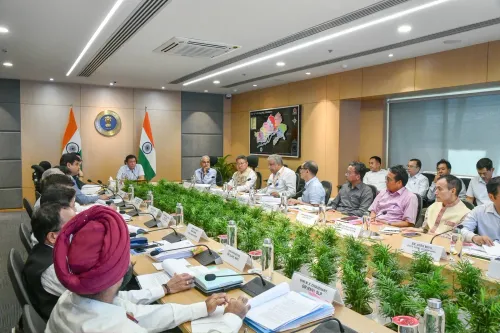
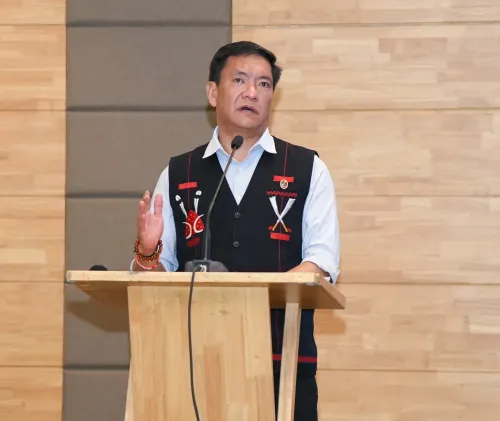
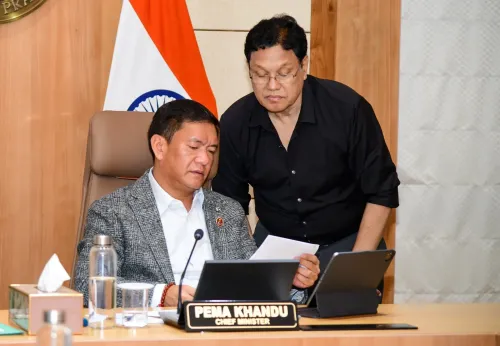
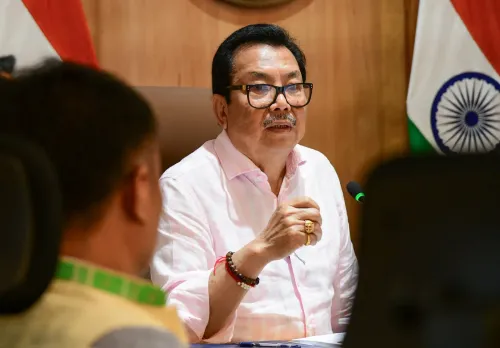
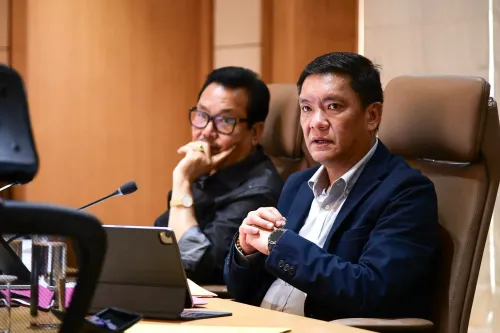
Arunachal Pradesh Chief Minister Pema Khandu chaired a Steering Committee meeting on Hydroelectric Power Development on Tuesday, 16 June 2026, conducting a detailed review of the state's portfolio of projects under Central Public Sector Undertakings (CPSUs) and Independent Power Producers (IPPs). Khandu signalled a firm stance on timelines, declaring there would be 'no delays, no excuses, and no slow movement.'
Context
The meeting, which Khandu described as 'very important,' placed 'every project, every bottleneck, every timeline' under what he called 'sharp focus.' The Chief Minister's post on X on the evening of 16 June reflected an unambiguous message directed at all stakeholders involved in the development pipeline. The review covered the entire active portfolio of hydroelectric schemes in the state, spanning both centrally-backed utilities and private developers.
Arunachal Pradesh holds the highest estimated hydropower potential of any Indian state, exceeding 50,000 MW, concentrated primarily in tributaries of the Brahmaputra basin. Despite this enormous resource base, only a fraction of the potential has been commissioned after decades of project allotments.
Policy Backdrop
The origins of this push trace back to 2003, when the Government of India launched a 50,000 MW hydroelectric initiative targeting Himalayan states, including Arunachal Pradesh, to fast-track development through central PSUs and private participation. Agencies such as NHPC have held allotments for multiple large projects in the state under this framework for years.
Successive administrations at both the state and central levels have attempted to accelerate project execution in the Northeast, which is seen as critical to India's eastern grid augmentation and broader renewable energy targets. However, chronic obstacles — including forest and environmental clearances, difficult terrain, and periodic local protests — have kept a significant portion of the portfolio stalled or behind schedule.
High-level steering reviews have periodically been used as a mechanism to enforce accountability across this complex, multi-stakeholder pipeline. Khandu's intervention on 16 June 2026 follows this established pattern of executive-level pressure on project timelines.
Stakeholders and Impact
The projects under review involve CPSUs — including central hydropower utilities — alongside IPPs that have been allotted projects in the state. Both categories have faced scrutiny over slow commissioning rates relative to the scale of allotments made over the past two decades.
For Arunachal Pradesh, accelerating hydropower development carries significant economic implications: royalty revenues, local employment, and the state's share of generated power all depend on projects moving from construction to commissioning. The broader Northeast region stands to benefit from improved grid stability and reduced dependence on power imports if the portfolio is executed on schedule.
Key projects to watch include those on the Subansiri and Dibang river systems, which represent some of the largest hydropower schemes in the national pipeline and have faced prolonged delays in the past.
What's Next
The outcome of the 16 June Steering Committee meeting is likely to translate into follow-up directives to project developers and central agencies, with specific timelines expected to be enforced more rigorously. Any escalation to the central government — including requests for expedited clearances or additional budgetary support — will be closely watched by the sector.
With India's renewable energy commitments and eastern grid requirements mounting, the pace at which Arunachal Pradesh can convert its hydropower potential into commissioned capacity will remain a key indicator of the state's contribution to national energy security goals.
Point of View
Zero-tolerance messaging after a Steering Committee review is a deliberate signal to both central agencies and private developers that the state government intends to hold project timelines accountable — a posture that carries weight given Arunachal's outsized but chronically underutilised hydropower portfolio. The framing of 'no excuses' reflects a broader frustration within northeastern state governments over the gap between allotment ambition and on-ground commissioning, a gap that has persisted across multiple political cycles. By anchoring the message in a formal committee structure rather than a political rally, Khandu is also positioning this as an administrative intervention, lending it institutional credibility. The follow-through — in the form of specific directives, clearance escalations, or budgetary asks — will determine whether this review translates into a genuine inflection point or remains one in a long line of high-level nudges.
NationPress
16 Sept 2026
Frequently Asked Questions
What did Pema Khandu say about hydropower development in Arunachal Pradesh?
CM Pema Khandu, after chairing a Steering Committee meeting on 16 June 2026, stated that the message is 'no delays, no excuses, and no slow movement' on hydroelectric projects under CPSUs and IPPs in the state.
How much hydropower potential does Arunachal Pradesh have?
Arunachal Pradesh has India's highest estimated hydropower potential, exceeding 50,000 MW, concentrated primarily in tributaries of the Brahmaputra basin, though only a fraction has been commissioned so far.
What are CPSUs and IPPs in the context of Arunachal hydropower?
CPSUs are Central Public Sector Undertakings — government-owned entities such as NHPC — while IPPs are Independent Power Producers, or private developers. Both categories hold allotments for hydroelectric projects in Arunachal Pradesh.
Why are hydropower projects in Arunachal Pradesh delayed?
Chronic delays in Arunachal Pradesh's hydropower projects stem from a combination of difficult terrain, pending forest and environmental clearances, and periodic local protests, which have slowed construction and commissioning across the portfolio.
Which hydropower projects in Arunachal Pradesh are most significant?
Projects on the Subansiri and Dibang river systems are among the largest and most closely watched in Arunachal Pradesh's hydropower pipeline, forming a key part of India's eastern grid augmentation plans.