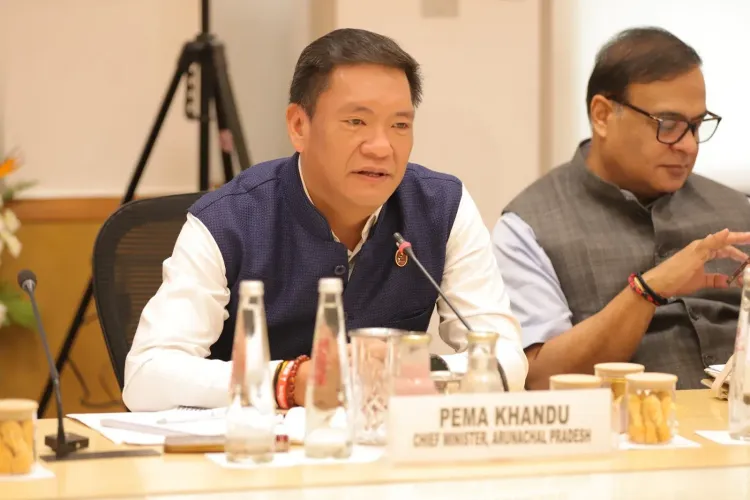
Arunachal CM Pema Khandu pushes 40,000 MW hydropower target at NITI Aayog meet
Synopsis
Arunachal Pradesh CM Pema Khandu used a NITI Aayog platform to table one of the Northeast's most comprehensive development agendas in recent memory — a 40,000 MW hydropower target by 2047, a demand to scrap population-only funding formulas, and a push to give the NEC the powers of a regional planning body. The proposals, if acted upon, could reshape how India's largest border state is funded and governed.
Key Takeaways
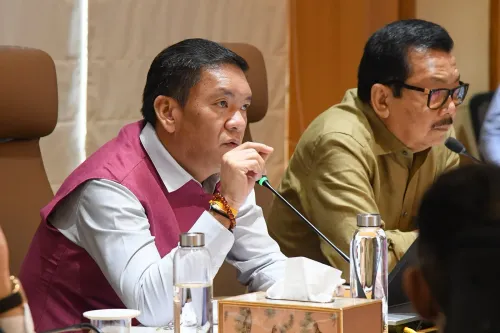
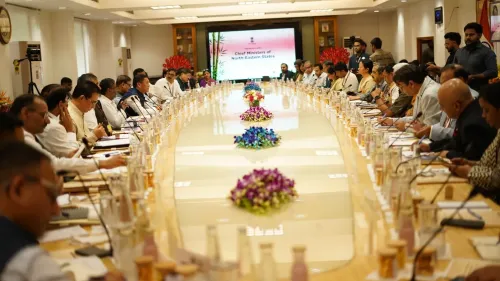
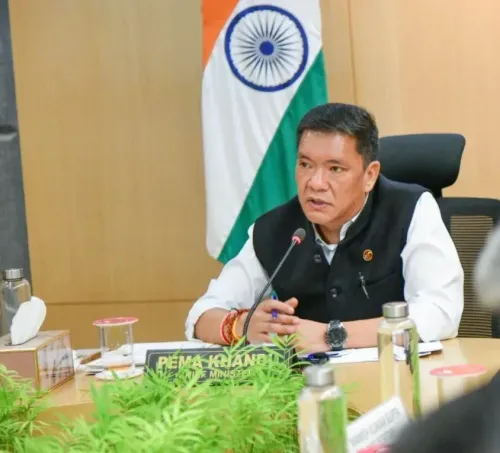
Arunachal Pradesh CM Pema Khandu addressed a NITI Aayog-convened meeting of Northeastern Chief Ministers on 12 June .
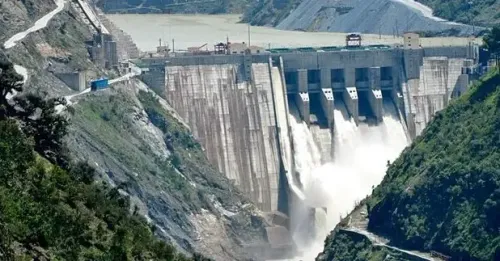
The state has set a 40,000 MW hydropower generation target by 2047 ; Khandu sought coordinated central support to achieve it.
Khandu called for a review of population-based funding criteria , arguing they disadvantage large, sparsely populated border states.
He proposed expanding PMGSY coverage to villages with populations of 250 or more to connect remote habitations.
A separate AIS cadre for Arunachal Pradesh was advocated; a joint cadre with Mizoram was proposed and reportedly backed by CM Lalduhoma .
Khandu proposed empowering the North Eastern Council (NEC) to serve as the 'NITI Aayog of the Northeast'.
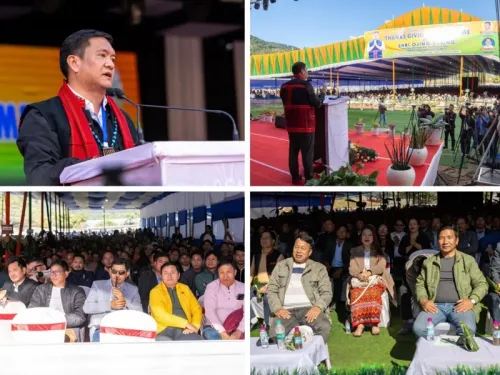
Arunachal Pradesh Chief Minister Pema Khandu on Friday, 12 June called for dedicated policy interventions and stronger central support for his state at a high-level meeting of Northeastern Chief Ministers convened by NITI Aayog in New Delhi. Khandu presented a wide-ranging agenda covering hydropower, infrastructure, funding reform, and administrative restructuring, arguing that existing national frameworks consistently disadvantage large, sparsely populated border states like Arunachal Pradesh.
Hydropower Ambitions and Skilling Push
At the centre of Khandu's address was Arunachal Pradesh's target of generating 40,000 MW of hydropower by 2047. He sought coordinated support from NITI Aayog and relevant central ministries to sustainably harness the state's vast river systems. Crucially, he stressed that hydropower development must be paired with skilling of local youth and promotion of ancillary industries — ensuring that economic benefits flow to communities living near project sites, not just to outside contractors.
NITI Aayog Vice Chairman Suman Bery acknowledged the state's human capital potential and suggested strengthening Industrial Training Institutes (ITIs) through formal partnerships with major hydropower companies. Bery assured Khandu that the state's concerns would be taken up with relevant central ministries. Assam Chief Minister Himanta Biswa Sarma also lauded Arunachal Pradesh's hydropower policies, emphasising the importance of sustainable natural resource utilisation.
Funding Formula Reform
Khandu raised a structural grievance that has long been voiced by geographically large but thinly populated states: population-based allocation criteria systematically shortchange them. He urged a review of these parameters and called for alternative funding metrics that account for terrain, area, and strategic significance. Arunachal Pradesh, despite being the largest Northeastern state by area, shares an extensive international border and faces acute developmental constraints that purely demographic formulas do not capture.
He also noted that the state has received comparatively fewer benefits from externally aided projects than several other Northeastern states, and requested NITI Aayog to explore mechanisms to bridge this gap.
Connectivity and Infrastructure Gaps
On road connectivity, Khandu sought an expansion of the Pradhan Mantri Gram Sadak Yojana (PMGSY) to cover villages with populations of 250 or more — down from the current threshold — noting that numerous remote habitations remain unconnected despite the progress made under the Vibrant Villages Programme. The difficult terrain and dispersed settlement patterns of Arunachal Pradesh, he argued, demand dedicated infrastructure support that generic national schemes do not adequately provide.
Administrative Reforms and Institutional Proposals
Khandu made a pointed case for a separate All India Services (AIS) cadre for Arunachal Pradesh, arguing that frequent inter-cadre transfers under the existing arrangement disrupt governance continuity and policy implementation. He proposed a joint cadre arrangement with Mizoram — a suggestion that reportedly received support from Mizoram Chief Minister Lalduhoma, who was present at the meeting.
He also proposed empowering the North Eastern Council (NEC) to function as the 'NITI Aayog of the Northeast', giving the body a stronger regional planning mandate. Separately, he informed the meeting about the establishment of the Institute of Transforming Arunachal and sought NITI Aayog's guidance in developing it into a premier policy and governance think tank.
Khandu highlighted citizen-outreach initiatives — Sarkar Aapke Dwar, Seva Aapke Dwar, and Cabinet Aapke Dwar — as examples of governance innovation that delivers services directly to remote villages. He reaffirmed the state's commitment to cooperative federalism and pledged to work closely with NITI Aayog, the NEC, and the Centre toward inclusive and sustainable development.
Point of View
Terrain, and strategic exposure. The population-based funding critique is not new, but pairing it with a concrete alternative — area, terrain, and border significance as metrics — gives it more traction than past iterations. The 40,000 MW hydropower target is ambitious, but the real test is whether the Centre will co-invest in grid infrastructure and transmission corridors, without which generation capacity is stranded. The AIS cadre proposal, backed by Mizoram, signals a rare moment of cross-state consensus in the Northeast that NITI Aayog would be unwise to ignore.
NationPress
29 Jul 2026
Frequently Asked Questions
What is Arunachal Pradesh's hydropower target and when is the deadline?
Arunachal Pradesh has set a target of generating 40,000 MW of hydropower by 2047. Chief Minister Pema Khandu sought coordinated support from NITI Aayog and central ministries to sustainably develop the state's river systems toward this goal.
Why is Arunachal Pradesh seeking a change in central funding criteria?
Chief Minister Khandu argued that population-based allocation formulas systematically disadvantage geographically large but sparsely populated states like Arunachal Pradesh. He called for alternative parameters that factor in terrain, land area, and strategic significance along international borders.
What is the proposed separate AIS cadre for Arunachal Pradesh?
Khandu advocated creating a dedicated All India Services cadre for Arunachal Pradesh, arguing that frequent transfers under the existing arrangement disrupt governance continuity. He proposed a joint cadre arrangement with Mizoram, which reportedly received support from Mizoram CM Lalduhoma.
What role did NITI Aayog Vice Chairman Suman Bery play at the meeting?
NITI Aayog Vice Chairman Suman Bery acknowledged Arunachal Pradesh's human capital strengths and suggested strengthening ITIs through partnerships with major hydropower companies. He assured that the state's concerns would be taken up with relevant central ministries.
What is the proposal to empower the North Eastern Council?
Khandu proposed that the North Eastern Council (NEC) be empowered to function as the 'NITI Aayog of the Northeast', giving it a stronger mandate for regional planning and addressing development priorities specific to the eight Northeastern states.