CM Pinarayi Slams Centre's AAY Eligibility Shift as Attack on Food Security
Synopsis
Kerala CM Pinarayi Vijayan has condemned the BJP-led Union Government's move to shift Antyodaya Anna Yojana eligibility from families to individuals, warning it slashes ration entitlements for the poorest households and disproportionately harms states like Kerala. He has demanded an immediate withdrawal of the amendment.
Key Takeaways
Kerala Chief Minister Pinarayi Vijayan on 8 July 2026 publicly condemned the Union Government's proposed shift of AAY eligibility from families to individuals.
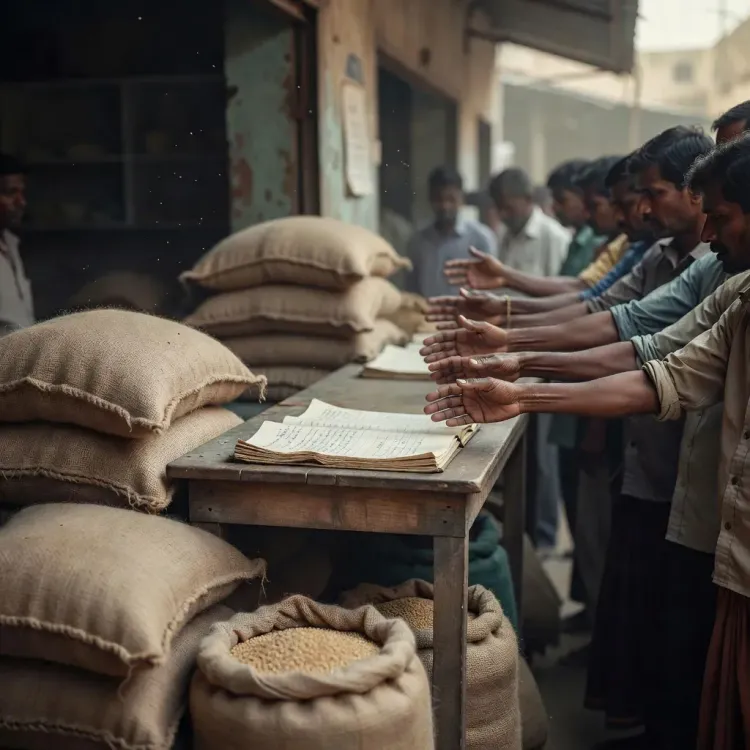
The Antyodaya Anna Yojana currently provides 35 kg of subsidised food grains per month to the poorest households under the National Food Security Act, 2013 .
Vijayan argued the change would reduce ration entitlements and 'disproportionately penalise' states like Kerala , which has high PDS coverage.
He criticised the Centre's continued reliance on 2011 Census data instead of updating beneficiary lists to reflect current demographics.
The Chief Minister demanded the 'anti-people amendment' be withdrawn immediately, signalling potential political and legal escalation.
The dispute is part of a broader pattern of friction between opposition-ruled states and the Centre over centrally sponsored welfare scheme norms.
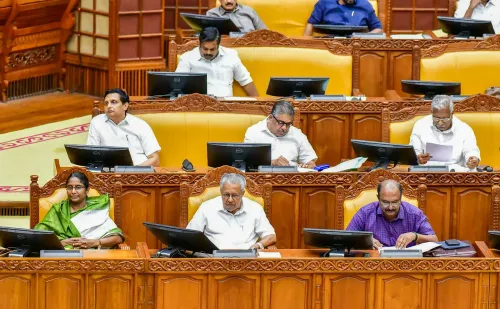
Kerala Chief Minister Pinarayi Vijayan on Wednesday, 8 July 2026, sharply criticised the BJP-led Union Government for moving to shift Antyodaya Anna Yojana (AAY) eligibility from families to individuals, calling it a direct attack on the food security of millions of poor households across the country.
Context
In his post, Vijayan stated that the proposed change would reduce ration entitlements for poor households and 'disproportionately penalise states like Kerala.' He demanded that the 'anti-people amendment must be withdrawn immediately,' framing the move as an undermining of the National Food Security Act (NFSA) itself rather than an expansion of welfare coverage.
The Chief Minister also pointed to the Union Government's failure to update beneficiary lists using a more recent census, arguing that continued reliance on 2011 Census data leaves millions unaccounted for due to demographic changes and migration.
Policy Backdrop
The Antyodaya Anna Yojana was launched in 2000 to target the poorest of the poor, providing 35 kg of subsidised food grains per month to identified households. It was subsumed into the National Food Security Act framework in 2013, which legally entitles up to 75% of the rural population and 50% of the urban population to subsidised grains, with AAY households as the priority segment.
A shift in the unit of entitlement from 'family' to 'individual' would effectively reduce the total grain allocation per household for larger families, since the existing 35 kg per family norm does not scale with household size in the same way an individual-based calculation would be expected to. Critics argue this restructuring could shrink the effective food security net for the most vulnerable.
The 2011 Census continues to serve as the basis for state-wise coverage ceilings under the NFSA, despite repeated demands from states — including Kerala — to revise these limits to reflect current population figures. Kerala has historically maintained high Public Distribution System (PDS) coverage with low leakages, and any central reduction in entitlement norms hits its beneficiary base directly.
Stakeholders and Impact
The households most affected would be those classified under the AAY priority category — families identified as the poorest among the poor, including those with no regular income, landless labourers, and marginalised communities. In Kerala, where PDS penetration is high, even marginal reductions in per-family entitlement translate into a measurable loss of food support.
The dispute also reflects a broader pattern of centre-state friction over centrally sponsored schemes. Opposition-ruled states have consistently argued that the Union Government's unilateral revisions to eligibility norms reduce welfare reach without adequate fiscal compensation or consultation with state governments.
What's Next
Attention will now turn to whether the Union Government issues a formal notification amending the NFSA or AAY guidelines, and how other state governments — particularly those with large AAY beneficiary populations — respond. Kerala may consider supplementary budget provisions to offset any reduction in central entitlements or explore legal avenues to challenge the amendment. Vijayan's public intervention signals that this policy change is likely to become a flashpoint in centre-state relations over food security governance in the months ahead.
Point of View
A narrative that resonates strongly with CPI(M)'s base in Kerala. The attack on the 2011 Census ceiling is a well-worn but legitimate grievance shared across party lines in many states, giving this critique broader coalition potential beyond left politics. By invoking the NFSA itself as being 'undermined,' Vijayan is laying groundwork for a possible legal challenge, not merely a political statement. The episode underscores how central welfare scheme revisions increasingly become arenas for centre-state contestation, especially as states grow more assertive in defending their PDS architectures.
NationPress
8 Jul 2026
Frequently Asked Questions
What is the Antyodaya Anna Yojana and who does it cover?
The Antyodaya Anna Yojana (AAY) is a central government scheme launched in 2000 that provides 35 kg of subsidised food grains per month to the poorest households in India. It was integrated into the National Food Security Act framework in 2013, where AAY households are designated as the priority category.
Why is Kerala opposing the AAY eligibility change?
Kerala Chief Minister Pinarayi Vijayan argues that shifting AAY eligibility from families to individuals reduces the effective ration entitlement for poor households and disproportionately affects Kerala, which has high Public Distribution System coverage. He also says the Centre is failing to update beneficiary lists beyond the 2011 Census data.
What is the National Food Security Act?
The National Food Security Act (NFSA) is a 2013 law that legally entitles up to 75% of the rural population and 50% of the urban population to subsidised food grains, with AAY households receiving the highest priority. It sets state-wise coverage ceilings based on 2011 Census figures.
Why is the 2011 Census a problem for food security coverage?
The 2011 Census figures, which determine how many people each state can include under the NFSA, have not been updated despite significant population growth and migration since then. States like Kerala argue this leads to under-coverage, leaving many eligible poor families outside the food security net.
What could happen next after Pinarayi Vijayan's criticism of the AAY change?
If the Union Government proceeds with a formal notification amending AAY or NFSA guidelines, states like Kerala may respond with supplementary budget allocations to compensate affected beneficiaries or mount legal challenges. The issue is expected to intensify centre-state debate over food security governance.