CM Rekha Gupta Backs Amit Shah's 24-Hour Parliament Debate Offer
Synopsis
Home Minister Amit Shah has offered to remain in Parliament from 3 PM on 12 August to 3 PM on 13 August, personally answering every question raised, to bring full clarity before the public. Delhi CM Rekha Gupta amplified the challenge, asking the opposition to choose debate over disruption.
Key Takeaways
Amit Shah pledged to stay in the House for a full 24 hours — from 3 PM on 12 August to 3 PM on 13 August 2026 — to discuss every subject.
He committed to personally writing down every point and delivering a reply to each, framing it as a transparency exercise for the public.
Delhi CM Rekha Gupta shared the statement on X, lending BJP's state-level leadership weight to the challenge.
Shah's statement directly called on the opposition to choose charcha (discussion) over hungama (disruption).
The government-versus-opposition dynamic of debate-or-walkout is a recurring pattern across Indian parliamentary sessions since the 1990s.
The outcome — whether the opposition engages or protests — will shape the trajectory of the current session's listed business.
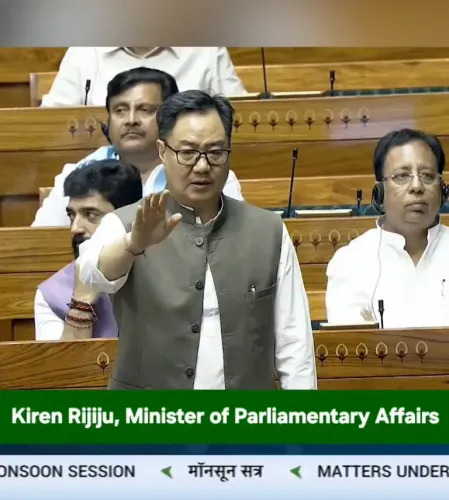
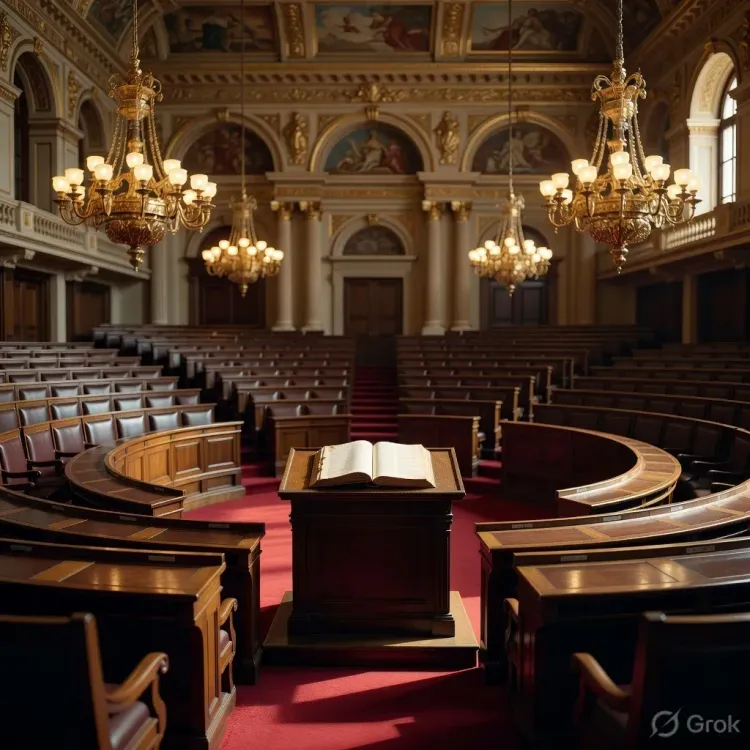
Union Home Minister Amit Shah threw down a legislative gauntlet on Wednesday, 12 August 2026 — offering to remain in the House from 3 PM that day until 3 PM the next, personally recording and answering every question, so that, in his words, 'milk is separated from water' before the nation. Delhi Chief Minister Rekha Gupta amplified the statement on X, framing it as a direct challenge to the opposition.
Shah's quoted declaration, as shared by Gupta, was unambiguous: 'सरकार हर विषय पर चर्चा के लिए तैयार है' — 'The government is ready to discuss every subject.' The Home Minister pledged to be present in the House for a full 24 hours, writing down every point and delivering a response to each, with the explicit aim of placing the full picture before the people of India. The closing line was the sharpest: the opposition must now decide whether it wants charcha (discussion) or hungama (disruption).
A 24-Hour Offer and What It Signals
A government offering open-ended, marathon floor time is not new to Indian parliamentary history — similar gambits have played out across budget, monsoon, and winter sessions going back to the 1990s. But the specificity here is notable: a named minister, a named window, a personal commitment to document every exchange. It raises the political cost for any opposition group that chooses to walk out rather than engage. Shah, who has served as Union Home Minister since 2019, is no stranger to high-stakes parliamentary moments. His floor presence on internal security and legislative business has repeatedly set the terms of debate in both Lok Sabha and Rajya Sabha. Framing a 24-hour vigil as a transparency exercise — 'so everything becomes clear to the public' — is a calculated move that shifts accountability squarely onto opposition benches.The Opposition's Move to Make
India's parliamentary arithmetic means that disruption is often the opposition's loudest lever when it lacks the numbers to block legislation outright. Walkouts, placard protests, and adjournment demands have defined multiple sessions over the past decade. Shah's offer essentially dares opposition parties to choose visibility over noise — to come to the floor, ask the hard questions, and let the record speak. Whether they take that dare, or whether proceedings dissolve into the familiar cycle of adjournments, will determine what the public actually sees of this session's unresolved business. A 24-hour clock is ticking. The opposition's answer will write the next line of this story.Point of View
Making opposition disruption look like evasion rather than protest. By having Delhi CM Rekha Gupta amplify it on social media, the BJP is simultaneously fighting on the floor and in the digital public square. The move fits a broader BJP pattern of using procedural boldness to force the opposition into a lose-lose optic — engage and legitimise the government's framing, or walk out and be cast as obstructionist. The unverified trigger of this specific session makes it impossible to judge the underlying policy substance, but the political choreography is unmistakable.
NationPress
12 Aug 2026
Frequently Asked Questions
What did Amit Shah offer in Parliament on 12 August 2026?
Home Minister Amit Shah offered to remain in the House for a full 24 hours — from 3 PM on 12 August to 3 PM on 13 August 2026 — to discuss every subject, personally record every point, and answer each one so the full picture is clear to the public.
Why did Delhi CM Rekha Gupta share Amit Shah's statement?
Rekha Gupta, Delhi Chief Minister and BJP leader, shared Shah's statement on X to amplify the government's challenge to the opposition, framing it as a call for substantive debate over disruption.
What does 'doodh ka doodh, paani ka paani' mean in this context?
The Hindi idiom — literally 'milk is milk and water is water' — means separating truth from falsehood. Shah used it to say that a full open discussion would make the facts undeniable and publicly clear.
Has the Indian government made similar 24-hour debate offers before?
Yes. Governments offering extended, open floor time to the opposition is a recurring feature of Indian parliamentary practice, seen across budget, monsoon, and winter sessions over the past several decades.
What happens next in Parliament after Shah's offer?
The critical question is whether opposition parties choose to participate in the proposed discussion or continue with protests and walkouts. Their decision will determine the course of the current session's business.