CM Rekha Gupta Backs Sanskrit University's AI and B.Tech Push
Synopsis
Delhi CM Rekha Gupta on 28 June 2026 amplified PM Modi's Mann Ki Baat remarks praising Central Sanskrit University's new B.Tech in AI and Data Science, framing it as a fusion of India's ancient knowledge tradition with modern technology for manuscript preservation and Indian-language AI.
Key Takeaways
Central Sanskrit University, Delhi is launching B.Tech programmes in Artificial Intelligence and Data Science .
PM Modi described the move as a 'visionary step' during Mann Ki Baat on 28 June 2026 .
Delhi CM Rekha Gupta amplified the announcement on X, signalling BJP's political backing.
The initiative aims to develop AI solutions for Indian languages and aid preservation of ancient manuscripts .
The move aligns with NEP 2020 's multidisciplinary and classical-modern integration goals.
Sanskrit's structured grammatical tradition is seen as a natural fit for computational linguistics research.
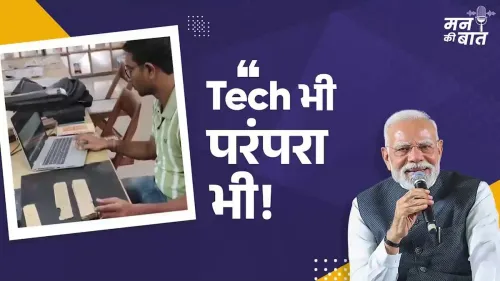
Delhi Chief Minister Rekha Gupta on Sunday, 28 June 2026 shared a quote from Prime Minister Narendra Modi praising the Central Sanskrit University, Delhi for launching B.Tech programmes in Artificial Intelligence and Data Science, calling it a visionary step that bridges India's ancient knowledge tradition with modern technology.
Context
The post, shared during the broadcast of Mann Ki Baat, quoted PM Modi as saying the initiative will 'strengthen the confluence of India's ancient knowledge tradition and new technology.' The CM amplified the Prime Minister's remarks, underscoring the significance of a Sanskrit institution venturing into cutting-edge technical disciplines.
The Central Sanskrit University — a central university under the Ministry of Education — has historically focused on classical studies, Vedic literature, and Indian philosophy. The introduction of B.Tech streams in AI and Data Science marks a significant pivot for the institution.
Policy Backdrop
The move aligns with the National Education Policy (NEP) 2020, which explicitly encourages multidisciplinary education and integration of classical Indian knowledge systems with contemporary science and technology. The government has in recent years pushed for technology-enabled preservation of ancient manuscripts under initiatives such as the National Mission for Manuscripts (NMM).
PM Modi's quote, as shared by CM Gupta, specifically highlighted two outcomes: developing 'new AI solutions for Indian languages' and giving 'a new direction to the preservation of ancient texts and manuscripts.' Both goals sit at the intersection of computational linguistics, cultural heritage, and applied AI — a domain gaining traction in Indian academic and policy circles.
Stakeholders and Impact
Students enrolling in these B.Tech programmes at the Central Sanskrit University would receive a rare dual grounding — classical Indian linguistic and philosophical training alongside engineering-grade technical education. Scholars and archivists working on digitisation of Sanskrit manuscripts stand to benefit from graduates trained specifically at this intersection.
The initiative also carries implications for the broader Indian-language AI ecosystem. Sanskrit's highly structured grammatical framework — codified by the ancient grammarian Panini — has long attracted computational linguists, and a dedicated technical faculty at a Sanskrit university could accelerate research in natural language processing for classical and modern Indian languages alike.
What's Next
The Central Sanskrit University is expected to operationalise the B.Tech curriculum in the coming academic cycle, though specific intake numbers and faculty appointments have not yet been publicly detailed. CM Gupta's amplification of the announcement signals political support from the BJP-led Delhi government for the Union government's push to modernise classical institutions without abandoning their foundational character.
If the model succeeds, it could serve as a template for other central universities rooted in classical disciplines to introduce applied technology programmes — deepening the NEP 2020 vision of a knowledge economy that draws equally from India's past and its technological future.
Point of View
The government frames technological investment as culturally continuous, not disruptive. The Central Sanskrit University's B.Tech launch is a test case for NEP 2020's multidisciplinary ambitions within classical institutions. If it gains academic credibility, it could reshape how India's heritage universities are perceived in the competitive higher-education landscape.
NationPress
28 Jun 2026
Frequently Asked Questions
What B.Tech courses is Central Sanskrit University Delhi launching?
Central Sanskrit University, Delhi is launching B.Tech programmes in Artificial Intelligence and Data Science, marking a significant expansion beyond its traditional classical studies curriculum.
What did PM Modi say about Central Sanskrit University in Mann Ki Baat?
PM Modi called the launch of AI and Data Science B.Tech programmes at Central Sanskrit University a 'visionary step' that will strengthen the confluence of India's ancient knowledge tradition and new technology, and help develop AI solutions for Indian languages and preserve ancient manuscripts.
Why did Delhi CM Rekha Gupta share this post?
CM Rekha Gupta shared PM Modi's quote from Mann Ki Baat to highlight and endorse the Central Sanskrit University's new technical programmes, signalling the Delhi BJP government's support for the initiative.
How does Sanskrit relate to Artificial Intelligence?
Sanskrit's highly formalised grammatical structure, codified by the ancient grammarian Panini, has long attracted computational linguists. Researchers see its rule-based framework as useful for natural language processing and developing AI tools for Indian languages.
What is the National Mission for Manuscripts and how does it connect?
The National Mission for Manuscripts is a government initiative focused on digitising and preserving India's vast collection of ancient texts. AI tools developed by graduates of programmes like those at Central Sanskrit University could directly support this preservation work.