CM Rekha Gupta Calls 1984 Violence a Massacre
Synopsis
Delhi Chief Minister Rekha Gupta on 7 November 2026 posted that a 'massacre' took place in 1984, using pointed language that reframes the anti-Sikh violence as a one-sided atrocity and reignites long-standing demands for accountability.
Key Takeaways
Delhi CM Rekha Gupta posted on 7 November 2026 describing the 1984 anti-Sikh violence as a 'massacre' ( narsanhar ).
The post comes around the anniversary of Prime Minister Indira Gandhi's assassination on 31 October 1984 , which triggered the violence.
Using the word 'massacre' rather than 'riots' is a deliberate reframing long demanded by Sikh survivors and human-rights groups .
Multiple official inquiry commissions have examined the events over four decades; large-scale accountability remains incomplete.
The post reflects a recurring pattern of political statements on 1984 each November, with legal cases still ongoing in Indian courts.
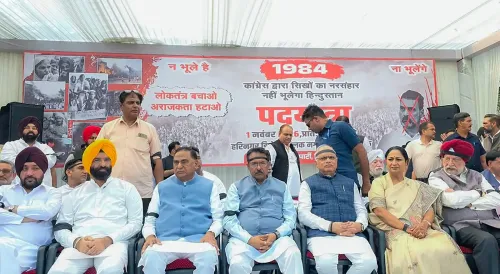
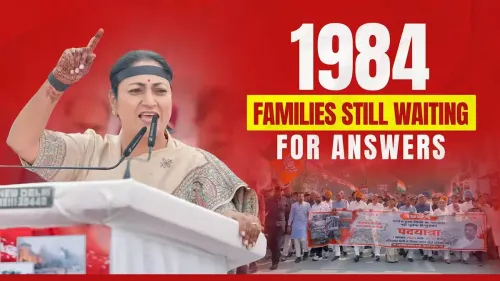
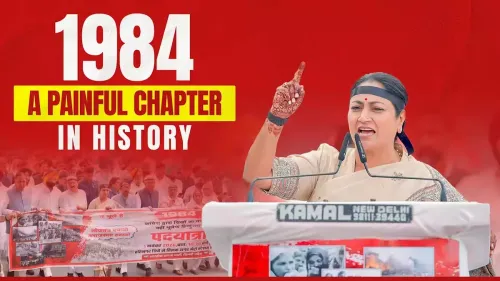
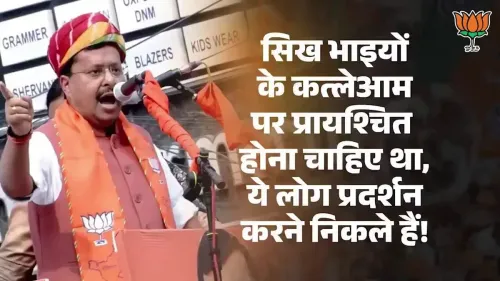
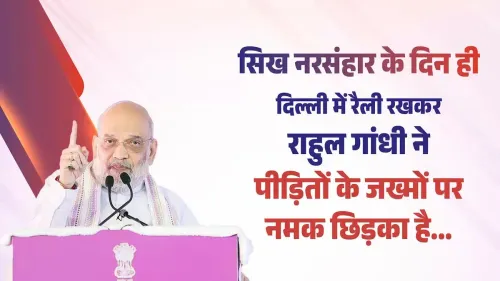
Forty-two years on, the wounds of November 1984 have not closed — and Delhi's Chief Minister is making sure they are not forgotten. Delhi Chief Minister Rekha Gupta posted on X on 7 November 2026, stating plainly: '1984 mein narsanhar hua tha' — 'A massacre took place in 1984.'
What happened in November 1984
The violence erupted in the days immediately following the assassination of Prime Minister Indira Gandhi on 31 October 1984. Mobs attacked Sikh homes, businesses, and places of worship across Delhi and several other Indian cities. The official death toll runs into the thousands; human-rights groups and survivor testimony place the numbers higher still. Entire neighbourhoods in Delhi were reduced to ash within 72 hours.A word the political mainstream long avoided
The choice of the word narsanhar — massacre — is deliberate and carries political weight. For decades, official and quasi-official language described the events as 'riots,' a framing the Sikh community and many historians have rejected as inadequate for organised, targeted killing. Using 'massacre' reframes the event as a one-sided atrocity rather than communal clashes between two communities. It is a distinction that survivors and advocacy groups have demanded for over four decades.Inquiry commissions, pending justice
Multiple commissions of inquiry were constituted in the years and decades after 1984 to identify perpetrators and assign accountability. Convictions have been secured in a handful of cases, but large-scale institutional accountability has remained elusive. The cases continue to work their way through Indian courts, keeping the issue alive in both legal proceedings and political discourse. Every early November, as the anniversary of Indira Gandhi's assassination returns, statements on 1984 flood the political space. CM Gupta's post lands squarely in that annual cycle — brief, unequivocal, and aimed at the historical record. The question of justice for 1984 is not closed. It never quietly was.Point of View
' she aligns with a Sikh community demand that mainstream politics resisted for decades and sharpens the BJP's long-running contrast with the Congress party on accountability for 1984. The post fits a broader BJP strategy of marking the November anniversary as a moment of moral reckoning rather than letting it pass as routine history. It also keeps pressure on unresolved court proceedings, reminding voters that the legal reckoning remains unfinished. In an era when a single word in a political post can redraw a narrative, 'narsanhar' is not accidental — it is the entire argument.
NationPress
7 Nov 2026
Frequently Asked Questions
What happened in the 1984 anti-Sikh riots?
Following the assassination of Prime Minister Indira Gandhi on 31 October 1984, mobs attacked Sikh communities across India — particularly in Delhi — over several days, killing thousands. Survivors and historians widely describe the organised nature of the violence as a massacre rather than spontaneous riots.
Why does Rekha Gupta call 1984 a 'massacre' and not 'riots'?
The word 'massacre' (narsanhar) implies organised, one-sided killing rather than two-sided communal clashes. Sikh survivors and human-rights groups have long insisted the term 'riots' is a mischaracterisation; using 'massacre' aligns with their demand for accurate historical recognition.
Has anyone been convicted for the 1984 anti-Sikh violence?
Yes, convictions have been secured in a limited number of cases over the decades, but large-scale accountability has remained elusive despite multiple inquiry commissions. Legal proceedings are still ongoing in Indian courts.
Why do politicians make statements about 1984 every November?
The violence began in early November 1984 immediately after Indira Gandhi's assassination on 31 October, making the anniversary a recurring moment for political statements, commemorations, and renewed calls for justice.
What is the BJP's position on the 1984 anti-Sikh riots?
The BJP has consistently sought to hold the Congress party politically responsible for the 1984 violence, demanding accountability and using the anniversary to contrast its position with that of its principal rival. CM Gupta's post is consistent with that established party stance.