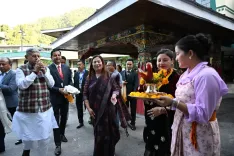
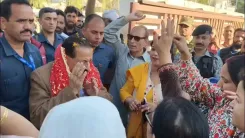
1984 Sikh genocide anniversary: CM Rekha Gupta, BJP's Harsh Malhotra lead Hari Nagar march
Synopsis
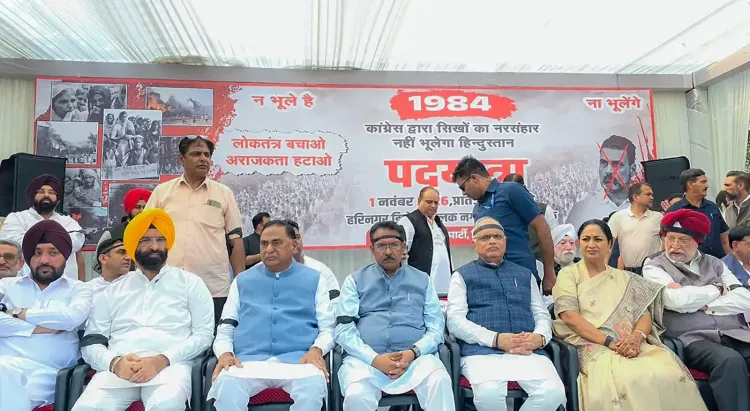
On the 42nd anniversary of the 1984 anti-Sikh violence, Delhi Chief Minister Rekha Gupta and BJP president Harsh Malhotra led a march in Hari Nagar demanding justice and Congress accountability — with a second march planned at Gurdwara Bangla Sahib on Monday, signalling the BJP's intent to keep the issue alive through the anniversary week.
Key Takeaways
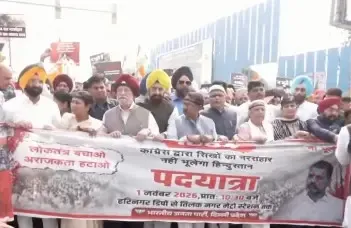
Delhi CM Rekha Gupta and BJP president Harsh Malhotra joined a march at Hari Nagar on 1 November 2026 , marking the 42nd anniversary of the 1984 anti-Sikh violence.
March participants demanded accountability from the Indian National Congress and justice for victim families waiting decades for redress.
Malhotra alleged that Congress leaders 'identified Sikh households' and named H.K.L.
Bhagat and Sajjan Kumar as having alleged roles in the killings.
Senior Advocate H.S.
Phoolka highlighted the killing of 51 serving soldiers during the violence as 'extremely grave.' A follow-up march near Gurdwara Bangla Sahib was announced for Monday to pay homage at the 1984 memorial.
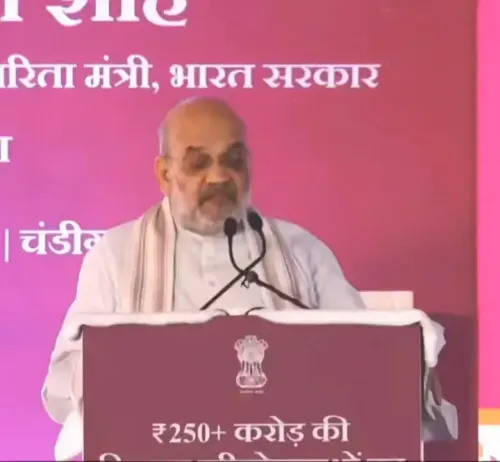
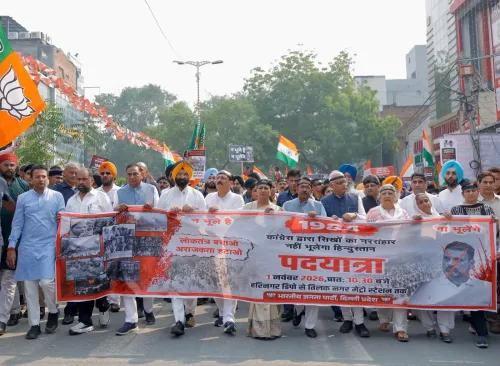
Delhi Chief Minister Rekha Gupta and Delhi Bharatiya Janata Party (BJP) president Harsh Malhotra on Sunday, 1 November 2026, joined a solidarity march at Hari Nagar in New Delhi to demand justice for families affected by the 1984 anti-Sikh violence and to keep alive the memories of the tragedy. Senior BJP leaders, elected representatives, and thousands of members of the Sikh community participated in the event, directing their demands for accountability squarely at the Indian National Congress.
What the March Stood For
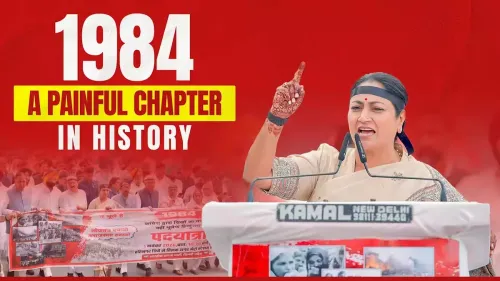
The march, organised on the 42nd anniversary of the anti-Sikh violence that erupted following the assassination of then Prime Minister Indira Gandhi, drew participants who called on Congress to answer for the events of November 1984. According to a party statement, the gathering expressed solidarity with victim families who have waited decades for justice and full accountability.
Chief Minister Rekha Gupta framed the demand in constitutional terms, asking: 'Was what happened in November 1984 not the murder of democracy?' She said thousands of Sikh families lost loved ones during that period and that many mothers, sisters, and families continue to live with the trauma. 'Even today, many mothers, sisters and families continue to live with the painful memories of that tragedy and await justice,' she said.
BJP's Charges Against Congress
Gupta held the Congress and the Gandhi family directly responsible for the violence, saying neither could 'escape responsibility for what happened to the Sikh community in 1984.' She drew a parallel with the Emergency of 1975, arguing that those who invoke the Constitution today must first answer for past democratic violations under their own watch.
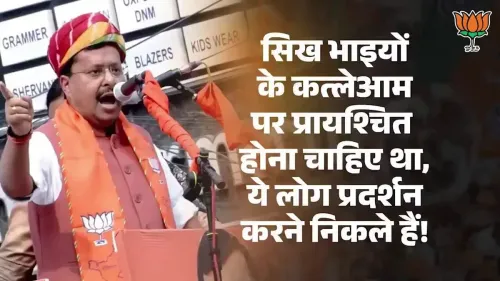
Delhi BJP president Harsh Malhotra went further, describing the 1984 violence as 'a well-planned conspiracy by the Congress,' alleging that Congress leaders themselves stood on streets, identified Sikh households and facilitated the massacre. He specifically named H.K.L. Bhagat and Sajjan Kumar as individuals whose alleged roles had come to light in connection with the killings, adding that Sikhs were massacred continuously for 72 hours.
Targeting Congress leader Rahul Gandhi, Malhotra alleged that by organising a programme on the anniversary of the 1984 violence, Gandhi was 'rubbing salt into the wounds of the victim families.' He credited Prime Minister Narendra Modi's government with constituting the SIT that secured punishment for those responsible for the genocide.
Voices from the Community and Legal Arena
Delhi Minister Manjinder Singh Sirsa accused Rahul Gandhi of 'following in his father's footsteps by indulging in politics' over the anniversary. BJP leader and Yamuna Development Board chairman Arvinder Singh Lovely said that on 1 November 1984, there was 'virtually no law and order left, not just in Delhi but across the country.'
Senior Advocate Sardar H.S. Phoolka, who has fought a prolonged legal battle for justice for victims of the 1984 anti-Sikh violence, said the brutal killings of retired soldiers and 51 serving soldiers were 'extremely grave and unfortunate.' BJP Rajya Sabha MP Vikramjit Singh Sahney said several members of his own family were killed during the violence.
Delhi Minister Ashish Sood criticised Congress leaders for what he called a 'mindset that promotes arson and anarchy,' referring to imagery displayed at Congress press conferences.
What Comes Next
BJP president Malhotra announced that a follow-up march would be organised on Monday near Gurdwara Bangla Sahib, where participants will pay homage at the memorial established in memory of the 1984 violence. The back-to-back events signal that the BJP intends to sustain political pressure around the anniversary, with the Congress-accountability narrative set to continue into the week ahead.
Point of View
Not merely a commemorative one — the Sikh vote bank in Delhi has historically been a swing factor. Framing Congress as perpetrators while crediting the Modi government's SIT with delivering justice is a well-worn but electorally potent narrative. What is missing from the political spectacle, however, is a serious reckoning with how many cases remain unresolved and how many survivors are still awaiting compensation — questions that transcend party lines and deserve more than anniversary-march rhetoric.
NationPress
1 Nov 2026
Frequently Asked Questions
Why did Delhi CM Rekha Gupta join the Hari Nagar march on 1 November 2026?
Chief Minister Rekha Gupta joined the march to demand justice for families affected by the 1984 anti-Sikh violence and to hold the Congress accountable for the tragedy. She said thousands of Sikh families still await justice and called the events of 1984 'the murder of democracy.'
What did BJP's Harsh Malhotra allege about the 1984 Sikh violence?
Malhotra described the 1984 violence as a 'well-planned conspiracy by the Congress,' alleging that Congress leaders stood on streets and identified Sikh households to facilitate the massacre. He named H.K.L. Bhagat and Sajjan Kumar as individuals whose alleged roles had come to light and said Sikhs were killed continuously for 72 hours.
What is the significance of the 1984 anti-Sikh violence anniversary?
The anti-Sikh violence of November 1984 erupted following the assassination of Prime Minister Indira Gandhi and resulted in the killing of thousands of Sikhs, primarily in Delhi. The 1 November anniversary marks the day the violence escalated, and survivors and advocacy groups continue to seek full accountability and justice.
Who is H.S. Phoolka and what did he say at the march?
Senior Advocate H.S. Phoolka is a legal campaigner who has fought a long battle for justice for victims of the 1984 anti-Sikh violence. At the Hari Nagar march, he described the killing of 51 serving soldiers during the violence as 'extremely grave and unfortunate.'
What follow-up events have been planned after the Hari Nagar march?
BJP president Harsh Malhotra announced a second march near Gurdwara Bangla Sahib on Monday, 2 November. Participants are expected to pay homage at the memorial established at the gurdwara in memory of those killed in the 1984 violence.