CM Rekha Gupta Calls for Polio Vaccination Awareness on World Polio Day
Synopsis
Delhi Chief Minister Rekha Gupta marked World Polio Day on 24 October 2026 by calling for renewed commitment to keeping India polio-free and raising vaccination awareness, invoking India's hard-won WHO-certified polio-free status since 2014.
Key Takeaways
Delhi CM Rekha Gupta posted a World Polio Day message on 24 October 2026 urging citizens to pledge a permanently polio-free India.
India was certified polio-free by the WHO South-East Asia Region in 2014 after the Pulse Polio Immunisation Programme launched in 1995 .
The country maintains polio-free status through the Universal Immunisation Programme and periodic supplementary immunisation campaigns.
World Polio Day is observed annually on 24 October to highlight global polio eradication efforts.
Wild poliovirus still circulates in parts of the world, making sustained surveillance and high vaccination coverage critical for India.
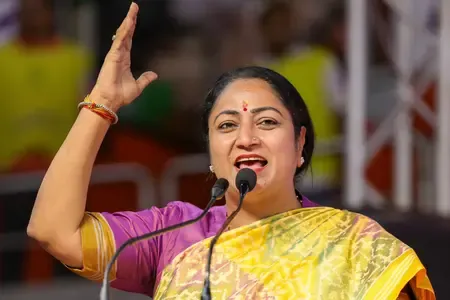
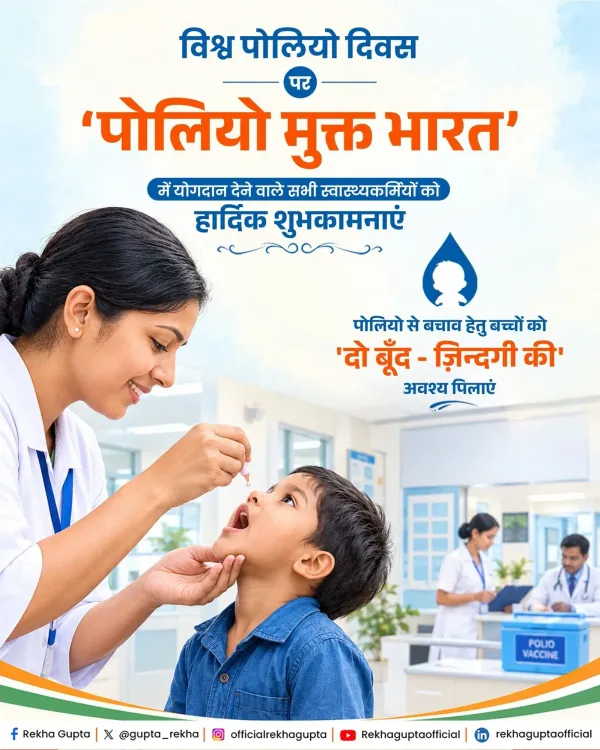
On World Polio Day, 24 October 2026, Delhi Chief Minister Rekha Gupta called on citizens to renew their commitment to keeping India permanently polio-free and to spread awareness about the life-saving power of vaccination for every child.
Posting in Hindi on X, CM Gupta urged: 'आइए, इस दिन भारत को सदैव पोलियो मुक्त बनाए रखने का संकल्प लें' — 'Let us, on this day, resolve to keep India permanently polio-free and to raise awareness about vaccination for the healthy and safe future of every child.'
From 'at-risk' to polio-free: India's hard-won milestone
The journey was neither short nor easy. India launched the Pulse Polio Immunisation Programme in 1995, deploying thousands of health workers in door-to-door campaigns that reached children in the most remote corners of the country. After nearly two decades of relentless effort, the World Health Organisation certified the WHO South-East Asia Region — including India — polio-free in 2014. It was a public-health triumph that placed India among a small group of nations that had beaten the virus despite enormous logistical odds.
Since then, India has maintained that status through the Universal Immunisation Programme and periodic supplementary immunisation rounds that keep circulating poliovirus at bay. Surveillance in high-risk districts continues precisely because eradication, not just control, remains the global goal.
Why World Polio Day still demands attention
Observed every year on 24 October, World Polio Day is a reminder that a disease declared eliminated can resurface the moment vaccine coverage slips. Globally, wild poliovirus still circulates in a handful of countries, and vaccine-derived strains have re-emerged in regions where immunisation gaps opened. India's surveillance systems and community outreach programmes exist precisely to prevent complacency from becoming a crack in the country's defences.
Political leaders across parties have consistently used the occasion to reinforce public trust in immunisation — a nudge that health experts say matters in districts where vaccine hesitancy lingers.
Point of View
While a genuine milestone, requires constant reinforcement because vaccination coverage is never uniformly high across all districts. By framing the pledge around children's futures rather than government achievement, the messaging sidesteps political ownership and speaks directly to parental instinct. The real test, however, lies in whether such symbolic nudges translate into measurable uptake during the next supplementary immunisation round.
NationPress
24 Oct 2026
Frequently Asked Questions
When is World Polio Day celebrated?
World Polio Day is observed every year on 24 October to highlight efforts to eradicate polio globally.
When did India become polio-free?
India was officially certified polio-free by the WHO in 2014 , when the entire WHO South-East Asia Region received the certification.
What is the Pulse Polio Immunisation Programme?
The Pulse Polio Immunisation Programme was launched by India in 1995 to eliminate wild poliovirus transmission through mass, door-to-door oral polio vaccination campaigns.
What did Delhi CM Rekha Gupta say on World Polio Day 2026?
Delhi Chief Minister Rekha Gupta called on citizens to resolve to keep India permanently polio-free and to raise awareness about vaccination for the healthy and safe future of every child.
Is polio still a risk in India?
India has maintained polio-free status since 2014 , but the country continues active surveillance and supplementary immunisation rounds because wild poliovirus still circulates in some other countries, posing a re-importation risk.