CM Rekha Gupta Calls for Year-Round War on Delhi's Air
Synopsis
Delhi Chief Minister Rekha Gupta has written a public op-ed arguing the capital must move beyond seasonal, emergency-only responses to air pollution and adopt a sustained year-round governance framework — a credibility bet timed to the opening of the 2026-27 winter smog season.
Key Takeaways
Delhi CM Rekha Gupta published an op-ed on 8 November 2026 calling for year-round action on air pollution, not just winter emergency responses.
Delhi's existing primary response mechanism, the Graded Response Action Plan (GRAP) , has been in place since 2017 and operates on a threshold-triggered, seasonal basis.
The Commission for Air Quality Management was established in 2020-21 to coordinate across Delhi, Haryana, Punjab, and Uttar Pradesh.
Winter pollution in Delhi is driven by stubble burning in Punjab and Haryana , cold temperature inversions, and vehicle and heating emissions.
Both the Supreme Court and the National Green Tribunal exercise ongoing judicial oversight over Delhi-NCR air quality governance.
Enforcement timelines and actual rollout of any new year-round measures will be the critical test for Gupta's stated policy direction.
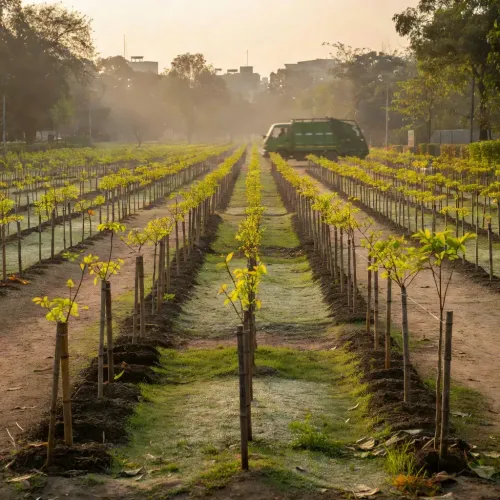
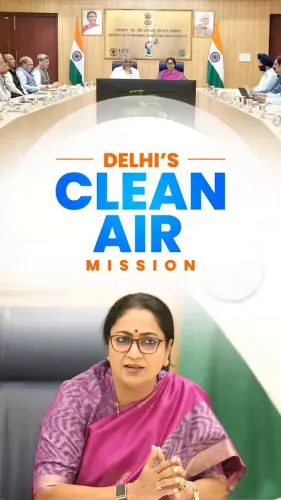
The festival lights are off, but Delhi Chief Minister Rekha Gupta is making sure the city's focus on clean air stays switched firmly on. In an op-ed published on Sunday, 8 November 2026, Gupta argued that Delhi must move beyond its seasonal, crisis-driven responses to air pollution and build a sustained, year-round framework for tackling the capital's most persistent public-health emergency.
Posting on X, Gupta wrote: 'Diwali may be over, but our duty to protect Delhi's air never ends!' — a pointed signal that the government intends to treat air quality as a 365-day governance priority rather than a winter-only alarm. The article outlines how Delhi is shifting from reactive emergency responses to structural, long-term intervention.
From GRAP Emergency Triggers to a 12-Month Strategy
For nearly a decade, Delhi-NCR's primary pollution-response mechanism has been the Graded Response Action Plan (GRAP), introduced in 2017 to impose graduated restrictions — on construction, truck movement, and industrial activity — whenever air quality crosses defined hazard thresholds. The plan was designed for crisis moments, not calendar-year management. It activates when pollution spikes and stands down when levels ease, leaving the structural causes largely untouched.
The Commission for Air Quality Management in NCR and Adjoining Areas, established by ordinance in 2020 and given statutory footing in 2021, broadened the coordination architecture across Delhi, Haryana, Punjab, and Uttar Pradesh. Yet the dominant public narrative around Delhi's air remains a winter story — smog, stubble fires, and emergency school closures.
Why Winter Dominates — and Why That Framing Falls Short
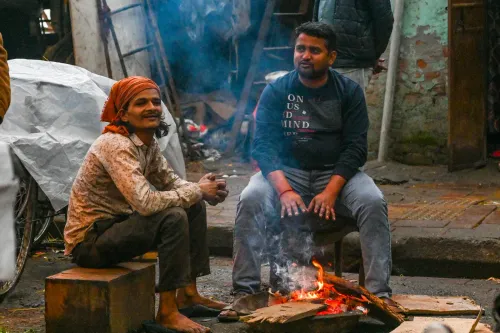
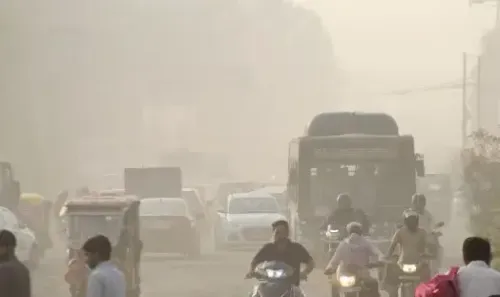
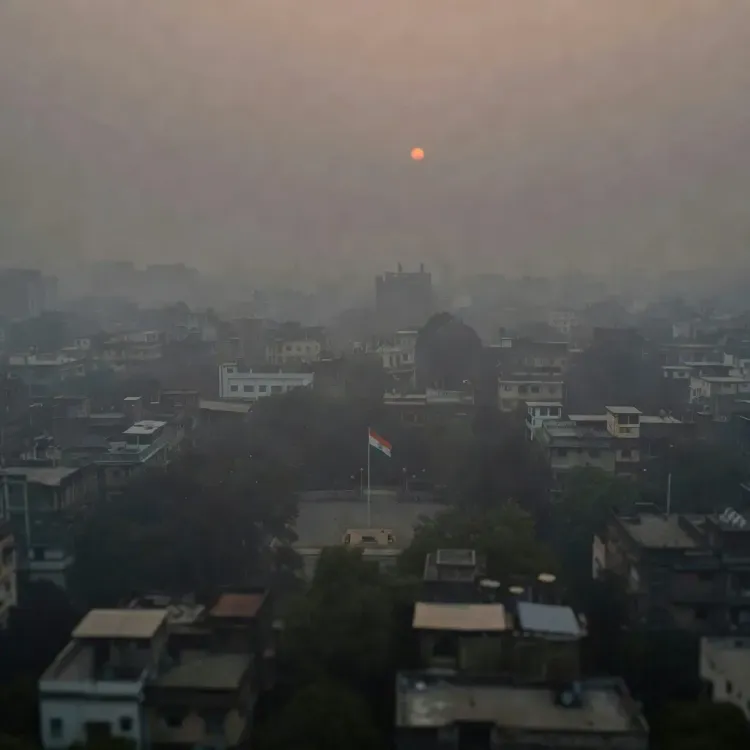
Every October-to-February cycle, the same combustion arrives: millions of tonnes of paddy stubble burned in Punjab and Haryana, cooler temperatures that trap pollutants in a low mixing layer, and a surge in vehicle and heating emissions. The photochemical cocktail routinely drives Delhi's AQI into 'severe' or 'severe-plus' territory, triggering judicial interventions from the Supreme Court and the National Green Tribunal.
But critics and health researchers have long argued that summer months are not clean — dust storms, industrial emissions, and vehicle exhaust keep PM2.5 levels elevated well above safe limits even in April and May. A year-round strategy would address those months as well, shifting the policy conversation from emergency management to prevention.
The Governance Bet Behind the Op-Ed
Choosing to write directly in a major newspaper — rather than issuing a government press note — is itself a signal. Gupta is staking personal credibility on the pollution agenda at the start of the high-smog season, with GRAP activations for winter 2026-27 likely already under review. The move places her administration squarely in ownership of outcomes that will be visible in real-time air-quality data over the coming months.
What the year-round measures actually entail — which sectors, which enforcement timelines, which inter-agency coordination — will be the test. Delhi residents, NCR industries, and the farming communities of Punjab and Haryana will all watch whether the rhetoric of sustained action translates into policy with teeth before the next Diwali arrives.
Point of View
Rekha Gupta is making a calculated political move: claiming ownership of Delhi's pollution narrative before the headlines turn toxic. The shift in language — from 'seasonal response' to 'year-round action' — directly targets a long-standing criticism of successive Delhi governments that emergency GRAP triggers are crisis PR, not structural governance. Whether this signals a genuine policy pivot or is itself a seasonal gesture will depend entirely on enforcement data and budget allocations over the next twelve months. The framing also positions the BJP-led Delhi government to contrast itself with predecessor administrations on one of the city's most emotionally charged issues.
NationPress
8 Nov 2026
Frequently Asked Questions
What did Delhi CM Rekha Gupta say about air pollution?
Rekha Gupta wrote in a public op-ed on 8 November 2026 that Delhi must move from seasonal, emergency-driven pollution responses to a sustained, year-round strategy — arguing that the duty to protect Delhi's air does not end after Diwali.
What is GRAP and how does it work in Delhi?
The Graded Response Action Plan (GRAP) , introduced in 2017 , imposes staged restrictions on construction, trucking, and industrial activity in Delhi-NCR when air quality crosses set hazard thresholds. It is a reactive, threshold-triggered mechanism designed for winter emergencies rather than year-round pollution control.
Why is Delhi's air quality so bad in winter?
Delhi's winter pollution is driven by a combination of paddy-stubble burning in Punjab and Haryana , cooler temperatures that trap pollutants in a shallow atmospheric layer, rising vehicle emissions, and heating activity — routinely pushing AQI into 'severe' or 'severe-plus' categories between October and February.
What is the Commission for Air Quality Management?
The Commission for Air Quality Management in NCR and Adjoining Areas was created by ordinance in 2020 and given full statutory authority in 2021 . It coordinates air-quality interventions across Delhi and the states of Haryana, Punjab, and Uttar Pradesh.
Does the Supreme Court monitor Delhi air pollution?
Yes. Both the Supreme Court of India and the National Green Tribunal exercise active judicial oversight over Delhi-NCR air quality governance, frequently issuing directions to state and central agencies on pollution control measures.