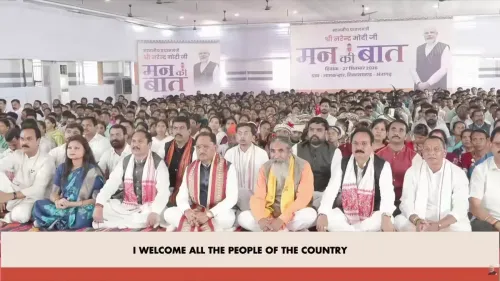
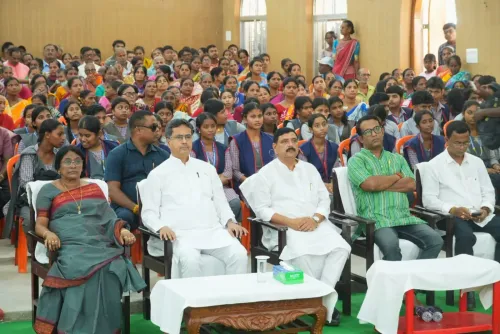
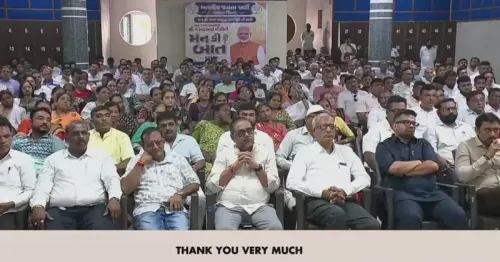
CM Rekha Gupta joins Mann Ki Baat Ep 138 with Delhi BJP leaders
Synopsis
Delhi Chief Minister Rekha Gupta joined BJP legislators and ministers to listen to the 138th episode of PM Modi's Mann Ki Baat, which marked ten years since the surgical strikes, called for census participation, and spotlighted schemes on nutrition, sport, and local enterprise.
Key Takeaways
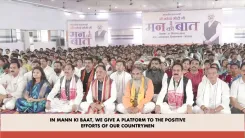
138th episode of PM Modi's Mann Ki Baat was listened to publicly by Delhi CM Rekha Gupta and senior BJP leaders on 27 September 2026 .
PM Modi marked 10 years of the September 2016 surgical strikes , honouring soldiers and reaffirming India's 'Zero Tolerance' stand on terrorism.
Modi recalled Ashok Singhal 's role in the Ram Janmabhoomi movement and social harmony efforts.
Citizens were urged to participate in the upcoming national census , with emphasis on janbhagidari (public participation) in governance.
Grassroots progress on Nasha Mukt Bharat , Poषण Abhiyan , and the Ek Zila Ek Utpad scheme (launched January 2018 ) was highlighted.
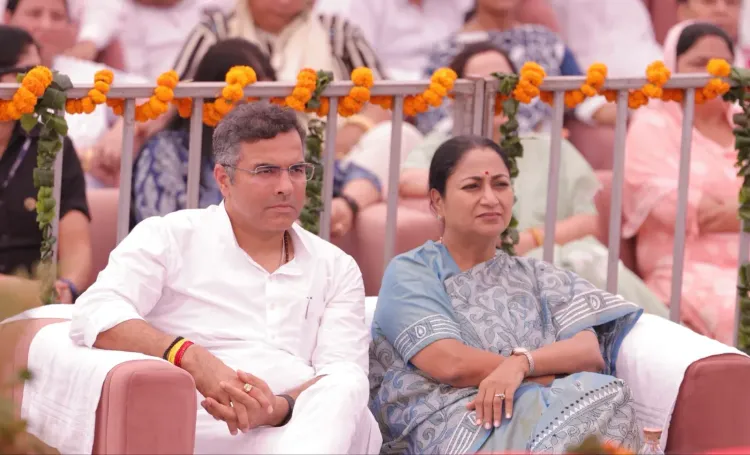
Delhi's BJP leadership — including an MP, three cabinet ministers, and three MLAs — attended the public listening session.
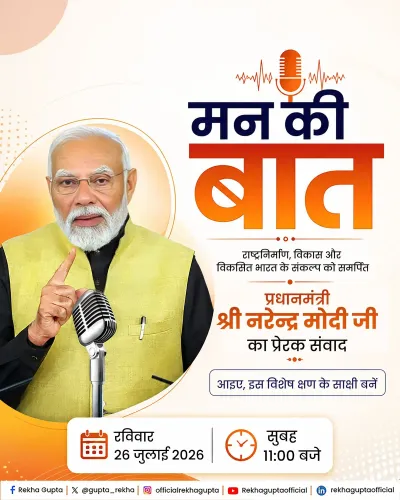
Ten years after Indian Army commandos crossed the Line of Control in the dark of a September night, Delhi Chief Minister Rekha Gupta sat with residents of the capital on Sunday, 27 September 2026, to listen to the 138th episode of Prime Minister Narendra Modi's monthly radio programme Mann Ki Baat — an episode that made the surgical-strike anniversary its emotional centrepiece.
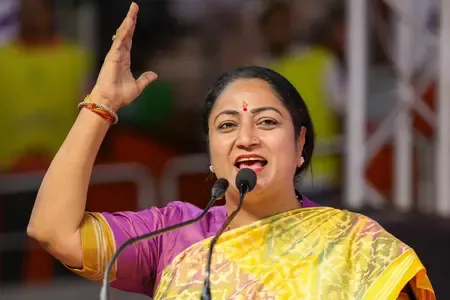
Gupta described the programme as 'aatmiya samvad' (a heartfelt dialogue) between the nation and its citizens, writing that it 'continuously strengthens the resolve of nation-building through public participation.' The Chief Minister was joined by a visible cross-section of Delhi's BJP machinery: MP Yogendra Chandolia, cabinet colleagues Pravesh Sahib Singh, Ashish Sood, and Ravinder Indraj, along with MLAs Raj Karan, Manoj Shokin, and Gajendra Daral.
A decade since the surgical strikes — Modi's zero-tolerance message
The September 2016 surgical strikes remain one of the BJP government's most politically resonant national-security moments. Launched in swift response to the Uri terror attack, Indian Army special forces crossed the Line of Control and destroyed terror-launch pads in Pakistan-administered Kashmir. In his 138th episode, Modi invoked the bravery of those soldiers and reiterated India's 'Zero Tolerance' commitment against terrorism — a phrase Gupta highlighted verbatim in her post.
The timing is deliberate: ten-year anniversaries of high-stakes military decisions carry weight in any democracy, and the BJP has consistently used this milestone to anchor its national-security narrative ahead of multiple electoral cycles. By listening publicly alongside Delhi's top elected and legislative voices, Gupta plants the capital's flag firmly in that framing.
Ashok Singhal, the census, and the threads Modi wove together
Beyond security, the episode ranged across a notably wide canvas. Modi recalled the contributions of Ashok Singhal — the senior RSS pracharak who drove the organisational backbone of the Ram Janmabhoomi movement through the 1980s and 1990s, a decades-long campaign that culminated in the November 2019 Supreme Court verdict and the eventual consecration of the Ram Temple in Ayodhya. Singhal's legacy sits at the intersection of cultural nationalism and social harmony, both of which Modi reportedly wove into his remarks.
The Prime Minister also called for every citizen's participation in the upcoming national census — a data-collection exercise whose delay has drawn sustained attention from planners and policymakers — and spotlighted grassroots progress on Nasha Mukt Bharat (drug-free India), the Poषण Abhiyan (nutrition mission), environment protection, sport, and the Ek Zila Ek Utpad (One District One Product) scheme, which has been identifying and promoting signature local products for exports since its January 2018 launch.
Mann Ki Baat at 138 — the programme's enduring political geometry
Mann Ki Baat has aired every month since October 2014, making it one of the longest-running direct-to-citizen communication exercises by any sitting Indian prime minister. At its core, the show deploys letters, calls, and local stories to project a picture of a government listening — and of citizens acting. Each episode doubles as a soft-power broadcast for flagship schemes, cultural pride, and governance wins.
For state-level BJP leaders, attending or publicly amplifying the broadcast is a standard but meaningful act of political alignment — it signals solidarity with the central leadership while giving local faces visibility on a nationally watched platform. Delhi, with its unique status as both a city and a political battleground, makes such moments especially high-profile.
With the census overdue and welfare schemes like Nasha Mukt Bharat mid-implementation in Delhi, the episode's call for citizen participation lands in a capital where those conversations are far from settled.
Point of View
Amplified by Delhi's top BJP leadership in a public setting, functions as a multi-layered political communication exercise: the surgical-strike anniversary anchors the national-security credential, while census participation and welfare schemes project a governing, problem-solving image. For CM Rekha Gupta, aligning publicly with the broadcast reinforces her administration's ideological proximity to the central leadership at a time when Delhi remains a perpetual electoral flashpoint. The invocation of Ashok Singhal ties the session to the BJP's cultural-nationalist base, signalling continuity from the Ram Janmabhoomi era to the present. Together, these threads suggest a deliberate effort to hold together the party's diverse voter coalition — security hawks, welfare beneficiaries, and cultural conservatives — through a single 60-minute radio programme.
NationPress
27 Sept 2026
Frequently Asked Questions
What is Mann Ki Baat and how many episodes have aired?
Mann Ki Baat is PM Narendra Modi's monthly radio programme launched in October 2014, through which he speaks directly to citizens about governance, culture, and society. The 138th episode aired on 27 September 2026.
Why did Modi talk about the surgical strikes on Mann Ki Baat?
September 2026 marks ten years since the Indian Army's surgical strikes across the Line of Control in 2016, carried out after the Uri terror attack. Modi used the anniversary to honour the soldiers and restate India's zero-tolerance policy on terrorism.
Who is Ashok Singhal and why was he mentioned?
Ashok Singhal was a senior RSS pracharak who led organisational efforts behind the Ram Janmabhoomi movement from the 1980s onward. Modi recalled his contributions to the movement and to social harmony during the episode.
What is the Ek Zila Ek Utpad scheme mentioned in Mann Ki Baat?
Ek Zila Ek Utpad, or One District One Product, is a central government scheme launched in January 2018 that identifies and promotes a signature local product from each district to boost livelihoods and exports.
Who attended Delhi CM Rekha Gupta's Mann Ki Baat listening session?
The session was attended by MP Yogendra Chandolia, cabinet ministers Pravesh Sahib Singh, Ashish Sood, and Ravinder Indraj, and MLAs Raj Karan, Manoj Shokin, and Gajendra Daral, along with other dignitaries.